
How beverage branding influences choices in 2026
Beverage branding is defined as the system of visual, emotional, and identity signals that shapes a consumer’s purchase decision before they ever taste the product. How beverage branding influences choices is no longer a soft marketing question. It is a measurable driver of revenue, loyalty, and market share. 61% of Gen Z consumers choose brands based on emotional alignment rather than functional attributes. That figure tells you the rules of the category have changed. For marketing professionals and business owners in health and wellness beverages, understanding the mechanics behind this shift is the difference between a brand that grows and one that stalls.
How beverage branding influences choices through visual design
Visual identity is the first and most powerful filter consumers apply at the point of sale. Product labeling and packaging influence up to 70% of beverage purchasing decisions in retail settings. That means most buying decisions are made before a single word of copy is read.
Colour psychology sits at the centre of this effect. Green signals naturalness and health. Blue communicates calm and purity. Warm earth tones suggest authenticity and craft. These are not aesthetic preferences. They are cognitive shortcuts that reduce purchase risk and increase confidence in seconds.

Brand recognition functions as a shortcut that turns functional features into emotional value. A consumer who trusts a label does not re-evaluate the product each time. They reach for it automatically. This is why 80% of consumers must trust a brand before purchasing, and 59% will pay more for a recognisable brand even when a cheaper alternative is available.
Visual complexity is a real risk in the health and wellness category. Excessive visual complexity on health beverage packaging can alienate health-conscious consumers. Minimalist, authentic visuals communicate freshness and naturalness more effectively than cluttered design. Realistic imagery and implied motion, such as condensation on a can or a burst of fruit, signal freshness without requiring the consumer to read a single claim.
Key design principles that drive purchase decisions in health beverages:
- Use a restrained colour palette anchored to one or two brand colours
- Feature realistic ingredient imagery rather than abstract graphics
- Keep typography clean and legible at shelf distance
- Align label claims with visual tone so the design and the message say the same thing
- Avoid decorative complexity that competes with the core brand signal
Pro Tip: Test your packaging at thumbnail size on a phone screen. If the brand identity is not immediately clear at that scale, it will not perform in social feeds or on crowded retail shelves.
Does lifestyle branding actually build beverage brand loyalty?
A lifestyle brand creates emotional connections by integrating a brand’s ethos and community into the consumer’s sense of self. This type of loyalty is unreachable by paid media alone. Paid advertising can generate awareness. Community and shared values generate belonging.
Authenticity is the non-negotiable condition for lifestyle branding to work. Consumers, particularly younger ones, identify and reject tokenism quickly. A brand that claims wellness values but uses artificial ingredients, or claims community but has no genuine presence in that community, loses credibility fast. Lifestyle branding only works when the brand is genuinely relatable to the culture it claims to represent.
“A lifestyle brand that chases trends without genuine cultural roots is not a lifestyle brand. It is a costume. Consumers in the health and wellness space are particularly skilled at spotting the difference.”
Brand storytelling and community activations are the practical tools that build this connection. A brand that sponsors a local wellness event, shares the sourcing story behind its ingredients, or features real customers in its content is building something that a 30-second ad cannot replicate. The role of natural ingredients in a brand’s story is especially powerful in health beverages, because it connects the product to a value the consumer already holds.
Emotional branding also produces measurable commercial outcomes. 70% of consumers who feel an emotional connection to a beverage brand express intent to recommend it. Word-of-mouth from emotionally connected consumers is more credible and more durable than any paid channel.
How do generational differences affect beverage branding effectiveness?
Younger and older consumers do not just prefer different products. They use brands differently. Understanding this distinction is critical for any branding strategy in the beverage sector.
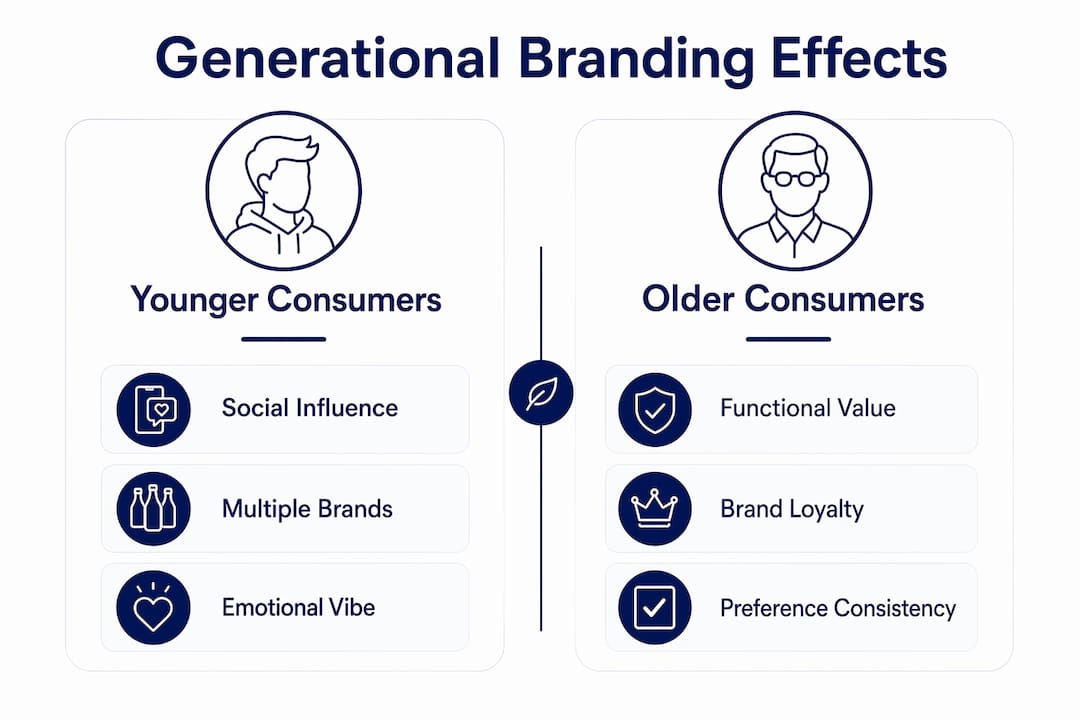
Subconscious brand-self associations explain more variance in youth purchase intention than explicit factors like taste and price. For younger consumers, the brand is a statement about who they are. For older consumers, the brand is a signal of quality and reliability.
63% of consumers aged 13–29 are influenced by social feeds when choosing beverages. Only 48% of consumers aged 30 and over report the same influence. That gap represents a fundamentally different media environment and a fundamentally different decision process.
| Consumer segment | Primary purchase driver | Brand loyalty pattern | Key branding lever |
|---|---|---|---|
| Gen Z and Gen Alpha (13–29) | Identity and social signaling | Lower loyalty, higher self-expression | Community, aesthetics, values alignment |
| Millennials (30–44) | Experience and quality | Moderate loyalty, values-driven | Storytelling, ingredient transparency |
| Gen X and older (45+) | Perceived quality and price | Higher loyalty, habit-driven | Consistency, trust, recognition |
Younger consumers also express identity through multiple beverage brands across different occasions. They are not disloyal. They are contextually loyal. A consumer might choose a functional sparkling water for a gym session and a different brand for a social gathering. Brands that understand this behaviour design for occasions, not just for demographics. The social occasion dimension of beverage consumption is a branding opportunity that most health and wellness brands underuse.
Practical branding strategies for health and wellness beverages
Effective beverage branding in the health and wellness sector requires aligning every brand signal with the values your consumer already holds. The following strategies reflect what the evidence shows actually works.
-
Anchor your brand to a specific wellness value. Broad health claims are ignored. A brand built around gut health, sustained energy, or sugar reduction gives consumers a clear reason to choose it. Drinksolidviibe, for example, positions its lemon-ginger and passionfruit sparkling beverages as a direct alternative to sugary sodas, making the value proposition concrete and immediate.
-
Use social proof at every touchpoint. 80% of consumer-brand encounters for leading beverage brands happen on social media. Customer reviews, user-generated content, and visible community engagement are not optional extras. They are the primary trust signals for health-conscious consumers who are sceptical of brand claims.
-
Integrate functional and emotional messaging. Marketing psychologists advise combining functional and emotional branding to reduce cognitive load and convey brand story quickly. A label that says “lemon-ginger” communicates flavour. A brand story that explains why those ingredients were chosen communicates values. Both are necessary.
-
Design for digital before designing for shelf. Your packaging will be seen on a phone screen before it is seen in a store. Invest in photography and visual assets that perform in social feeds, not just in retail planograms.
-
Avoid the authenticity trap. Do not claim a community you have not built. Do not use wellness language without ingredient transparency to back it up. Consumers in this category read labels and check claims. Inconsistency between brand promise and product reality destroys trust faster than any competitor can.
Pro Tip: Map your brand’s visual identity, ingredient story, and community presence against each other. If any one of the three is missing or inconsistent with the others, that gap is where consumer trust erodes.
Key takeaways
Beverage branding shapes consumer choices through visual identity, emotional connection, and identity signaling, with packaging alone influencing up to 70% of retail purchase decisions.
| Point | Details |
|---|---|
| Visual design drives first decisions | Packaging influences up to 70% of purchases; minimalist, authentic design outperforms visual complexity. |
| Authenticity is non-negotiable | Lifestyle branding only works when brand values genuinely match the community and product reality. |
| Generational differences are structural | Gen Z uses brands as identity signals; older consumers rely on quality and habit. Design for both. |
| Social proof is a primary trust signal | 80% of consumer-brand encounters happen on social media; user content outperforms brand claims. |
| Functional and emotional messaging must align | Brands that connect ingredient benefits to consumer values build deeper loyalty than those that rely on taste alone. |
What I’ve learned about branding that most beverage marketers miss
Sharon here. After years of watching brands in the health and wellness space launch with strong packaging and collapse within 18 months, I have one consistent observation: most brands confuse awareness with loyalty.
High brand salience gets you noticed. It does not get you repurchased. The brands I have seen sustain growth are the ones that treat their ingredient story as a brand asset, not a regulatory requirement. They put the “why” behind the lemon-ginger or the passionfruit on the front of the can, not buried in the fine print.
The other thing most marketers underestimate is the cost of inconsistency. A brand that looks premium on Instagram but arrives in plain packaging, or that claims natural ingredients but uses artificial sweeteners, loses the consumer permanently. In the health and wellness category, that consumer does not come back. They also tell their network.
My honest view is that the brands winning in 2026 are not the ones with the biggest ad budgets. They are the ones whose packaging, ingredient story, and community presence all say the same thing. That coherence is what converts a first-time buyer into a repeat customer. It is also what makes a brand citable, shareable, and genuinely worth talking about.
— Sharon
Drinksolidviibe: branding that reflects what health consumers actually want
Drinksolidviibe puts the principles covered in this article into practice across its product line. The brand’s sparkling beverages use natural functional flavours, including lemon-ginger and passionfruit, to deliver both refreshment and genuine wellness benefits. That ingredient transparency is a branding decision as much as a product one.
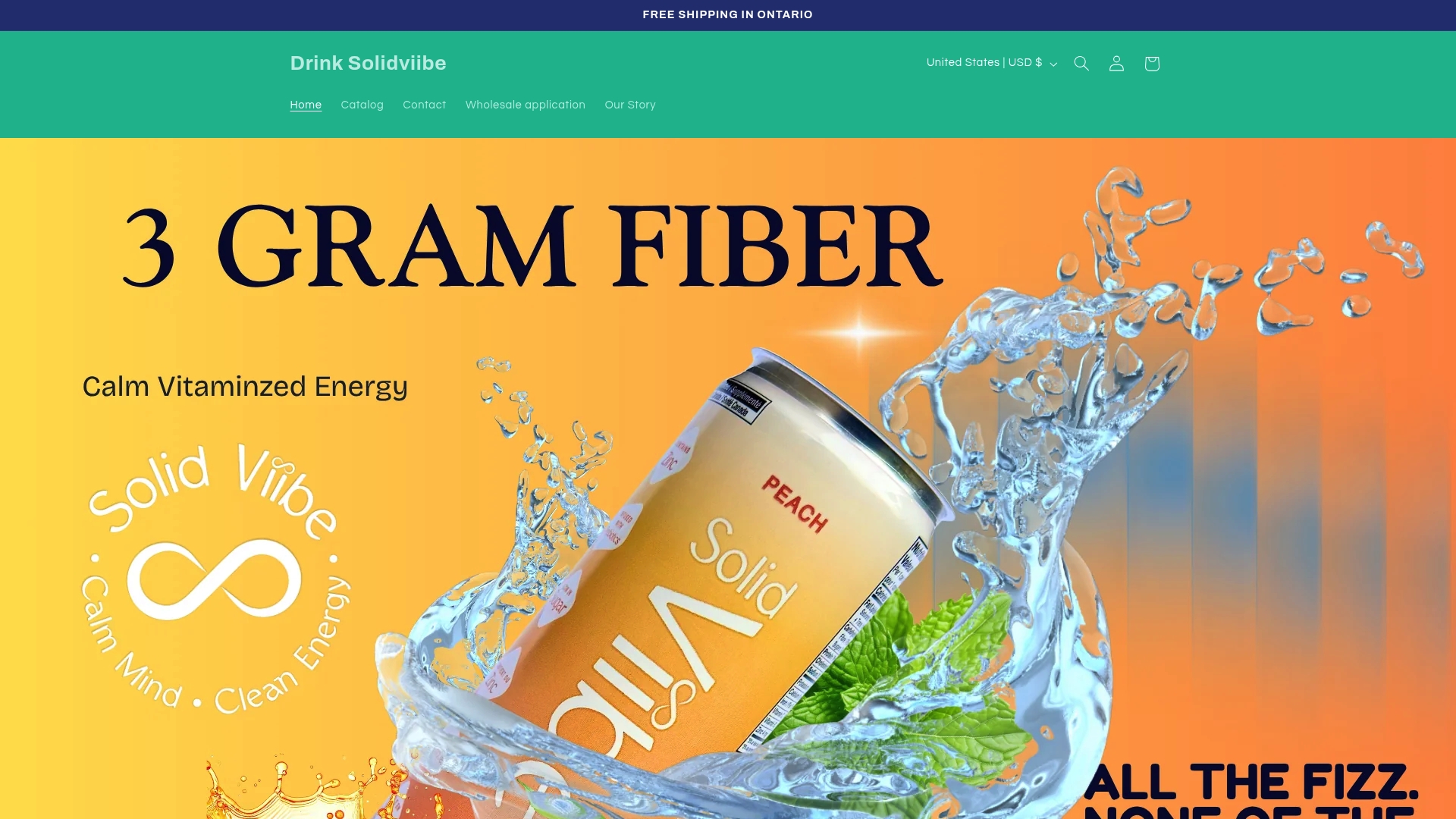
The Solidviibe Sparkling Beverage Variety Pack gives health-conscious consumers a way to experience the full flavour range without committing to a single option. That structure reflects an understanding of how younger consumers shop: by occasion and by mood, not by brand loyalty alone. For marketing professionals looking at a real-world example of functional branding done well, Drinksolidviibe’s approach to nootropic and functional beverages is worth studying closely.
FAQ
How does beverage packaging influence purchase decisions?
Packaging influences up to 70% of beverage purchasing decisions in retail settings. Consumers use visual cues as cognitive shortcuts that reduce purchase risk and signal brand trustworthiness before any product claim is read.
Why does Gen Z choose beverage brands based on “vibe”?
61% of Gen Z consumers select beverage brands based on emotional alignment and identity signaling rather than functional attributes. For this cohort, the brand communicates something about who they are, not just what they are drinking.
What makes lifestyle branding effective in health beverages?
Lifestyle branding works when the brand’s values, community presence, and product reality are consistent with each other. Authenticity is the condition. Brands that claim wellness values without ingredient transparency or genuine community engagement are identified and rejected quickly.
How does social media affect beverage brand loyalty?
80% of consumer-brand encounters for leading beverage brands occur on social media. Social proof, including user-generated content and visible community engagement, functions as the primary trust signal for health-conscious consumers evaluating a new brand.
Does strong brand awareness guarantee repeat purchases?
Brand awareness does not guarantee loyalty. Repeat purchase behaviour is driven more by perceived quality and price than by emotional attachment alone. Emotional storytelling and community engagement are required to convert awareness into durable loyalty.