
Yes, you can make soda alternatives at home that actually taste good

You can make satisfying, lower-sugar soda alternatives at home using nothing more exotic than a simple syrup or shrub, a splash of sparkling water, and about ten minutes. Fermented bases like kombucha and switchels get you there too, if you want more tang and less measuring. This guide walks through fast wins you can make tonight, exact syrup and shrub ratios, every practical way to get fizz (including how to avoid an exploding bottle), tea and kombucha builds, electrolyte drinks worth replacing your sports drink with, sweetener trade-offs, and how long everything keeps in your fridge.
Key Takeaways
Homemade soda alternatives work because a concentrated flavour base, whether syrup, shrub, or tea, paired with sparkling water or careful fermentation delivers real fizz with far less added sugar than a canned drink.
| Point | Details |
|---|---|
| Start with a syrup ratio | Use 1:1 for light mixers and 2:1 for bold, concentrated flavours. |
| Carbonate before flavouring | Add syrup after carbonation to avoid foam-overs and preserve fizz. |
| Ferment carefully | Refrigerate naturally carbonated bottles within 24 to 48 hours to prevent overpressure. |
| Watch the sugar math | A 12-ounce cola contains a high amount of added sugar; syrups let you control that number directly. |
| Try a ready-made option | Drinksolidviibe’s sparkling tonics use natural ingredients and lower sugar for days you’d rather not measure syrup. |
Table of Contents
- How to make soda alternatives at home: fast wins to try first
- How to make basic syrups and shrubs for homemade soda
- Carbonation methods: soda makers, bottled water, and fermentation
- Tea sodas and kombucha: turning fermented drinks into soda replacements
- Fruit infusions, switchels, and DIY electrolyte drinks
- Sweetener choices: how to cut sugar without losing flavour
- Storage, batch prep, and quick fixes for common problems
- What I learned testing these swaps myself
- A lower-effort way to keep the fizz without the syrup math
- Sources
- FAQ
How to make soda alternatives at home: fast wins to try first
You don’t need a fermentation crock or a lab notebook to ditch canned soda tonight. U.S. soda sales have dropped for twelve straight years, and most of that shift is regular people finding replacements that don’t feel like a sacrifice. Start with whichever of these matches your mood.
- Sparkling water plus concentrated syrup. Stir 1 to 2 tablespoons of a fruit or herb syrup into a cup of chilled sparkling water. This gives you the closest flavour match to bottled soda with a fraction of the sugar.
- Iced tea soda. Brew a strong tea concentrate, chill it, then cut it with sparkling water. Black or green tea adds antioxidants that regular soda has none of.
- Shrub lemonade. A vinegar-based fruit concentrate mixed with sparkling water delivers a tart, grown-up flavour that plain lemonade can’t touch, with less sugar than the syrup route needs.
- Kombucha, diluted if needed. Already fizzy from fermentation, kombucha gives you tang and gut-friendly microbes in one glass, though some bottled varieties still carry meaningful added sugar.
- Electrolyte switchels or coconut water blends. Ginger, apple cider vinegar, and a splash of citrus turn into a homemade recovery drink for after a workout or a hot afternoon outside.
Pick one, make a small batch, and taste as you go. Sweetness is easy to add and hard to take away.
How to make basic syrups and shrubs for homemade soda
Every homemade soda starts the same way: a concentrated flavour base plus sparkling water. Martha Stewart’s approach to homemade soda breaks it down to exactly that, and once you understand the ratios, you can improvise flavours indefinitely.
Simple syrup vs. reduced syrup
A basic 1:1 simple syrup (equal parts sugar and water, dissolved over low heat) gives you a light, clean sweetener that mixes fast and doesn’t overpower delicate flavours like elderflower or mint. A 2:1 syrup (double the sugar to water) is thicker and more potent, so you use less of it per glass, which matters if you’re watching total sugar. Reach for 2:1 when you want a bold fruit flavour, like blackberry or ginger, to come through strongly in a small dose.
No-cook citrus infusion
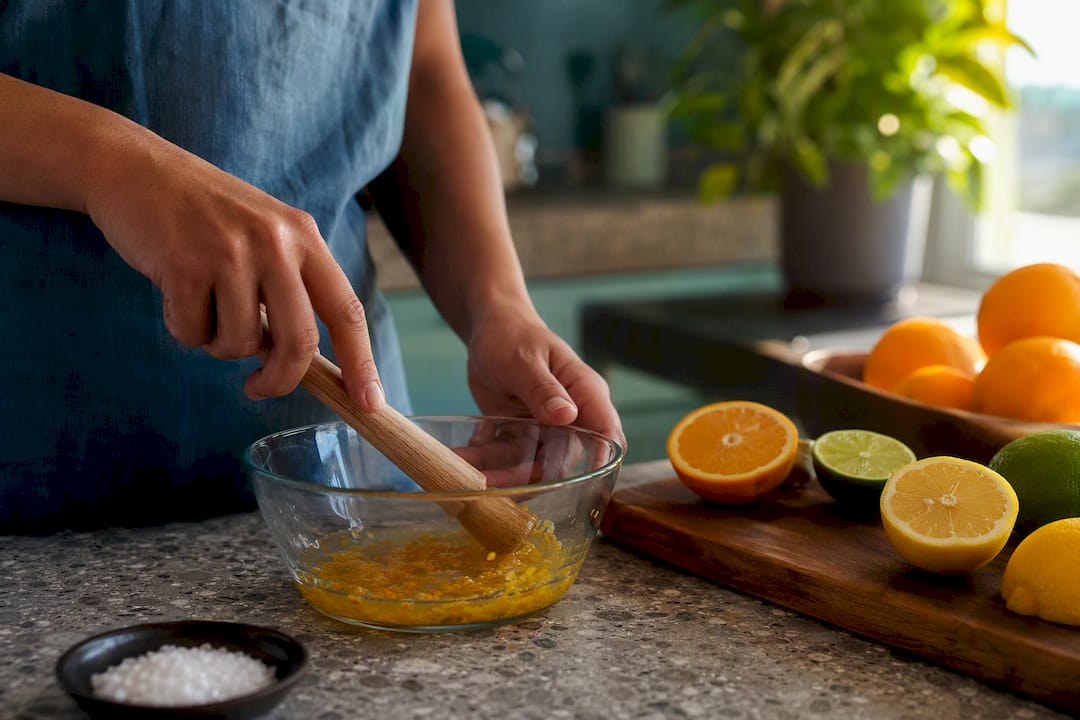
Heat isn’t always your friend. For citrus, grate the zest into sugar, muddle it with a spoon to release the oils, then let it sit for 30 to 60 minutes before straining and dissolving into water or a splash of sparkling water directly. This preserves the bright, oily top notes that boiling tends to cook away.
Fruit reduction syrups
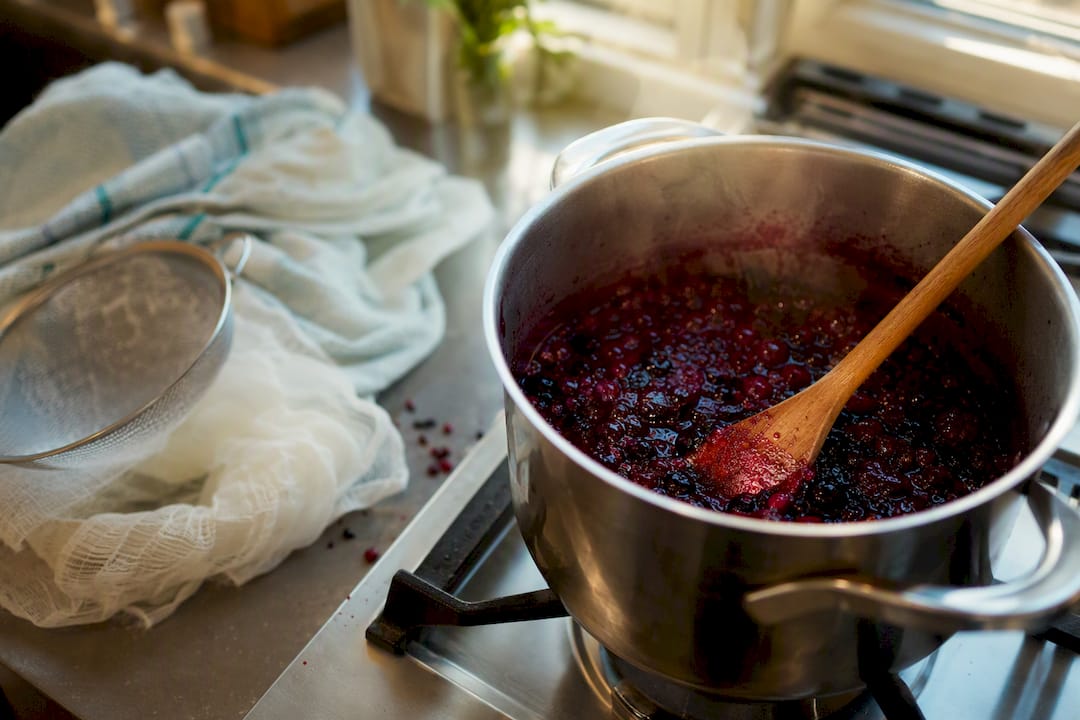
For jammy, concentrated fruit flavours, simmer chopped fruit with sugar and a little water for 15 to 20 minutes, mashing occasionally, then strain through a fine sieve or cheesecloth. Press the solids gently to extract every drop without pushing pulp through.
Shrub formula
A shrub is a fruit and vinegar concentrate, and the ratio that works reliably is 1 cup fruit, 1 cup sugar, 1 cup vinegar (apple cider or white wine vinegar both work). Macerate the fruit in sugar for a few hours or overnight to draw out juice, then stir in the vinegar and strain. The acidity sharpens the flavour so effectively that you can often use less sugar than a straight syrup would need for the same punch.
| Syrup type | Ratio | Best for |
|---|---|---|
| Simple syrup | 1:1 sugar to water | Light, versatile mixers |
| Reduced syrup | 2:1 sugar to water | Bold, concentrated flavours |
| No-cook citrus | Zest muddled into sugar, steeped 30 to 60 min | Bright, fresh citrus notes |
| Fruit reduction | Fruit simmered with sugar, 15 to 20 min | Jammy, deep fruit flavours |
| Shrub | 1:1:1 fruit, sugar, vinegar | Tart, low-sugar tang |
- Choose your base flavour (citrus, berry, ginger, herb).
- Pick the method that suits it (cook, no-cook, or shrub).
- Strain thoroughly and chill before mixing.
- Start with 1 to 2 tablespoons of syrup per 1 cup (250 ml) of sparkling water, and adjust up in small increments.
Pro Tip: If a syrup tastes flat even after adding more sugar, the problem usually isn’t sweetness, it’s balance. A pinch of salt, a few drops of an acid like lime juice, or a dash of bitters can make a drink taste sweeter without adding a single extra gram of sugar.
Carbonation methods: soda makers, bottled water, and fermentation
Fizz is the other half of the equation, and you have three real options.
- Home soda makers. These carbonate plain water quickly and give you full control over fizz level, but never run syrup or juice through the machine itself; carbonate the water first, then stir in your syrup after. Running sugary liquid through the carbonating chamber gunks up the valve and voids most manufacturer warranties.
- Bottled sparkling water. This is the fastest and most foolproof option for a single glass. No equipment, no cleanup, and you can find a range of sparkling water styles with different mineral profiles and carbonation intensity.
- Natural fermentation (ginger bug or similar). A ginger bug is a wild-fermented starter culture that produces its own carbonation over a few days. It’s the most hands-on route and the one with real risk if you’re not careful.
That risk is worth taking seriously. Naturally fermented soda builds pressure inside a sealed bottle, and if fermentation runs too long, that pressure can crack glass or blow a cap off. Always use pressure-rated flip-top bottles designed for home brewing, leave headspace at the top rather than filling to the brim, and move bottles to the refrigerator within 24 to 48 hours of reaching your target fizz to slow the yeast down before pressure builds past what the bottle can handle.
Pro Tip: Always carbonate first, flavour second. Adding syrup before carbonating causes foam-overs almost every time, and pouring syrup into already-fizzy water rather than the reverse keeps more bubbles intact in your finished glass.
Tea sodas and kombucha: turning fermented drinks into soda replacements
Tea gives you a caffeine-controlled, antioxidant-rich base that mixes into soda almost as easily as syrup does.
- Brew a concentrate using roughly double the usual tea-to-water ratio (about 4 tea bags or 4 teaspoons of loose leaf per 2 cups of water), steeped for 5 to 7 minutes, then chilled.
- Mix the concentrate with sparkling water at roughly a 1:2 ratio (one part tea concentrate to two parts sparkling water), adjusting to taste.
- Sweeten lightly with syrup or skip it entirely if the tea itself is flavourful enough.
Black tea gives you the boldest, most soda-like body. Green tea leans lighter and grassier. Rooibos, being naturally caffeine-free, is the better pick for an evening drink.
Kombucha works differently since it’s already fizzy from fermentation, but it isn’t automatically a clean swap for soda.
- Dilute kombucha with sparkling water at roughly equal parts to cut sugar per serving while keeping the fizz and tang.
- Check labels before buying. Some commercial kombuchas carry meaningful added sugar despite their health-food branding.
- If brewing at home, keep fermentation vessels and utensils properly sanitized. Contamination during brewing is the main safety concern, not the trace alcohol that naturally forms.
- Home-brewed kombucha typically contains a small amount of alcohol as a fermentation byproduct, usually under 0.5%, but check your batch if you’re avoiding alcohol entirely.
Registered dietitians who work with patients trying to cut soda regularly point people toward kombucha and sparkling water as realistic first swaps, precisely because they still deliver fizz and flavour intensity.
Fruit infusions, switchels, and DIY electrolyte drinks
Not every soda alternative needs carbonation. Some of the most refreshing options lean on infusion and acidity instead.
- Fruit-infused water. Add sliced fruit, herbs, or cucumber to cold water and let it sit for 2 to 4 hours in the fridge (or overnight for a stronger infusion). Muddling the fruit slightly before adding it speeds up flavour release.
- Switchel. Combine 2 tablespoons apple cider vinegar, 1 to 2 tablespoons honey or maple syrup, and a teaspoon of grated fresh ginger with 2 cups of water. Dilute further to taste; this drink is meant to be sharp, not sweet.
- DIY electrolyte mix. Combine a pinch of sea salt, a splash of orange juice for potassium, and a small amount of honey or syrup in a glass of water. Adjust the salt up slightly for heavy sweat loss and down for casual daytime sipping.
Coconut water is a shortcut version of the same idea, though it’s worth remembering that not every bottled coconut or maple water on shelves has an identical sugar and calorie profile, so a quick label check still matters even with “natural” drinks.
Serve any of these over crushed ice in a real glass with a citrus wheel or herb sprig, and it stops feeling like a health compromise and starts feeling like something you’d order at a bar.
Pro Tip: Layer in fresh herbs like mint or basil, or a pinch of warm spice like cinnamon, and your brain reads the drink as sweeter than it measures. This is the same trick that lets you cut sugar in a syrup by 20 to 30 percent without anyone noticing the difference.
Sweetener choices: how to cut sugar without losing flavour
The sweetener you choose changes more than taste. It changes how your body processes the drink.
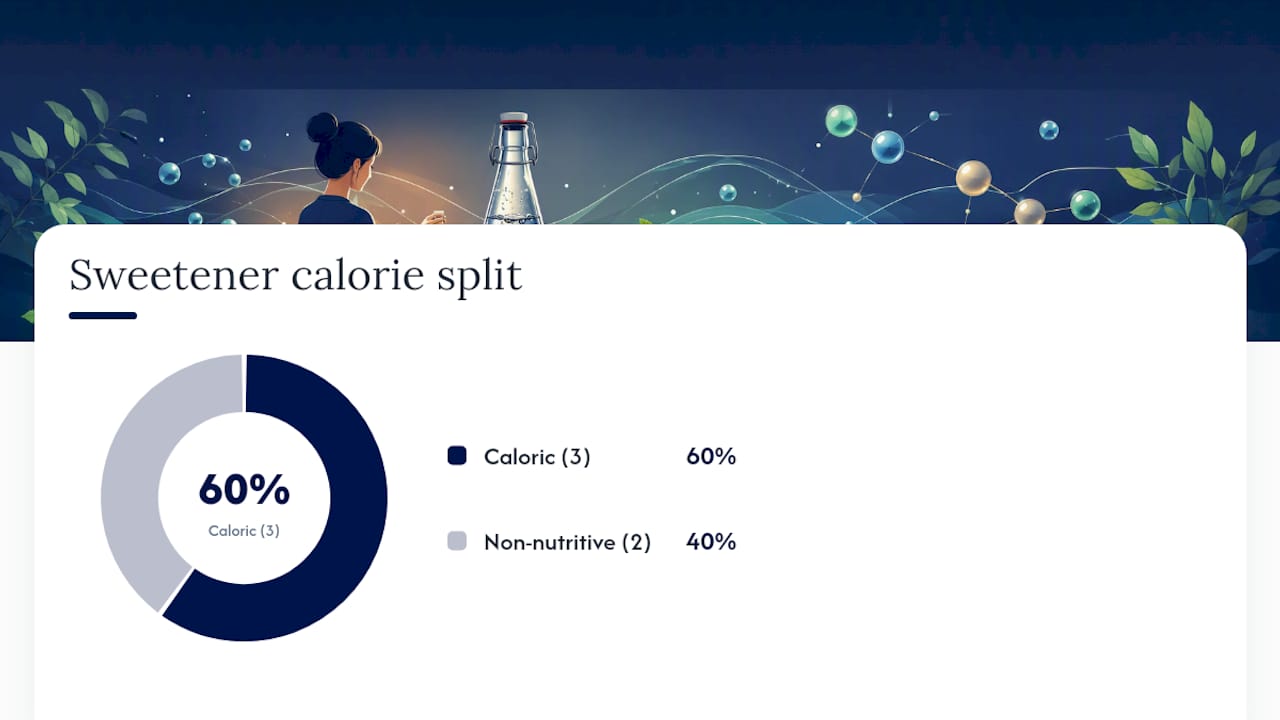
Cane sugar dissolves cleanly and has a neutral flavour, which makes it the easiest baseline for syrups. Honey and maple syrup bring their own distinct flavour and a handful of trace minerals, but they’re still sugars nutritionally, so they don’t offer a free pass on quantity. Agave has a high fructose content and a mild taste, which some people prefer, though it behaves similarly to sugar in terms of calories. Monk fruit and stevia are non-nutritive, meaning they sweeten without adding calories or spiking blood sugar, but their aftertaste isn’t for everyone, and it’s worth using them sparingly rather than as a constant daily habit.
| Sweetener | Calories | Notes |
|---|---|---|
| Cane sugar | Standard sugar calories | Clean, neutral flavour |
| Honey/maple syrup | Standard sugar calories | Adds distinct flavour and trace minerals |
| Agave | Standard sugar calories | High fructose, mild taste |
| Monk fruit | Zero calorie | Intense sweetness, some aftertaste |
| Stevia | Zero calorie | Intense sweetness, some aftertaste |
Context matters here. A typical 12-ounce can of cola contains a high amount of added sugar (Hsph), and the American Heart Association recommends capping added sugar at about 25 grams a day for most women and 36 grams for most men. One can of soda alone can blow past that limit before you’ve eaten a meal. Research linking regular sugar-sweetened beverage consumption to higher metabolic risk markers is part of why so many people are looking for a homemade fix in the first place.
- Cut sugar gradually rather than all at once; a slow reduction over a few weeks is far easier to sustain than quitting cold turkey.
- Use acid (citrus, vinegar) and bitterness (tea, bitters) to make a drink taste more complex, which reduces how much sweetness you actually need.
- Don’t lean on non-nutritive sweeteners as your only tool. Rotating them with small amounts of real sugar tends to feel more sustainable long-term than an all-or-nothing swap.
Pro Tip: Dietitians often suggest replacing just one can of soda a day with a homemade alternative rather than eliminating soda entirely. Small, consistent swaps beat dramatic overhauls that fizzle out in two weeks.
Storage, batch prep, and quick fixes for common problems
Once you’ve got a formula you like, batch prep saves you from starting from scratch every time you want a drink.
- Store syrups in clean, airtight glass jars or bottles with as little headspace as air-filled space at the top invites faster spoilage.
- A standard 2-cup syrup batch typically makes enough concentrate for roughly 16 to 32 servings, depending on how strong you like your mix, so scaling up to a full litre of concentrate is straightforward math from there.
- Refrigerated syrups generally hold for 7 to 14 days, with higher-sugar or higher-acid syrups lasting toward the longer end.
- Shrubs keep noticeably longer than plain syrups, often several weeks refrigerated, because the vinegar acts as a natural preservative.
- Home-fermented drinks like kombucha or ginger bug soda need closer monitoring: taste for excess sourness or a sharp alcohol edge, both signs it’s fermented past the point you want.
- Flat fizz? Your sparkling water may have lost carbonation from a loose cap or too much time in the fridge door; try a fresher bottle or a cooler pour temperature.
- Foaming over the glass? You likely added syrup before carbonating rather than after; reverse the order next time.
- Cloudy syrup? Strain again through a finer mesh or cheesecloth; pulp particles are almost always the cause.
- Off flavours in a shrub? This usually signals it’s been stored too long or at too warm a temperature; when in doubt, trust your nose and toss it.
What I learned testing these swaps myself
The syrup-plus-sparkling-water method won every taste test I ran, hands down. What surprised me was how often “too sweet” turned out to be a balance problem, not a sugar problem. A shrub I thought needed more honey actually just needed more vinegar. Kombucha was the one I expected to love and didn’t, mostly because so many bottled versions taste more like sugar than tang. Your mileage may vary, and that’s the whole point of making it yourself.
[Sharon’s credentials and experience placeholder]
A lower-effort way to keep the fizz without the syrup math
Not every day has room for simmering syrups or babysitting a ginger bug, and that’s exactly the gap Drinksolidviibe’s sparkling wellness tonics are built to fill. Each can arrives pre-balanced with natural ingredients, low sugar, and added vitamins and minerals in flavours like passionfruit and lemon-ginger, so you get the fizz and flavour payoff of a homemade batch without the strain or the fridge full of jars.
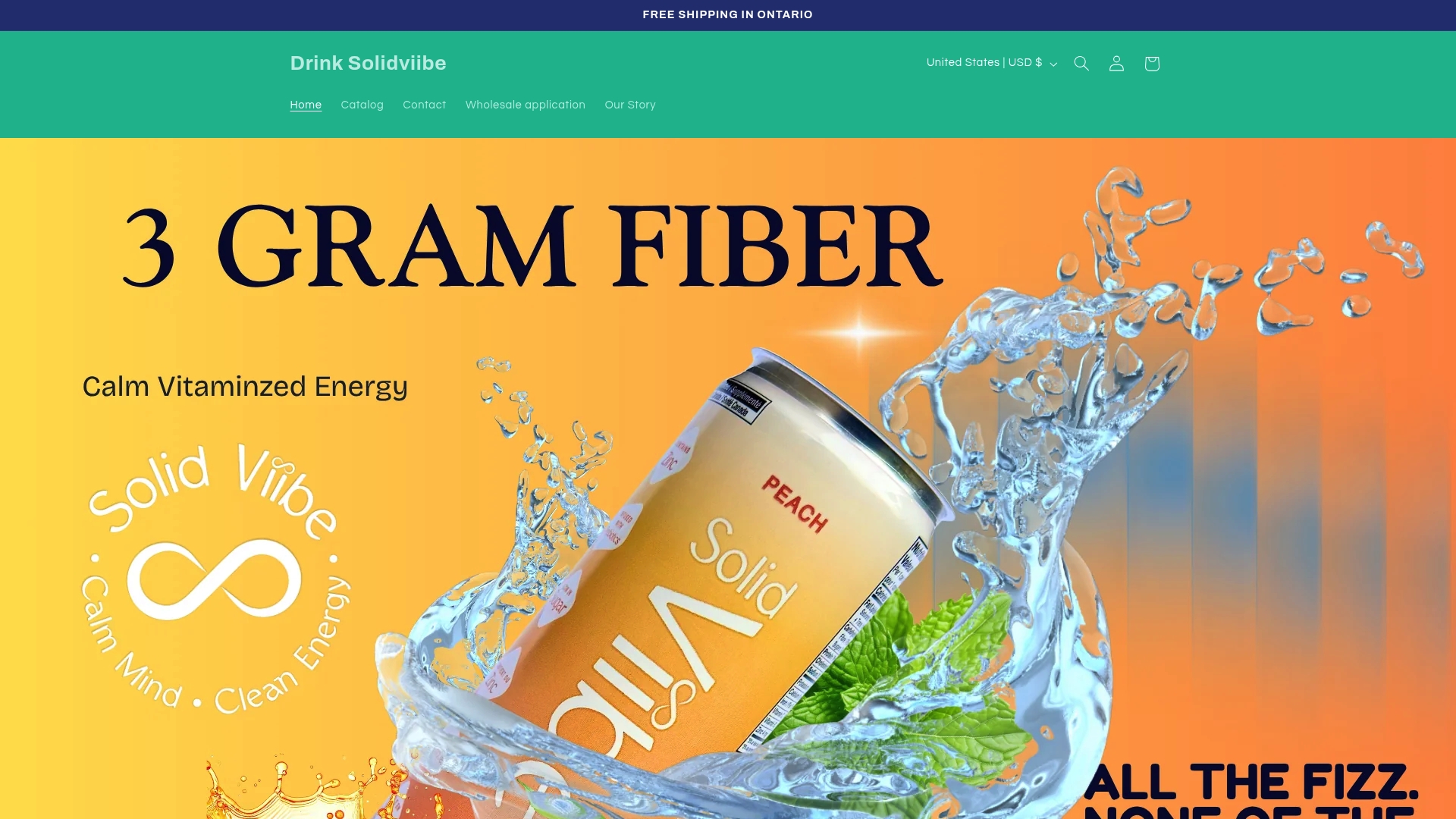
If you’re comparing options, whether homemade or store-bought, run through a short checklist before you buy: check sugar grams per can, scan the ingredient list for anything you can’t pronounce, and see whether the drink actually contains functional additions like prebiotics rather than just marketing claims. Drinksolidviibe’s low-sugar sparkling drink lineup is built to pass that checklist on every point. Grab a variety pack from the Drinksolidviibe store and keep a few cold in the fridge for the nights you’d rather not measure vinegar.
Sources
- Beverages and public health concerns | The Nutrition Source | Harvard T.H. Chan School of Public Health
- How to make homemade soda that’s tastier and better for you | Martha Stewart
- 6 healthy soda alternatives that still taste good | Hartford HealthCare
- Review on sugar-sweetened beverage consumption and health outcomes (NCBI PMC10426908)
FAQ
Is it cheaper to make soda alternatives at home than to buy them? Usually, yes, especially for syrup-based drinks where a bottle of vinegar or a bag of sugar makes many servings. Fermented options like kombucha take more time investment even if the ingredient cost stays low.
Can I make soda alternatives that are keto-friendly? Yes. Swap sugar-based syrups for monk fruit or stevia-sweetened versions, and stick to shrubs or fruit infusions that use minimal sweetener, since the vinegar and acid carry most of the flavour.
Are homemade soda alternatives safe for diabetics? Many are, particularly options built around non-nutritive sweeteners or unsweetened tea and sparkling water bases, but portion and ingredient choices should be discussed with a healthcare provider given individual blood sugar responses.
How long does homemade syrup actually last? Most syrups hold for 7 to 14 days refrigerated, with higher-sugar and higher-acid versions lasting toward the longer end of that range.
Can naturally fermented soda really explode? Yes, if left at room temperature too long without pressure-rated bottles or a refrigeration checkpoint. Using flip-top brewing bottles and moving them to the fridge within a day or two of reaching your target fizz keeps that risk low.
Is kombucha a good daily soda replacement? It can be, but check the label first. Some commercial kombuchas carry as much added sugar as a soft drink, so diluting with sparkling water or choosing a low-sugar variety matters more than the kombucha label alone.


