
Under 8g Sugar: Maker's Guide to Buying a Lemon Ginger Tonic

A lemon-ginger sparkling tonic is worth buying if you want a low-sugar, natural daily drink with a bright, spicy flavour. One version is a solid pick in that category. Just don’t expect it to cure a sore throat or replace medical care. It’s a refreshment upgrade with a functional edge, not a remedy.
TL;DR:
- Most lemon-ginger tonics have less than 8 grams of sugar per can, making them a low-sugar alternative to conventional soft drinks.
- Despite consumer demand, these beverages generally offer incremental health support rather than dramatic or quick-results effects.
- Ingredient transparency is crucial, as actual vitamin levels and ginger content often differ from labels, influencing proper product selection.
- Flavor sharpness and carbonation type significantly impact taste, with drier, crisper fizz preferred by health-minded consumers.
- Cost-effectiveness is best achieved through case purchases or subscriptions, especially for regular drinkers seeking to replace soda with a functional, low-sugar option.
Table of Contents
- What is a lemon-ginger sparkling wellness tonic?
- What does the research actually say about these drinks?
- How do you compare labels and flavours before buying?
- When and how should you drink it?
- Is the cost of a lemon-ginger tonic actually worth it?
- How soon will you notice any difference?
- How do different lemon-ginger formulations stack up?
- Why we built the tonic this way
- Ready to try Solidviibe’s lemon-ginger tonic?
- Sources
- FAQ
What is a lemon-ginger sparkling wellness tonic?
A lemon-ginger sparkling tonic is a ready-to-drink canned beverage built around carbonated water, natural lemon and ginger flavouring, and a light dose of added vitamins or minerals, usually with far less sugar than a typical soda. It’s a different animal from a mug of ginger tea steeped at home or a homemade lemon-honey syrup. Those are DIY remedies you control ingredient by ingredient. A canned tonic is a manufactured, shelf-stable product designed for grab-and-go convenience, consistent taste, and repeat purchase.
The carbonation itself changes the experience. Instead of a warm, still liquid, you get a crisp, fizzy drink meant to be served cold, which shifts how the ginger heat and lemon brightness hit your palate. Nutrient fortification is also a manufacturing choice, not something a home remedy typically offers.
What to look for on the label:
- Real lemon and ginger flavouring, not just “natural flavour” as a catch-all term
- A stated sugar count under roughly 8 grams per can
- Any added vitamins or minerals listed with actual amounts, not vague claims
One lemon-ginger can fits in this space: a low-sugar, naturally flavoured sparkling drink built for people who want flavour and function without the sugar load of conventional soft drinks.
What does the research actually say about these drinks?
The short version: the market has shifted hard toward low-sugar and clean-label drinks, but the science behind “functional” claims is more modest than the marketing often suggests.
Start with demand. In 2026, 66% of consumers say they prioritise lower-sugar, lower-calorie drinks, and 58% actively check ingredient lists before buying. That’s not a niche preference anymore. It’s closer to the mainstream expectation, and it’s a big part of why lemon-ginger tonics exist as a category at all.
In numbers: 66% of shoppers now choose lower-sugar drinks by default, and 58% read the ingredient panel before checkout, according to EY’s consumer beverage survey.
But demand for a category isn’t proof the products inside it deliver on every health claim. Nutrition experts quoted by Food & Wine caution that functional drinks work best as supportive tools rather than cure-alls. — the benefit, if any, depends on regular, consistent intake over time, not a single can consumed while you’re already feeling under the weather.
Formulation science backs up that caution. A review of nutrients and bioactive compounds in functional beverages found that many products face stability and bioavailability challenges, and labelled vitamin content may differ from actual amounts. That’s not an accusation against any specific brand. It’s a structural challenge in the category, which is exactly why ingredient transparency matters more than a splashy claim on the front of the packaging.
A few things worth keeping in mind when you’re shopping this aisle:
- Lemon consistently ranks as one of the most preferred flavours in flavoured water research, with taste and low calorie count named as the top two purchase drivers.
- Ginger’s warming, slightly spicy profile pairs well with citrus but doesn’t turn a sparkling drink into medicine.
- Most tonics on shelves lack clinically therapeutic doses of botanicals, according to broader functional foods research — the support they offer is incremental, not dramatic.
None of this means lemon-ginger tonics are a waste of money. It means the honest pitch is “a better-for-you daily drink with some nutrient support,” not “drink this and your cold disappears.”
How do you compare labels and flavours before buying?
Reading a can label takes about thirty seconds once you know what actually matters. Most shoppers skim the front of the package and miss the details that separate a genuinely clean-label drink from one that just looks the part.
- Check total sugar in grams, not just “low sugar” marketing text. Anything under 8 grams per can puts you well below a standard soda.
- Identify the sweetener type. Cane sugar, monk fruit, and stevia behave differently on the palate and in your body than sugar alcohols or artificial sweeteners.
- Scan the ingredient order. Ingredients are listed by weight, so if sugar or syrup appears before lemon and ginger, the flavour is doing less work than the sweetener is.
- Look for actual vitamin or mineral dosing, ideally in milligrams, rather than a badge that just says “vitamin enriched” with no number attached.
- Watch for proprietary blends. If a label hides amounts behind a blend name, you can’t verify what you’re actually getting, which runs against the transparency industry commentary on functional beverages says builds real consumer trust.
On taste and texture, carbonation intensity is a matter of personal preference, but sharper, drier fizz tends to carry ginger heat better than a soft, flat carbonation that lets sweetness dominate. Mouthfeel matters too: beverage industry research on formulation preferences shows health-minded drinkers generally prefer a clean, crisp mouthfeel over heavy, juice-forward blends that feel more like a snack than a refreshment. You can dig deeper into flavour trade-offs in this breakdown of soft drink flavour options.
On logistics: compare price per can, not just pack price, since single cans, six-packs, and variety packs all land at different per-unit costs. Some brands also offer subscription pricing that knocks a few percent off regular orders.
Pro Tip: Buy a mixed variety pack before committing to a full case of one flavour. Lemon-ginger and citrus profiles taste noticeably different cold from the fridge versus over ice, and you want to know which serving style you’ll actually stick with before you order 24 cans.
When and how should you drink it?
There’s no single “correct” time to crack open a lemon-ginger tonic, but a few moments make the most sense for how the drink actually performs.
- Post-workout: the carbonation and citrus brightness work well as a lower-sugar alternative to sports drinks or soda.
- Afternoon slump: a cold can gives you a flavour reset without the caffeine crash that follows an energy drink.
- With lighter meals: ginger’s warmth pairs naturally with grain bowls, grilled fish, or anything citrus-adjacent already on the plate.
Serve it chilled straight from the fridge for the cleanest carbonation, or over ice if you prefer a longer, slightly diluted sip. It also works as a low-sugar mocktail mixer. A splash of soda water and fresh mint turns one can into two servings, which is a useful trick covered in more depth in this guide to alcohol alternatives built around functional sipping.
Storage is straightforward: keep unopened cans in a cool, dark place, and drink an opened can within a day for the best fizz, since carbonation fades fast once cracked. If you’re prepping drinks ahead for a busy week, this low-sugar morning drink guide has practical batching tips that translate well to canned tonics too.
Is the cost of a lemon-ginger tonic actually worth it?
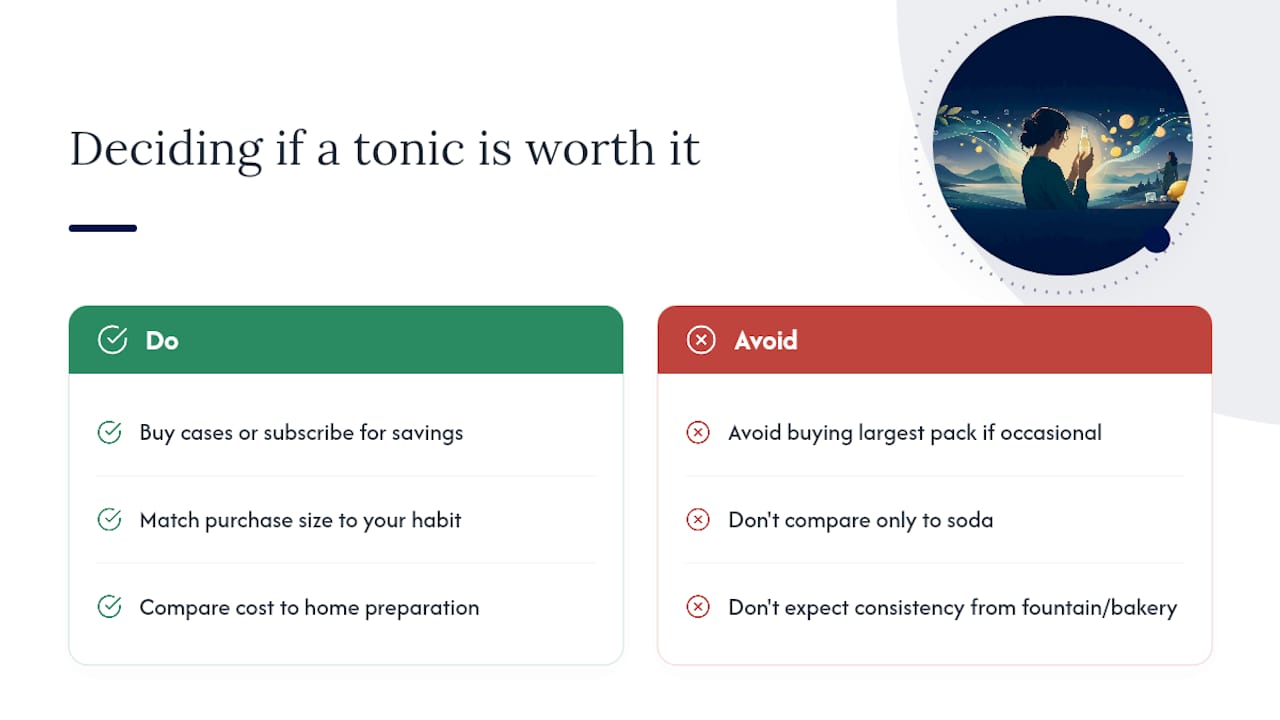
A single can typically costs more than a store-brand soda but less than a bottled cold-pressed juice or a specialty coffee shop drink. The real value comparison isn’t against soda, though. It’s against what you’d spend assembling a similar low-sugar, functional drink yourself: fresh ginger, lemons, a sweetener, and a carbonation method all add up in both cost and time.
Buying by the case lowers the per-can price meaningfully compared to grabbing singles at a convenience store, and variety packs let you spread that savings across flavours instead of betting on one. Subscription options, where available, may shave a further discount off the standard case price in exchange for recurring delivery.
The honest value calculation looks at three things: sugar avoided compared to a regular soft drink, convenience compared to home preparation, and consistency compared to fountain drinks or bakery-made options that vary batch to batch. For someone drinking soda or juice daily, swapping in a lower-sugar tonic is a cost that pays for itself in fewer added grams of sugar over a month, even if the per-can price sits a little higher.
Where the math gets less favourable is if you’re an occasional drinker rather than a daily one. A case sitting half-finished in the fridge isn’t better value than buying singles as needed, so match your purchase size to your actual drinking habit rather than buying the biggest pack for the lowest per-unit price.
How soon will you notice any difference?
If you’re expecting a sore throat or cold symptom to ease within minutes of finishing a can, that’s the wrong expectation to bring into this purchase. A lemon-ginger tonic is a beverage with some nutrient support, not a fast-acting remedy, and no responsible brand should imply otherwise.
What you can reasonably notice quickly is sensory: the cold carbonation and citrus flavour can make your mouth and throat feel refreshed in the moment, the same way any cold, flavourful drink does when you’re feeling off. That’s a comfort effect, not a healing one.
Any functional benefit tied to lower sugar intake, or to the small amounts of added vitamins, plays out over weeks of consistent use rather than a single can. This lines up with expert guidance that functional drinks work as supportive tools rather than instant fixes — cutting 20 to 30 grams of sugar per day by swapping soda for a tonic adds up over a month in a way one can never could on its own.
If you’re specifically looking for immune-supportive habits rather than a single-product fix, pairing a tonic with other low-sugar immunity-focused drinks as part of a broader routine is a more realistic approach than expecting any one beverage to carry the whole job.
How do different lemon-ginger formulations stack up?
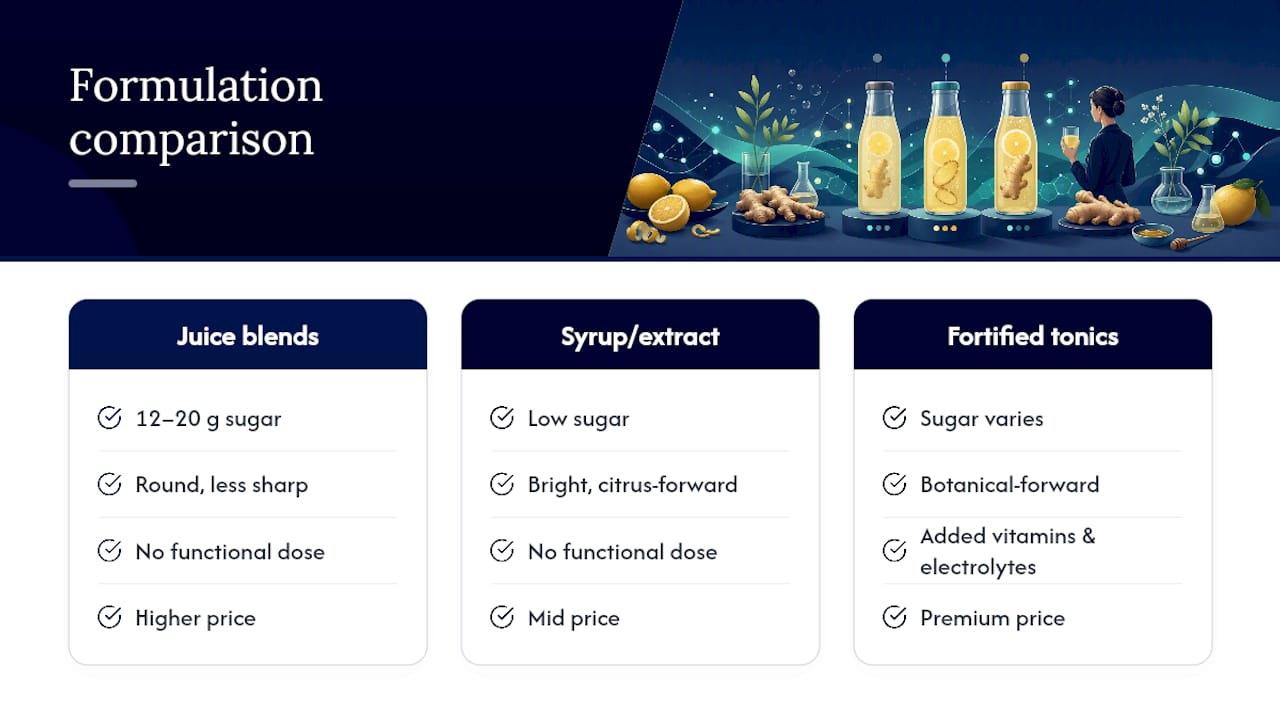
Formulations in this category generally split into three types, and the differences show up in both price and how the drink actually performs day to day.
Juice-based blends lean on real fruit juice for flavour, which tends to push sugar higher, often into the 12 to 20 gram range per can, even when labelled “natural.” They can taste rounder and less sharp, but they cost more to produce and usually carry a higher price tag as a result.
Syrup-and-extract formulations use concentrated natural flavouring instead of juice, which keeps sugar low while preserving a brighter, more citrus-forward taste. Beverage formulation research points to this approach as the one that best supports daily repeat drinking, since it avoids the heavier, snack-like feel of juice blends. This is the category Solidviibe’s lemon-ginger tonic sits in.
Heavily fortified tonics load up on added vitamins, electrolytes, or botanical extracts, often at a premium price. These can be worth it if the dosing is transparent and verifiable, but as the earlier functional beverage review noted, labelled amounts don’t always match what’s actually in the can, so a higher price doesn’t automatically mean a higher functional payoff.
On effectiveness, none of these three approaches will outperform the others for treating a sore throat, because none of them are medicine. The real differences are sugar content, flavour sharpness, and price per can. If low sugar and clean ingredients are your priority, syrup-and-extract formulations using natural lemon and ginger flavouring tend to deliver the best balance of taste and value without the premium markup fortified tonics often carry.
Why we built the tonic this way
A lemon-ginger tonic was built around one simple bet: people want a drink that tastes genuinely good and doesn’t load them up with sugar, and they’d rather trust a short ingredient list than decode a wall of health claims. That’s the flavour-first, low-sugar philosophy behind the can.
Customer feedback consistently points to two things people notice first: the ginger heat feels balanced rather than overwhelming, and the carbonation holds up well over ice rather than going flat fast.
Here’s the honest part. This tonic isn’t going to fix a sore throat or replace a real remedy when you’re sick. It’s a better daily drink choice, built to displace soda and sugary juice from your routine, and that’s a genuinely useful job on its own. We’d rather undersell it and have you trust the label than oversell it and lose that trust the first time it doesn’t perform like medicine.
— Sharon
Ready to try Solidviibe’s lemon-ginger tonic?
If you’ve read this far comparing sugar counts and ingredient lists, you already know what you’re looking for: a sparkling drink that tastes bright and spicy without the sugar crash. One lemon-ginger tonic is built exactly for that. Natural lemon and ginger flavouring, a low sugar count, and no proprietary blends hiding what’s actually in the can.
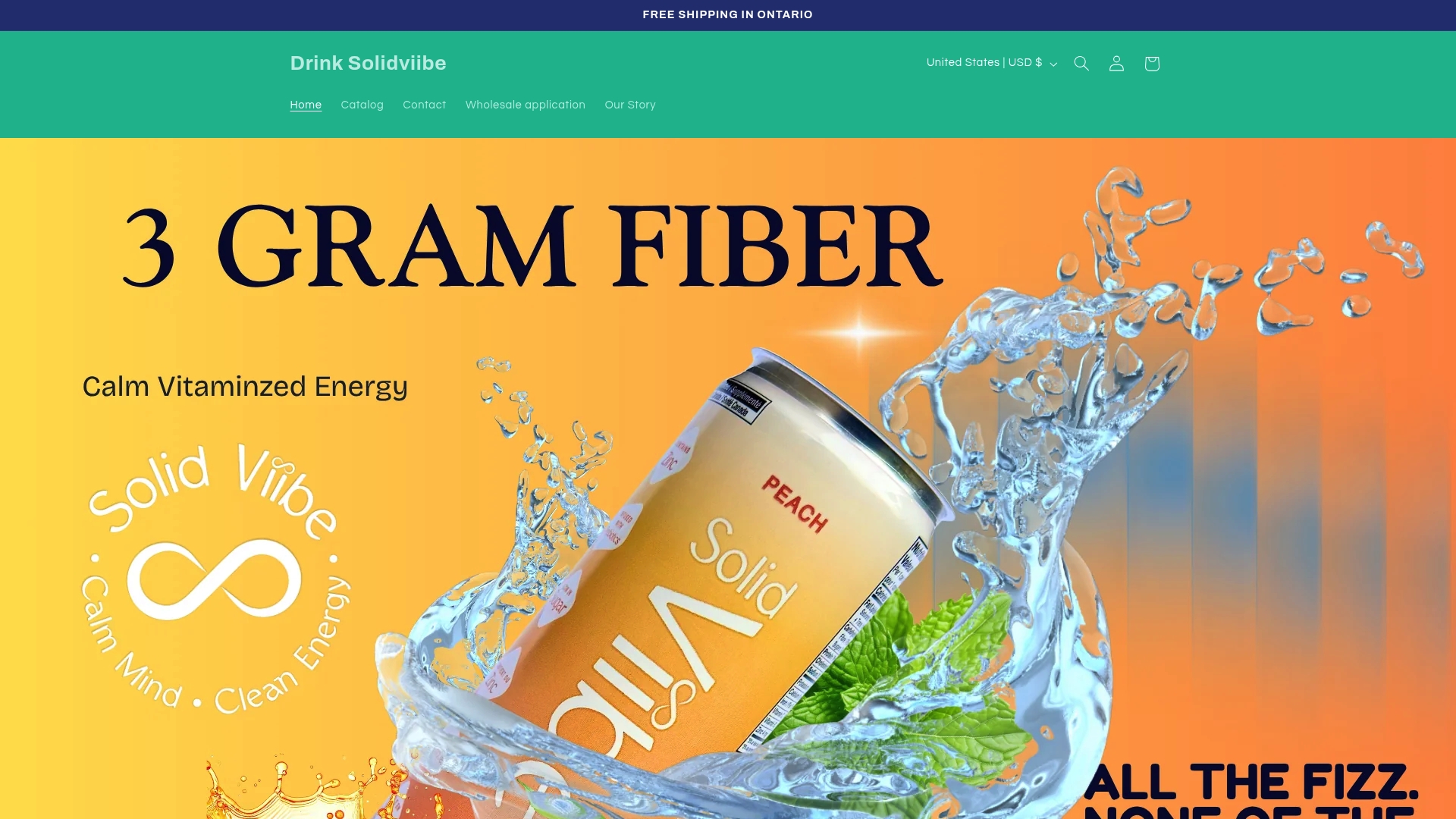
For new buyers, starting with a single-flavour pack can help you see how the lemon-ginger profile fits your taste, or you might get a variety pack to try passionfruit or peach alongside it. For regular drinkers, subscription options are sometimes available to keep cans stocked without repeat ordering. Cans often ship in standard pack sizes suited to both individual orders and wholesale accounts.
Head to the Solidviibe shop to check current pack sizes and pricing, and pick the option that matches how often you actually drink sparkling tonics rather than the biggest case on the page.
Sources
The consumer sugar-preference data comes from EY’s consumer beverage survey, and expert caution on realistic expectations comes from Food & Wine’s coverage of functional drink ingredients. Formulation and labelling concerns are drawn from MDPI’s review of functional food and beverage compounds, and flavour preference data comes from consumer research on flavoured water.
- EY consumer beverage survey
- Food & Wine: the 5 ingredients you should know (and may want to avoid) in wellness drinks
- The health benefits of nutrients and bioactive compounds in functional foods and beverages (MDPI)
- Consumer expectations for flavored water (PMC)
FAQ
Does lemon help a sore throat?
Lemon can make a cold drink feel refreshing and bright, but there’s no research showing it treats a sore throat directly. Treat a lemon-ginger sparkling tonic as a low-sugar refreshment choice, not a remedy.
What makes a lemon-ginger tonic “low sugar”?
Most low-sugar tonics, including Solidviibe’s, keep total sugar under roughly 8 grams per can by relying on natural flavour concentrates instead of fruit juice or added syrup.
Is a canned tonic the same as ginger tea?
No. A canned tonic is carbonated, chilled, and formulated for consistent flavour and shelf stability, while tea is a warm, steeped drink you control ingredient by ingredient at home.
How much ginger is actually in these drinks?
Labels rarely disclose ginger content in milligrams, and research on functional beverages shows labelled amounts don’t always match what’s measured, so look for brands that name real ginger extract rather than vague “natural flavour” claims.
Where can you buy Solidviibe’s lemon-ginger tonic?
Solidviibe sells directly through its online shop in single packs, variety packs, and subscription options, with wholesale distribution available for retail partners.


