
Low sugar B vitamin drinks that help when your diet falls short

B vitamin drinks can top up B12, B6, and folate quickly, which can reasonably support energy when your diet or absorption is falling short. They come as sparkling tonics, effervescent sachets, drink mixes, and fermented beverages like kefir. They work best for people with a real gap to fill: vegans, older adults, recent blood donors, or anyone eating a restricted diet. Check the serving label, and talk to a clinician first if you’re pregnant, nursing, or on medication.
TL;DR:
- B vitamin drinks are most effective for vegans, older adults, recent blood donors, or those on restricted diets who have a true deficiency.
- Look for products with clear labeling of B12, B6, and folate as percentages of daily value and active forms like methylcobalamin and 5-MTHF.
- Most beverages are safe for daily use due to water solubility, but high doses can mask deficiencies or cause nerve issues if consumed excessively over time.
- Effervescent sachets and drinks are convenient for occasional boosts, but control over dose and sugar content varies between formats.
- A B vitamin drink is a supplement, not a substitute for clinical diagnosis or blood testing, and should be used cautiously with awareness of personal health conditions.
Table of Contents
- Types of B vitamin drinks and where to find them
- What B vitamins in a drink actually do for your energy
- How to choose a B vitamin drink that fits your goal
- Safety, daily use, and dosing limits
- How Solidviibe formulates its vitamin B sparkling tonics
- When I actually recommend a B vitamin drink
- Try Solidviibe’s low-sugar vitamin B tonic
- Sources
Types of B vitamin drinks and where to find them
Walk down any grocery aisle and you’ll find B vitamins hiding in far more places than you’d expect. The trick is knowing what label language actually signals a meaningful dose versus a marketing footnote.
Ready-to-drink fortified sparkling waters and tonics are the easiest entry point because there’s no mixing or guessing involved. Look for a supplement facts panel that lists B12, B6, and folate as a percentage of daily value, not just a vague “with B vitamins” claim on the front label. A can that lists methylcobalamin (the active, body-ready form of B12) tells you more than one that just says “vitamin B12” with no source named. MyFoodData’s ranking tool shows fortified beverages and some energy drinks sitting among the highest B12 sources per serving in the beverage category, which is a useful way to compare products before you buy.
Effervescent tablets and single-serve sachets pack a concentrated dose into a small format, usually dissolved in a glass of water. The trade-off is convenience versus control: a sachet might deliver several times the daily value of B12 in one serving, which is fine for occasional use but not something you want to stack with a second B-rich drink the same day. These are popular with people who travel, since a strip of sachets survives a suitcase better than a case of cans.
Liquid packets and drink mixes work similarly but let you control dilution. Add less water and you get a stronger, sometimes bitter dose; add more and you stretch the serving but may undercut the intended amount per gulp. Read the mix ratio on the package rather than eyeballing it, since B vitamins themselves aren’t the flavour problem. Artificial sweeteners or high citric acid often are.
Fermented drinks like kefir are a different category entirely: they’re not fortified, they’re naturally B-rich because of the fermentation process itself. Health lists kefir among drinks that can supply a substantial share of daily B12 in a single serving, which makes it worth a mention alongside fortified options, especially if you’d rather get your B vitamins from something that also delivers live cultures. The catch: B12 content in kefir varies by brand and fermentation method, so it’s a good “and” strategy, not a guaranteed sole source.

Sports and hydration mixes with B blends round out the category. These typically pair a B complex with electrolytes like sodium, potassium, and magnesium, aimed at recovery rather than general daily maintenance. They tend to run lower in sugar than traditional sports drinks but higher in overall vitamin dosing, since the assumption is you’re using them occasionally around a workout, not sipping one every afternoon.
A few quick things to check as you compare formats:
- Whether the label states milligrams/micrograms per serving or per container (containers with multiple servings can mislead you into thinking the dose is higher than it is)
- Whether B12 is listed as cyanocobalamin or methylcobalamin, since the latter needs less conversion in the body
- Whether folate is listed as folic acid or as 5-MTHF (L-5-methyltetrahydrofolate), the active form some people process more efficiently
- Sugar content per can or sachet, since “vitamin-enriched” doesn’t automatically mean low-sugar
If you want a broader look at how these products stack up against traditional sports drinks, Solidviibe’s comparison of sparkling drinks and sports drinks breaks down the sugar and formulation differences in more detail, and this rundown of vitamin-enriched beverage examples is a useful companion for spotting format differences at a glance.
What B vitamins in a drink actually do for your energy
B vitamins don’t give you energy the way caffeine does. They’re cofactors, meaning your cells need them to convert food into usable energy (ATP) and to keep your nervous system firing correctly. B12, B6, and folate specifically support red blood cell formation and nerve function, which is why a shortfall shows up as fatigue, brain fog, or tingling in the hands and feet rather than a sudden energy crash.
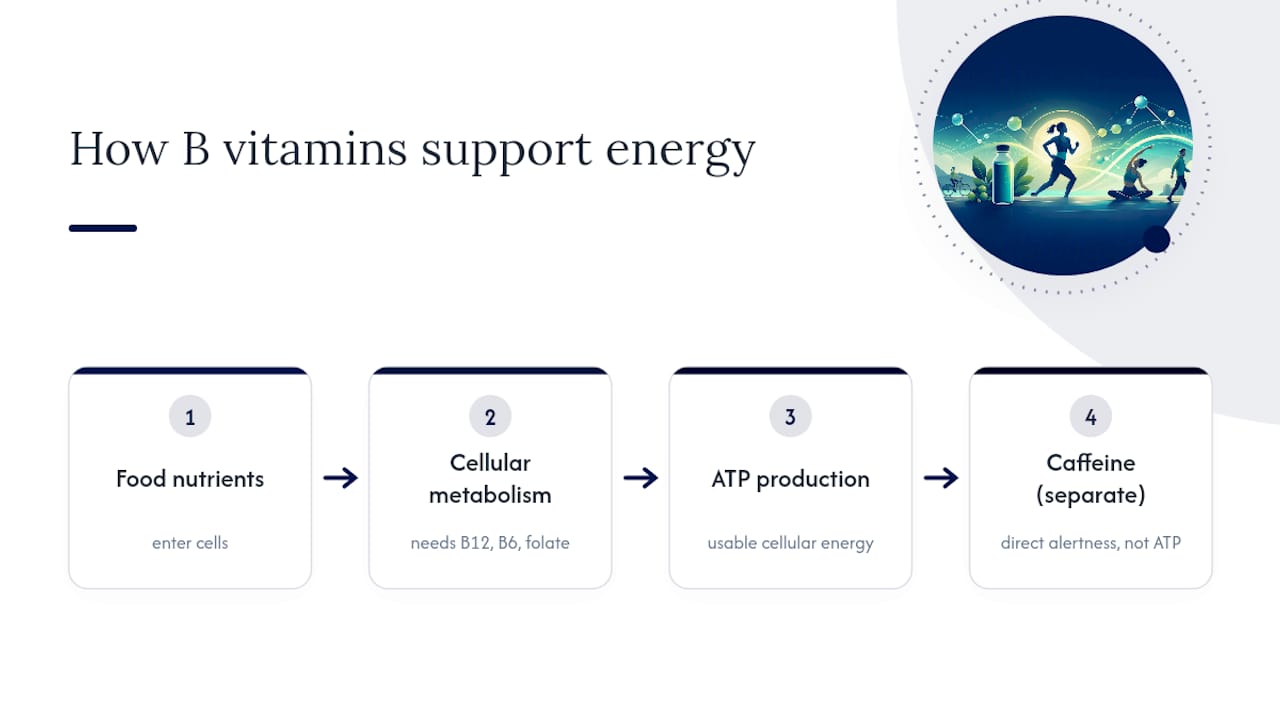
Statistic Callout: Public health guidance from bodies like the World Health Organization frames micronutrient deficiency as a population-level concern that requires clinical assessment when symptoms appear, not something a single drink resolves on its own. That framing matters because vitamin marketing often blurs the line between “supports energy metabolism” and “gives you energy,” and those are two different claims.
Here’s the honest limitation: if your B12, B6, and folate levels are already adequate, drinking more of them won’t make you feel more alert. The benefit shows up specifically when there’s a gap to close. Vegans and vegetarians are a clear example, since B12 occurs almost exclusively in animal products, making a fortified drink a practical bridge. Older adults often absorb B12 less efficiently regardless of diet, because stomach acid production declines with age, and stomach acid is what frees B12 from food for absorption. Recent blood donors lose red blood cells and the nutrients tied to their production, so a short-term top-up can help recovery. People on restricted diets, whether medical or elective, are the fourth group worth watching.
For everyone else, a B vitamin drink is a topping-up strategy, not a treatment. It won’t diagnose a deficiency and it shouldn’t replace bloodwork if you’re genuinely exhausted for weeks on end. Solidviibe’s explainer on whether vitamin drinks actually work goes deeper into when the science supports a real benefit versus when it’s mostly marketing.
How to choose a B vitamin drink that fits your goal
Not every can on the shelf is built for the same job. Some are meant for daily maintenance, others for an occasional B12 boost, and a few are designed around post-workout recovery. Matching the product to your actual goal starts with reading past the front label.
- Check the supplement facts panel first. Look for per-serving amounts of B12, B6, and folate listed as a percentage of daily value, and confirm the serving size matches what you’d realistically drink in one sitting.
- Look for active forms, not just generic names. Methylcobalamin for B12 and 5-MTHF for folate are more readily used by the body than their synthetic counterparts (cyanocobalamin and folic acid), which matters more if you have a genetic variant affecting folate metabolism.
- Compare sugar, calories, and caffeine against your use case, keeping in mind healthy beverage options for school vending machines if you’re selecting for institutional settings. A daily tonic should run low in sugar since you’re drinking it often; an occasional post-exercise mix has more room for a bit more sweetness or added caffeine if that fits your schedule.
- Favour brands with transparent labelling and third-party testing. Certifications or batch testing disclosures are a reasonable proxy for quality control, especially since supplements aren’t regulated with the same rigour as pharmaceuticals.
- Match the format to the moment. A low-sugar sparkling tonic works for daily use, a hydration mix suits post-exercise recovery, and a single high-dose sachet is better reserved for occasional use rather than a daily habit.
Pro Tip: Compare products by “amount per serving,” not “amount per bottle.” A 16-ounce can with two servings listed on the label might only deliver half the B12 you think you’re getting if you don’t finish it in one sitting.
For a related label-reading checklist that applies just as well to enriched sparkling water, Solidviibe’s guide on what to check before buying mineral-enriched sparkling water covers similar ground from a mineral angle, and this guide to electrolyte beverage benefits is worth a look if you’re weighing a B-blend hydration mix against a straight electrolyte drink.
Safety, daily use, and dosing limits
Most fortified drinks and sachets list B vitamin amounts above the standard daily value, sometimes significantly higher. That sounds alarming, but B vitamins are water-soluble, meaning your body excretes what it doesn’t use through urine rather than storing excess in fat tissue the way it does with vitamins A, D, E, and K. This is generally considered a low-risk category of supplement for healthy adults.
That doesn’t mean unlimited amounts are risk-free. High-dose folate can mask a B12 deficiency by correcting the blood-related symptoms while the underlying nerve damage from low B12 continues untreated, which is one reason bloodwork matters more than guessing. Very high B6 intake over extended periods has also been linked to nerve symptoms in some cases, though this typically involves doses far beyond what a single beverage serving provides.
Watch for these situations before making a B vitamin drink a daily habit:
- Numbness, tingling, or balance problems, which can signal a nerve issue that needs proper diagnosis rather than more supplementation
- Pregnancy or breastfeeding, since nutrient needs and safe upper limits shift during this period
- Any chronic condition affecting the kidneys, liver, or nerves, where vitamin metabolism may work differently
- Current medication use, since some drugs (certain diabetes and stomach acid medications, for example) interfere with B12 absorption
As a general frequency guide: a low-dose daily tonic aimed at maintenance is reasonable for most healthy adults, while a high-dose sachet or shot is better treated as an occasional tool rather than a daily ritual. If you’re unsure where your current intake sits, a pharmacist is a practical first stop for checking interactions before you add a new daily supplement.
How Solidviibe formulates its vitamin B sparkling tonics
Solidviibe builds its tonics around natural ingredients and functional flavours like lemon-ginger and passionfruit, aiming for something you’d actually want to drink every day rather than choke down because it’s “good for you.” That distinction matters for a category where a lot of products taste like a multivitamin dissolved in tap water.
The positioning is deliberate: low sugar, no artificial additives, and vitamin content stated plainly rather than buried under stimulant claims. That’s a different lane from traditional energy drinks, which often lean on caffeine and sugar to create the sensation of energy rather than supporting the metabolic processes B vitamins are actually involved in.
Health-conscious drinkers increasingly want a beverage that does two things at once: tastes good and does something for the body beyond hydration. That’s the gap a natural, vitamin-enriched sparkling tonic is built to fill.
Customer feedback rounds out the picture of how these tonics land with the people actually drinking them daily… For more on why the ingredient list matters as much as the vitamin panel, Solidviibe’s piece on why natural ingredients matter in your drinks digs into the formulation choices behind the flavour profiles.
When I actually recommend a B vitamin drink
I’d reach for one while travelling, on a stretch of low-energy days, or if you’re eating plant-based and want a B12 safety net. I would not recommend one as a stand-in for a real diagnosis. If you suspect an actual deficiency, especially with neurological symptoms, that’s a bloodwork conversation with a clinician, not a beverage aisle decision.
What I look for on a label is simple: low sugar, active forms named plainly (methylcobalamin over cyanocobalamin), and no vague “energy blend” language hiding the actual dose. Natural flavouring is a bonus, not a requirement, but it’s usually a decent proxy for a brand that isn’t cutting corners elsewhere. For the deeper mechanics of how these vitamins interact with energy metabolism, the earlier section on what B vitamins actually do is worth a second look before you buy.
— Sharon
Try Solidviibe’s low-sugar vitamin B tonic
Solidviibe checks the boxes this guide just walked through: low sugar, natural ingredients, no artificial additives, and vitamin content stated on the label rather than hidden behind buzzwords. Flavours like lemon-ginger and passionfruit are built to make a daily B-vitamin habit something you look forward to, not something you tolerate.
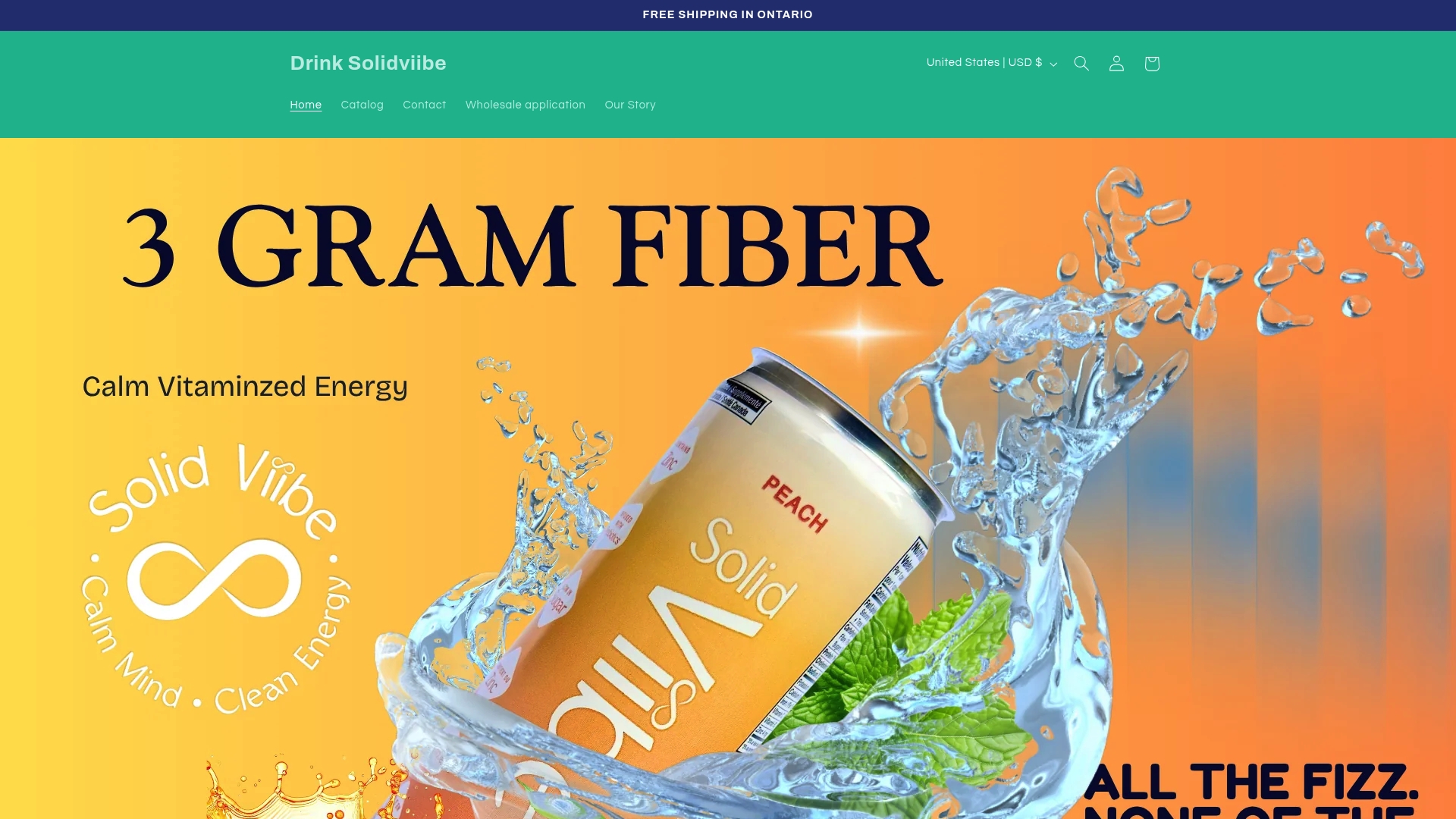
If a daily low-sugar tonic fits the goals covered here, the full range and flavour options are available at Solidviibe’s online store, where you can check current packs and place an order directly.


