
Ages 14–18 need 61–88 fl oz: evidence based healthy drinks for teens

For teens, plain water and unsweetened pasteurized milk are the best everyday drinks. Limit 100% juice to small daily amounts, and avoid sugar-sweetened beverages, drinks with non-sugar sweeteners, and caffeine or energy drinks for anyone under 18. Sports drinks belong only alongside long, sweat-heavy exercise, not the school run or a video game session.
TL;DR:
- Drinking plain water and unsweetened milk remains the best daily hydration and nutrition strategy for teens, with moderate fruit juice intake in small amounts.
- Smoothies should include fruit, protein, and fiber, avoiding added sugar, while plant-based milks should be unsweetened and fortified.
- Sugary beverages like soda, energy drinks, sweetened teas, and flavored milks offer no health benefits and should be avoided entirely for this age group.
- Occasional flavored sparkling water and herbal teas are safe alternatives but should be consumed in moderation due to acidity concerns.
- Encouraging small behavioral adjustments, like infusing water or modeling healthy choices, is more effective than lectures for increasing teen water intake.
Table of Contents
- Healthy drinks for teens: water, milk and low-sugar smoothies that work
- Drinks to limit: juice, flavoured milk and some plant milks
- Sugary drinks, sweeteners and caffeine: what to keep out of the fridge
- How much should teens drink each day?
- Recipes and swaps that actually get a teen to drink water
- When sports drinks actually make sense
- Getting a reluctant teen to actually drink more water
- Why trust this guidance
- A publisher’s take on feeding teens better drinks
- A lower-sugar sparkling option for the occasional treat
- Sources
- FAQ
Healthy drinks for teens: water, milk and low-sugar smoothies that work
Water should make up the bulk of what a teenager drinks in a day, and it doesn’t need to be complicated. Tap water in most of the United States contains fluoride, which helps protect developing teeth, so it’s often a better everyday default than bottled water stripped of minerals. If your teen turns their nose up at “boring” water, that’s a flavour problem, not a hydration problem, and it’s solvable without added sugar.
Plain pasteurized milk is the other first-choice beverage recommended by the expert panel behind the 2025 beverage guidelines, largely because it delivers calcium, vitamin D, and protein that most teen diets fall short on. A moderate daily amount of milk covers most needs for teens 9 and older; younger kids need somewhat less. Whole milk isn’t necessary once a child is past toddlerhood, and reduced-fat (1% or skim) is the more common recommendation for teens, though a pediatrician may suggest full-fat milk for a child who needs extra calories.
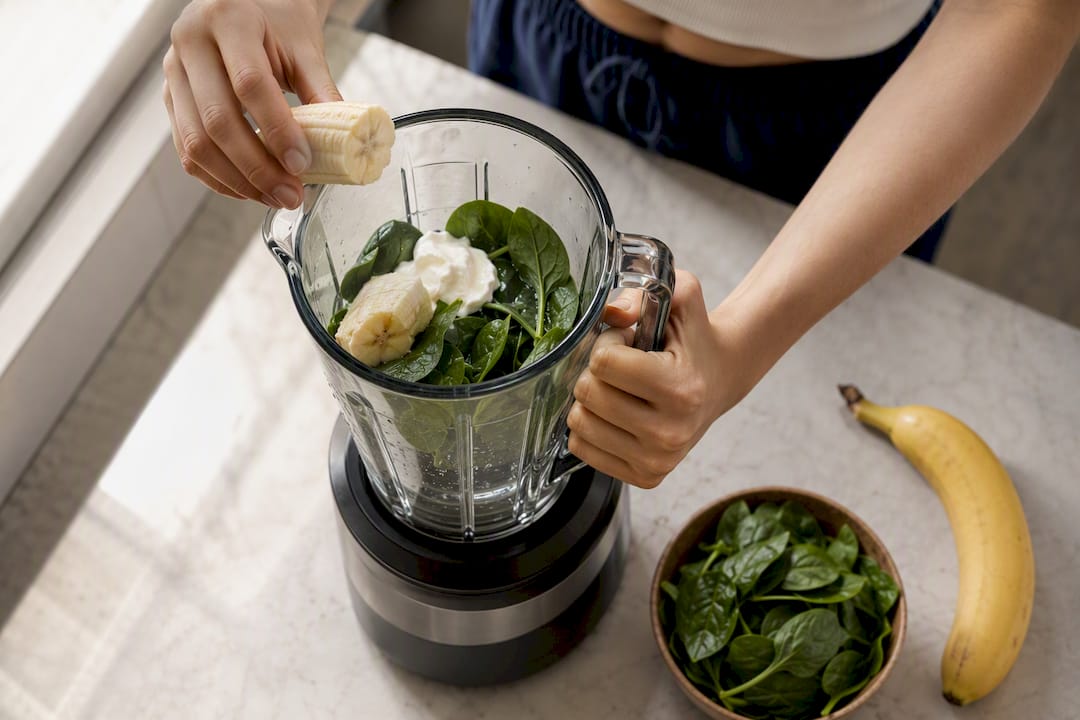
Smoothies can be a genuinely nutritious stand-in for a sugary drink, but only if you build them with intention. The winning formula is fruit plus protein plus fibre, something like half a banana, a handful of spinach, a scoop of plain Greek yogurt, and water or unsweetened milk blended together. Skip the fruit juice base and the honey drizzle. Nemours KidsHealth notes that pairing fruit with protein and fibre slows how fast sugar hits the bloodstream, which matters for mood and focus later in the day.
Some families need or choose plant-based milk, whether for a dairy allergy, lactose intolerance, or a vegan household. Unsweetened, fortified soy milk is the closest nutritional match to dairy in protein content and is a reasonable substitute when a doctor or dietitian recommends one. Almond, oat, and rice milks are lower in protein and often need extra fortification to close the nutrient gap, so read the label before assuming they’re interchangeable with dairy.
Sparkling water and unsweetened herbal teas can add variety without adding sugar. A splash of 100% juice or a few muddled berries turns plain seltzer into something that feels like a treat.
- Plain still water, first choice for daily hydration
- Unsweetened pasteurized milk, 2 to 3 cups daily for most teens
- Balanced smoothies built with fruit, protein, and fibre
- Unsweetened fortified soy milk when dairy isn’t an option
- Sparkling water or herbal tea as an occasional flavourful swap
One caution worth flagging: plain sparkling water and flavoured seltzers are more acidic than still water, and frequent sipping can wear at enamel over time. Treat carbonated drinks, even sugar-free ones, as a rotation item rather than an all-day habit, and rinse with plain water afterward if your teen drinks them often.
Drinks to limit: juice, flavoured milk and some plant milks
100% fruit juice isn’t the enemy, but it’s easy to overpour, and juice lacks the fibre that whole fruit provides, so it delivers a concentrated dose of natural sugar with none of the fullness that slows you down. The 2025 expert consensus treats juice as a limit item across every age group, not a free pour.
- Kids aged 5 to 8: limited daily amounts of 100% juice
- Kids and teens 9 and older: limited daily amounts of 100% juice
- Whole fruit is almost always the better choice when a teen wants something sweet and fruity
Flavoured milks (chocolate, strawberry) can carry a surprising amount of added sugar per serving, sometimes rivalling a can of pop. They aren’t off-limits, but they work better as an occasional pour than a daily habit, especially once a teen is already getting enough calcium from plain milk elsewhere.
Not every plant-based milk is a like-for-like swap either. Sweetened almond or oat milk can sneak added sugars into a cereal bowl or smoothie without anyone noticing. If a plant milk is genuinely needed, unsweetened and fortified is the version worth keeping in the fridge.
Sugary drinks, sweeteners and caffeine: what to keep out of the fridge
Soda, sweetened iced teas, most sports drinks consumed outside of exercise, and many “enhanced” flavoured waters belong in the avoid column entirely for this age group. So do energy drinks, full stop.
- Regular soda and fruit punches
- Sweetened coffee and tea drinks, including many bottled versions
- Energy drinks of any kind
- Drinks sweetened with non-sugar sweeteners marketed as a “healthier” fix
Advisory guidance from the American Academy of Pediatric Dentistry specifically warns against swapping sugar-sweetened drinks for ones with non-sugar sweeteners, since the evidence doesn’t show a weight or metabolic benefit in kids, and long-term effects in developing bodies remain unclear.
Caffeine is its own category of concern. Pediatric specialists at CHOP recommend avoiding caffeine altogether under 18 because of links to disrupted sleep, anxiety, and elevated blood pressure, and energy drinks often pack far more caffeine per can than a cup of coffee, alongside additives that haven’t been studied in adolescents. If your teen is curious about coffee culture, a conversation about decaf versus regular coffee is a reasonable place to start before caffeine becomes a daily habit.
How much should teens drink each day?
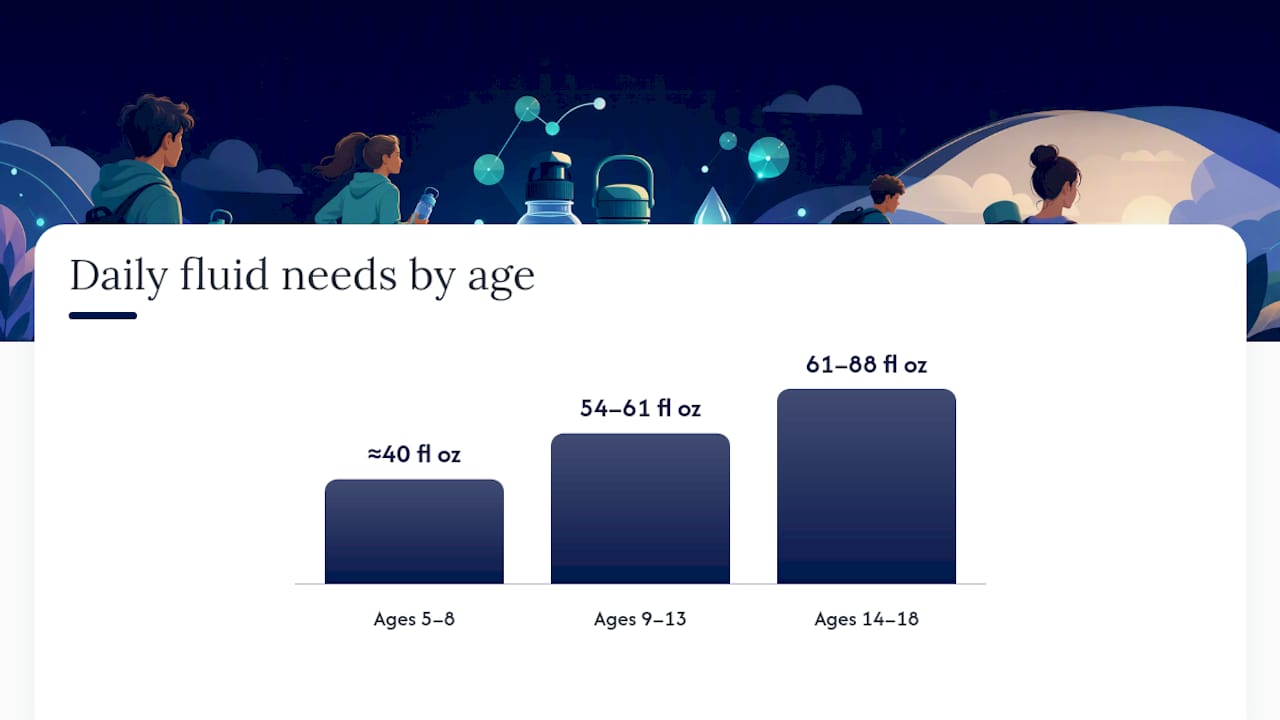
Fluid needs shift a lot by age, and the ranges below reflect that variability rather than a single magic number.
- Ages 5 to 8: roughly 40 fluid ounces a day
- Ages 9 to 13: roughly 54 to 61 fluid ounces a day
- Ages 14 to 18: roughly 61 to 88 fluid ounces a day
Those figures come from the Healthy Eating Research guideline and cover total fluid, not just water from a glass. Milk counts. Soup counts. Watermelon at lunch counts. A teen who drinks two cups of milk, a large glass of water with breakfast, water through the school day, and a small glass of juice at dinner is likely close to target without ever thinking about it as a “hydration plan.”
Activity level and climate move the needle more than age alone does. A teen playing outdoor sports in August needs meaningfully more than one grinding through a quiet study week in January, so treat these ranges as a target zone, not a strict quota.
Watch for the practical signs instead of counting ounces obsessively. Pale yellow urine, steady energy through the afternoon, and normal skin elasticity are good signs. Dark urine, headaches, dizziness, dry lips, or unusual fatigue are signs a teen needs more fluid now, and if those symptoms show up alongside vomiting, fever, or an inability to keep fluids down, that’s a call to a doctor, not a wait-and-see situation.
Recipes and swaps that actually get a teen to drink water
These work because they’re fast, cheap, and don’t taste like a compromise.
- Green smoothie: half a banana, a handful of spinach, half a cup of plain Greek yogurt, and a cup of water or milk, blended. Naturally sweet from the banana, no added sugar needed.
- Citrus berry infused water: a pitcher of water with sliced orange, a handful of crushed strawberries, and a few mint leaves, steeped for an hour in the fridge.
- Yogurt mini shake: half a cup of plain yogurt, half a cup of milk, and a quarter cup of frozen berries blended until smooth, a quick post-school protein hit.
- Unsweetened iced herbal tea: brew chamomile or hibiscus tea strong, chill it, and add a few mint leaves and a squeeze of lime.
- Homemade electrolyte water: a quart of water with a pinch of salt, a tablespoon of lemon juice, and a teaspoon of honey, useful only around genuinely long, sweaty activity, not daily use.
For school mornings, batch a pitcher of infused water the night before so nobody’s waiting around for flavour to develop. Choose plain yogurt over pre-sweetened cups when building shakes and smoothies, and measure juice with an actual measuring cup rather than eyeballing a splash, since eyeballed pours run high almost every time.
Pro Tip: Freeze chopped strawberries, mint, or citrus slices into ice cubes. They flavour a glass of water as they melt instead of watering it down, which is exactly what regular ice cubes do to a good infusion.
When sports drinks actually make sense
Casual activity, walking to school, a pickup basketball game, an hour of gym class, doesn’t call for a sports drink. Plain water covers it.
- Sports drinks make sense for vigorous, continuous activity lasting longer than an hour, especially in heat or humidity
- They work by replacing carbohydrates and electrolytes lost through heavy, sustained sweating, per guidance from Johns Hopkins Medicine
- A homemade version (water, a pinch of salt, a splash of juice) does the same job with far less sugar than most bottled options
- Pair recovery with a small snack like half a banana with peanut butter rather than a second sports drink
Getting a reluctant teen to actually drink more water
Behaviour change works better than lectures. A few small environmental tweaks do a lot of the heavy lifting: keep a pitcher of cold water visible in the fridge, hand each teen their own labelled bottle, and build a refill routine around things they already do, like leaving for school or finishing homework.
- Let your teen pick the flavour combinations for infused water instead of dictating them
- Batch-make a weekly pitcher together so it feels like a shared project, not a chore
- Swap “good drinks” and “bad drinks” language for “drinks to drink” and “drinks to limit,” which the American Academy of Pediatric Dentistry found lands better with families than nutrient-heavy lectures
- Model it yourself; a teen is far more likely to reach for water if that’s what’s in your hand at dinner too
Pro Tip: Skip the moral framing entirely. “This drink has 9 teaspoons of sugar in it” lands better with a teenager than “sugar is bad for you,” because it’s a fact they can check themselves, not a rule they’re being handed.
Why trust this guidance
This article is written by Sharon. The recommendations here track the 2025 expert consensus from Healthy Eating Research alongside guidance from pediatric and dental organizations. Solidviibe specializes in creating sparkling beverages that use natural ingredients and functional flavours, targeting health-conscious consumers.
A publisher’s take on feeding teens better drinks
Nobody swaps a fridge full of soda for water overnight, and pretending otherwise just sets families up to feel like they failed. Swap one drink a day. Let the small wins count. The guidance is consistent: water and milk first, juice in small amounts, soda and energy drinks out entirely, and everything else negotiated one glass at a time.
— Sharon
A lower-sugar sparkling option for the occasional treat
Solidviibe is built for the moments when your teen wants something fizzy and flavourful that isn’t plain water, not as a daily substitute for it. Made with natural ingredients like passionfruit and lemon-ginger, low in sugar, and free of artificial additives, it’s designed as an occasional alternative to soda when the family wants a treat that still leans healthy.
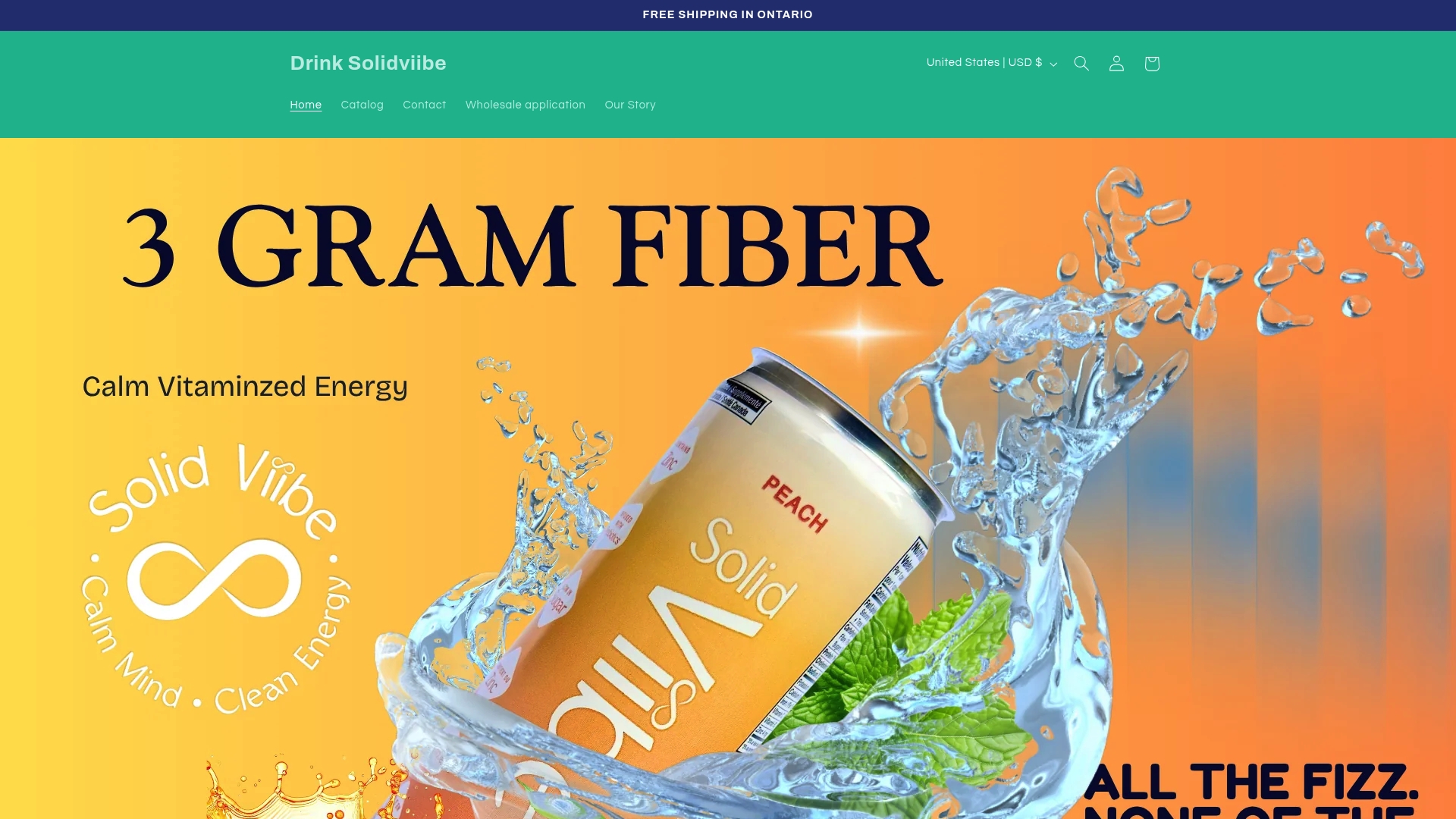
Water and milk still do the daily heavy lifting for hydration and nutrition, and nothing changes that. But when your teen wants a drink that feels special, something to sip while watching a movie or packed for a weekend outing, Solidviibe fills that gap without the sugar crash a can of pop delivers. Browse the full range of flavours and see which one fits your family’s occasional treat rotation.
This article is general information, not a substitute for advice from a qualified doctor. Consult a qualified healthcare professional about your own circumstances before acting on anything here.
Sources
- Ages 5-18 Beverage Recommendations | Healthy Eating Research
- Beverage guidelines help parents steer kids toward healthier drinks | Duke University School of Medicine
- Are energy drinks safe? | Children’s Hospital of Philadelphia (CHOP)
- Sports drinks and energy drinks (for teens) | Nemours KidsHealth
FAQ
What is the best healthy drink for a teenager?
Plain water is the top choice for everyday hydration, with unsweetened pasteurized milk as the second staple for calcium, vitamin D, and protein.
What are the top healthiest drinks for teens?
Water, plain milk, well-built smoothies with fruit and protein, small servings of 100% juice, and unsweetened herbal teas or sparkling water cover the healthiest options for most teens.
What are popular drinks for teens that are still low in sugar?
Infused waters, homemade smoothies, unsweetened iced tea, and occasional low-sugar sparkling drinks like Solidviibe are popular options that don’t carry the sugar load of soda or sweetened coffee drinks.
What can I give my 14-year-old for energy instead of an energy drink?
Skip caffeine and energy drinks entirely at this age; a balanced snack with protein, a glass of water, and consistent sleep do more for real energy than any caffeinated drink, according to pediatric guidance on caffeine risks.


