
20 Second Label Checks: What Wellness Tonic Benefits Actually Work

Wellness tonics can realistically support hydration, offer modest help with immunity and digestion, and ease stress through ingredients like ginger, probiotics, and L-theanine, but the effects depend heavily on which ingredients are used and at what dose. These are complementary supports, not medical treatments, and evidence strength varies by ingredient. Brands that publish transparent, low-sugar formulations tend to be the more trustworthy place to start.
TL;DR:
- Wellness tonics can support hydration and modestly aid immunity, digestion, and stress management, but their effectiveness heavily depends on ingredient quality and dosage.
- Ingredients like probiotics, vitamin C, ginger, and L-theanine show genuine benefits when used at effective amounts, yet many drinks fall short of lab-researched doses.
- Most healthy adults can consume tonics safely, but those on blood thinners, thyroid medication, or with chronic conditions should consult a healthcare professional before use.
- Checking ingredient order, verified dosages, and low sugar content ensures selecting a high-quality tonic with transparent labeling.
- Homemade or brand-specific tips include timing consumption around workouts or meals and storing fresh ingredients correctly for maximum benefit.
Table of Contents
- What do wellness tonics actually do for your body?
- Which ingredients in wellness tonics actually work?
- Are wellness tonics safe, and who should be cautious?
- How do you choose a quality wellness tonic?
- How do you use wellness tonics day to day?
- Where does Solidviibe stand on wellness tonics?
- Try a low-sugar tonic without the guesswork of decoding labels
- Sources
- FAQ
What do wellness tonics actually do for your body?
Swapping a sugary soda for a low-sugar tonic is the one benefit you can bank on without qualification. Cutting added sugar while staying hydrated has a direct, measurable effect on daily energy and blood sugar stability, and that alone justifies the switch for a lot of people.
Everything past that gets more nuanced. Functional beverages are non-alcoholic drinks built around bioactive add-ins like probiotics, adaptogens, and vitamins, and Mount Sinai’s own review of the category notes that whether they deliver depends entirely on formulation and dose. A systematic review of functional beverages backs that up, finding real potential for rehydration, immune support, and digestive comfort, alongside real risk when a product leans on high sugar or stimulants instead.
Here’s what “support” realistically looks like by category:
- Immunity: vitamin C and zinc support normal immune function, and pre/probiotic strains may help maintain gut flora that influences immune signalling, though a canned drink won’t prevent a cold.
- Digestion: ginger and probiotic strains can ease bloating and support regular transit, particularly when taken consistently rather than as a one-off fix.
- Stress, focus, and sleep: adaptogens and L-theanine show promise in clinical settings, but subjective reports also lean on expectation. Placebo research from Stanford shows marketing and belief genuinely shape how good a product makes you feel, separate from the ingredients themselves.
- Athletic recovery: electrolyte-forward tonics can rival standard sports drinks for casual exercisers, though serious endurance athletes with heavy sweat loss may still need a purpose-built formula.
None of this makes tonics a substitute for sleep, whole food, or actual hydration habits. It makes them a reasonable upgrade over what most people are drinking now.
Which ingredients in wellness tonics actually work?
Ingredient evidence in this category is wildly uneven, and the gap between a lab study dose and what’s in your can matters more than the label copy suggests.
- Ashwagandha: studied for cortisol and stress markers, but typical trials use 300 to 600 mg of standardized extract daily. Most drinks simply can’t fit that much in without altering taste, so beverage doses often fall well short.
- L-theanine: one of the few adaptogen-adjacent compounds that works at drink-friendly amounts. Studies showing calm-focus effects use roughly 100 to 200 mg, a level some canned tonics do hit.
- Probiotics: benefit depends on strain and colony count (CFU); look for a named strain, not just “probiotics” on the label.
- Vitamin C: well-established for immune function support at standard daily doses, and easy to dose accurately in a beverage.
- Turmeric/curcumin: anti-inflammatory potential is real in research, but curcumin absorbs poorly without fat or piperine, so a splash in a drink rarely matches study doses.
- Ginger: effective for digestive comfort even at modest culinary amounts, making it one of the more realistic wins in a tonic.
- Electrolytes (sodium, potassium, magnesium): dose-dependent and easy to verify on a label, unlike botanical extracts.
Quinine deserves its own note. It’s a genuine pharmaceutical compound with a history in malaria treatment, and PubChem’s data confirms it carries real side-effect and interaction risks even though tonic water contains it at low concentration. If you’re on blood thinners or heart medication, that trace amount is still worth flagging to a pharmacist. Adaptogens like ashwagandha can also interact with thyroid medication, so this isn’t a category where “natural” means “no interactions.”
Are wellness tonics safe, and who should be cautious?
Most healthy adults tolerate wellness tonics without issue, but a few patterns are worth watching.
- Common side effects: mild GI upset, jitteriness from caffeine-adjacent ingredients, or sleep disruption if consumed late in the day.
- Allergic signs: unusual rash, swelling, or breathing trouble after a new ingredient warrants stopping immediately and seeking care.
- Drug interactions: blood thinners, SSRIs, and thyroid medications can all interact with common tonic ingredients, and quinine specifically carries QT-prolongation concerns for people on certain heart medications.
- Vulnerable groups: pregnant or breastfeeding people, young children, and anyone managing a chronic condition should run new tonics past a clinician first.
It’s also worth knowing that these are food products, not drugs. The FDA actively enforces against beverages that make unapproved medical claims, so a can promising to “cure” anything should raise your guard, not lower it.
Pro Tip: Keep a mental note of anything new you add to your routine for two weeks. If digestion or sleep changes, you’ll actually know what caused it instead of guessing.
How do you choose a quality wellness tonic?
Reading a label properly takes about 20 seconds once you know what to look for.
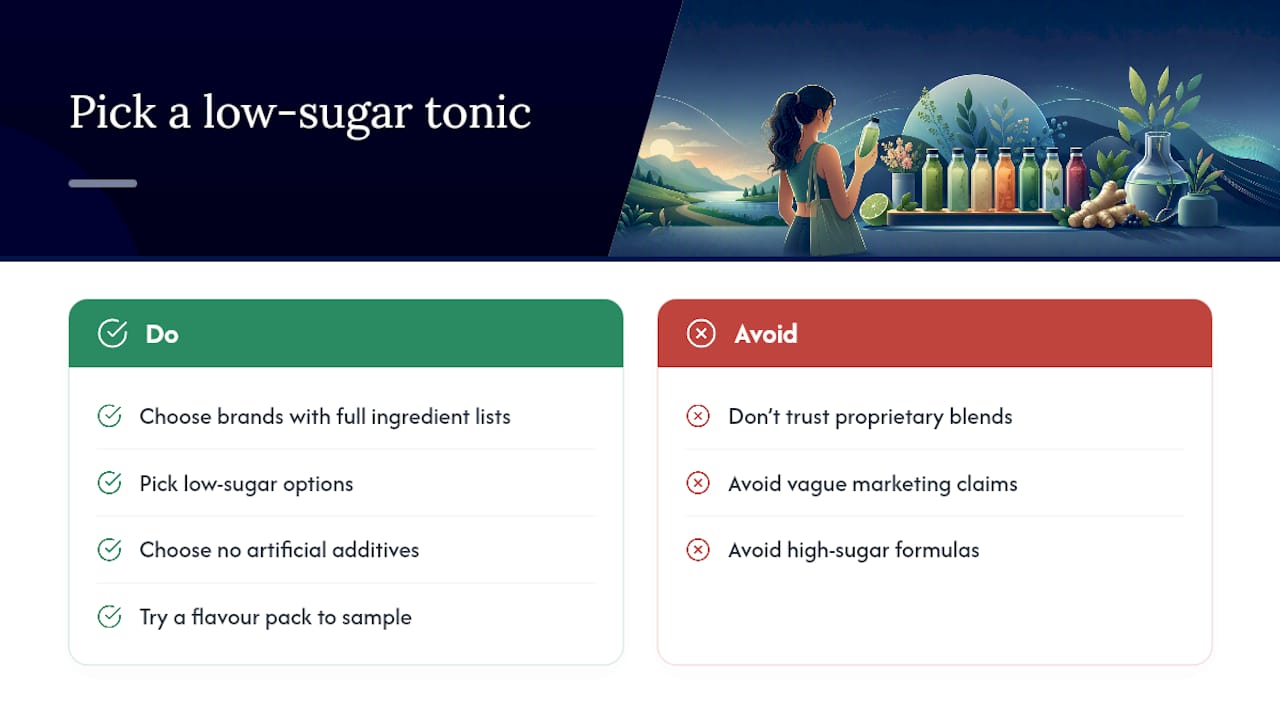
- Check the ingredient order. Ingredients are listed by weight, so if the “active” ingredient is buried near the bottom, you’re likely getting a trace amount.
- Look for actual numbers. UCLA Health’s dietitians point out that proprietary blends hide dosages; a milligram amount on the label is a good sign, a vague blend name is not.
- Scan sugar and sodium. Low-sugar formulations matter more than any single functional ingredient, especially if you’re drinking one daily.
- Verify probiotic claims. A specific strain and CFU count is credible; “contains probiotics” alone is marketing.
- Cross-check bold claims. If a product cites a clinical effect, it should be able to point to a study, and a supplement-assessment guide walks through exactly how to vet those claims.
Pro Tip: A short ingredient list you can pronounce is usually a better sign than a long one full of extracts you’d need a chemistry degree to decode.
How do you use wellness tonics day to day?
Timing and serving size matter more than most people assume, and simple recipes make consistency easier.
- Pick your format. A concentrated shot works before a workout or first thing in the morning; a diluted sip alongside food is gentler on digestion, especially with ginger or turmeric.
- Lemon-ginger tonic: juice half a lemon, grate a thumb of fresh ginger, top with sparkling water and a pinch of salt.
- Warm turmeric tonic: whisk a half teaspoon of turmeric with black pepper and warm water, then stir in honey to taste.
- Gut-soothing probiotic mix: combine a splash of kefir or a probiotic shot with sparkling water and fresh mint.
- Store smart. Homemade tonics with fresh ingredients keep 3 to 4 days refrigerated; anything with live probiotics is best consumed within 48 hours for potency.
Where does Solidviibe stand on wellness tonics?
Some brands build their sparkling tonics around natural ingredients and low sugar first, then flavour, using recognizable additions rather than proprietary blends. For deeper reading on flavour swaps or reading a fortified drink’s label, our blog covers both. None of this replaces a balanced diet or a doctor’s guidance. It’s a better can in your fridge, nothing more, nothing less.
— Sharon
Try a low-sugar tonic without the guesswork of decoding labels
Some brands skip the proprietary-blend problem entirely. Every can lists what’s in it, in flavours like lemon-ginger and passionfruit, built with low sugar and no artificial additives so you’re not stuck comparing vague claims against each other. If you’ve read this far wondering which brand actually shows its work on the label, that’s a gap some brands seek to close. For a lighter take on sparkling swaps generally, our carbonated drink alternatives guide is a good next stop, and if recovery drinks are more your focus, the functional beverages for performance guide breaks down when electrolytes matter most. Ready to taste it for yourself? Head to Solidviibe’s shop and pick a flavour pack to try.
This article is general information, not a substitute for advice from a qualified doctor. Consult a qualified healthcare professional about your own circumstances before acting on anything here.
Sources
- What Are “Wellness Beverages,” and Can They Really Improve My Health? | Mount Sinai Today
- Is a wellness drink worth it? Decoding functional beverage labels | UCLA Health
- Composition, properties and beneficial effects of functional beverages on human health (MDPI review)
- Quinine (PubChem)
- Unapproved drugs and patient harm | FDA
FAQ
Do wellness drinks actually work?
Some do, depending on the ingredient and dose. Hydration and sugar reduction are reliable benefits, while immunity, digestion, and stress support vary by formulation and are usually modest rather than dramatic.
What does a tonic do for your body?
A well-formulated tonic can support hydration, contribute vitamins or minerals, and offer ingredients like ginger or probiotics that support digestive comfort, but it works alongside diet and lifestyle, not instead of them.
Is tonic good for your liver?
There’s no established evidence that tonic water or wellness tonics specifically benefit liver function. The quinine in tonic water is processed by the liver, so people with liver conditions should check with a doctor before regular use.
Is tonic water good for your kidneys?
Tonic water isn’t known to harm healthy kidneys in typical amounts, but the quinine content means anyone with kidney disease or on interacting medications should ask a clinician before drinking it regularly.


