
Carbonated drink alternatives comparison guide for 2026

Which soda alternatives actually cut sugar without killing the flavour?
Sparkling water, prebiotic sodas, kombucha, and unsweetened iced tea are the four strongest soda alternatives available in Canada right now, each with a distinct trade-off between sugar content, functional benefits, and taste. If your goal is zero sugar, plain sparkling water wins outright. If you want the closest thing to a real soda experience with added gut benefits, prebiotic sodas like Olipop and Poppi are the most direct swap. The table below maps the key differences so you can see at a glance where each option sits.
| Alternative | Sugar (per serving) | Calories | Functional benefits | Taste profile | Acidity / dental impact | Canadian availability | Approx. cost |
|---|---|---|---|---|---|---|---|
| Plain sparkling water | 0g | 0 | Hydration | Neutral, crisp | pH 3.5–4.5, low enamel risk | Widely available | $1–$2 per can |
| Prebiotic soda (e.g., Olipop) | 2–9g | — | Prebiotic fibre, gut support | Fruity, soda-like | Moderate | Specialty/health stores | $3–$5/can |
| Kombucha | 8–14g | 30–60 | Live probiotics, organic acids | Tart, complex, vinegary | Moderate | Most grocery stores | $4–$6/bottle |
| Unsweetened iced tea | 0g | 0–5 | Antioxidants | Earthy, light | Low | Everywhere | $2–$4 per bottle |
| Club soda | 0g | 0 | Mineral trace | Slightly salty | Low | Everywhere | $1–$2 per can |
| Tonic water | 8–14 grams | 30–60 | None | Bitter-sweet | Moderate | Everywhere | $1–$2 per can |
Key pros and cons at a glance:
- Plain sparkling water: Zero calories, zero sugar, excellent hydration. Flavour is minimal, which some find boring.
- Prebiotic sodas: Closest to real soda in taste, with added fibre. Higher cost and not a whole-food fibre replacement.
- Kombucha: Rich in probiotics and organic acids. Residual sugars are higher than most alternatives, and the taste is an acquired one.
- Unsweetened iced tea: Antioxidants, near-zero calories, widely affordable. Caffeine content varies by type.
- Club soda: Essentially identical to sparkling water with trace minerals. Versatile for mixing.
- Tonic water: Looks like sparkling water but carries real sugar and calories. Not a low-sugar choice.
How do prebiotic sodas like Olipop and Poppi compare?
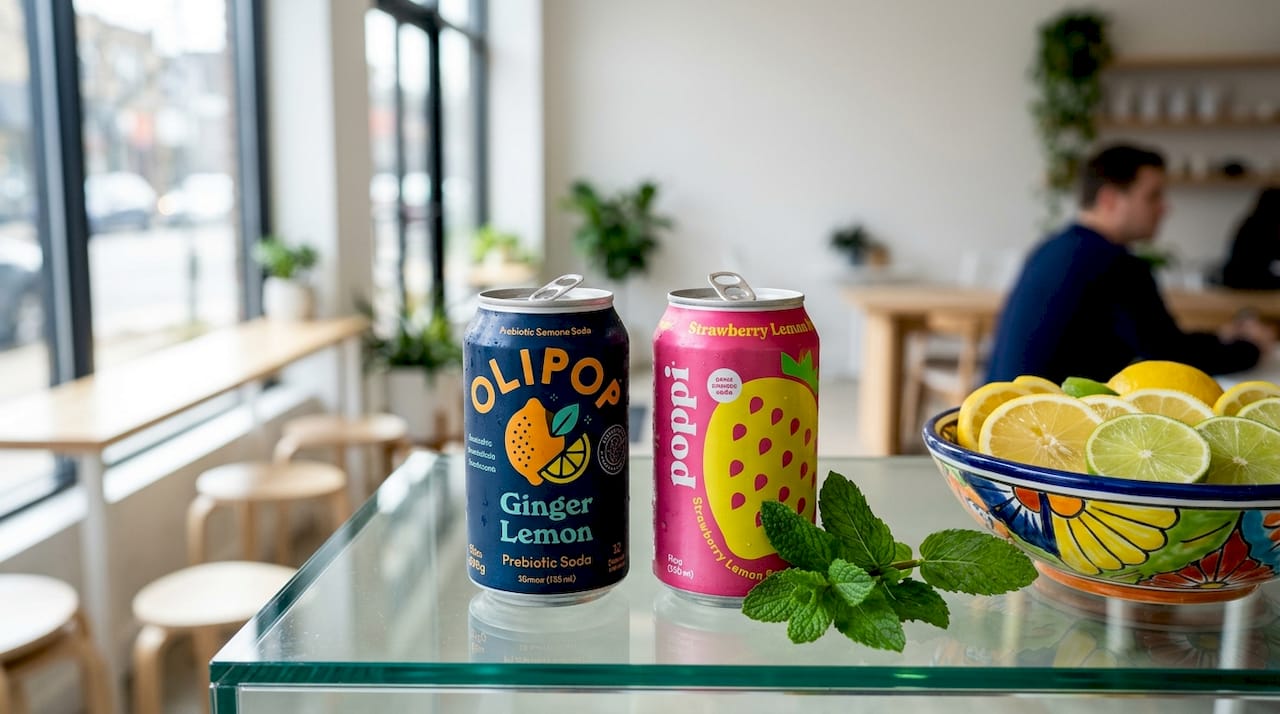
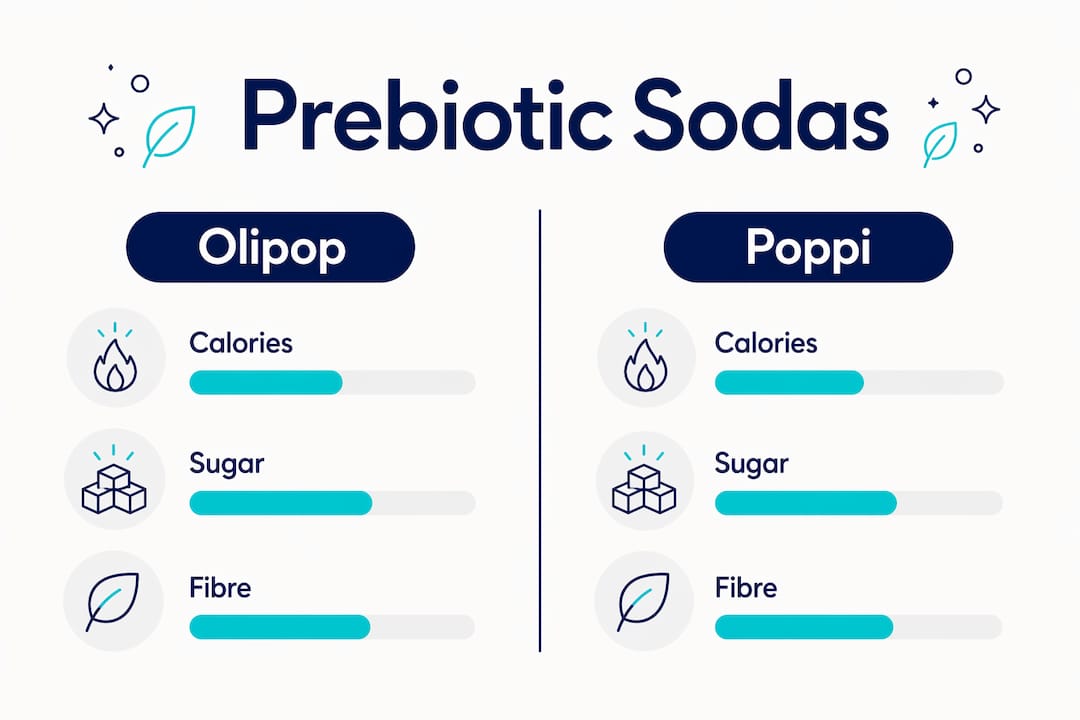
Prebiotic sodas are the category that has genuinely disrupted the soda aisle, and the reason is simple: they taste like soda while delivering fibre your gut can actually use. Olipop leads on fibre, packing approximately 9 grams of prebiotic fibre per can, which is a meaningful contribution toward the daily fibre target recommended for adults. Poppi sits at the lighter end, with roughly 25 calories and 2–5 grams of sugar per can, leaning more on apple cider vinegar as its functional ingredient.
| Product | Calories | Sugar | Fibre | Sweeteners | Flavour style |
|---|---|---|---|---|---|
| Olipop | — | 2–5g | ~9g | Stevia, cassava root | Classic soda (cola, root beer, orange) |
| Poppi | ~25 | 2–5g | 2–5 grams | Stevia | Fruity, lighter |
| Generic prebiotic soda | 30–60 | 3–9g | 2–9g | Stevia, monk fruit | Varies |
Both brands use stevia as their primary sweetener, which avoids the metabolic concerns linked to aspartame while keeping calories low. The fibre types in this category, typically inulin, chicory root, and Jerusalem artichoke, feed beneficial gut bacteria rather than being digested directly. That is genuinely useful, though the functional benefits require consistent intake across multiple cans to move the needle on microbiome diversity.
In Canada, Olipop and Poppi are stocked at Whole Foods, select Loblaws locations, and online retailers. Expect to pay $3–$5 per can, which adds up quickly if you are drinking two or three a day.
Pro Tip: Start with one prebiotic soda per day and increase slowly. High-fibre drinks can cause bloating or gas if you ramp up too fast, especially if your current diet is low in fibre.
What makes kombucha a strong probiotic soda alternative?
Kombucha earns its place in this comparison because it delivers something no other category on this list can: live probiotic cultures alongside organic acids produced during fermentation. That combination supports gut lining integrity and may help with digestion, though the research is still developing.
Key features of kombucha as a soda substitute:
- Probiotics: Live bacteria strains from fermentation, including Lactobacillus and Acetobacter species.
- Organic acids: Acetic acid and glucuronic acid, which contribute to the tart, complex flavour.
- Sugar content: Typically 8–14 grams per bottle, higher than sparkling water or prebiotic sodas.
- Calories: Generally 30–60 per bottle, depending on residual sugar levels.
- Taste: Tart, slightly vinegary, with a fizz that closely mimics the sharp bite of traditional soda.
That tartness is actually one of kombucha’s strongest selling points for soda drinkers. Drinks with acidic or spicy profiles satisfy cravings for the sharp bite of a cola or ginger ale in a way that plain sparkling water simply cannot. Brands like GT’s Kombucha and Health-Ade are widely available at Canadian grocery chains including Sobeys, Metro, and Costco, typically priced at $4–$6 per bottle.
A few cautions worth knowing: kombucha is not ideal for people with compromised immune systems due to its live cultures, and the sugar content varies considerably between brands. Always check the label. The fermentation process also produces trace amounts of alcohol, usually under 0.5%, which is worth noting if you avoid alcohol entirely.
Sparkling water and unsweetened iced tea: the lowest-calorie options
Plain sparkling water is the cleanest swap on this entire list. A 2016 hydration trial found no meaningful difference in hydration between sparkling and still water, which puts to rest the old claim that carbonation somehow dehydrates you. Zero calories, zero sugar, and no additives make it the default recommendation from most registered dietitians.

| Type | Calories | Sugar | Minerals | Acidity | Dental impact |
|---|---|---|---|---|---|
| Plain seltzer / sparkling water | 0 | 0g | None | pH 3.5–4.5 | Low |
| Club soda | 0 | 0g | Sodium, potassium | pH 3.5–4.5 | Low |
| Tonic water | 30–60 | 8–14 grams | None | Moderate | Moderate |
| Mineral water | 0 | 0g | Calcium, magnesium, potassium | pH 3.5–4.5 | Very low |
| Unsweetened iced tea | 0–5 | 0g | Trace | Low | Very low |
For context on why acidity matters: cola sits at a pH as low as 2.5 and contains phosphoric acid, which erodes enamel and has been linked to reduced bone density with heavy consumption. Sparkling water at pH 3.5–4.5 is far less aggressive. Unsweetened iced tea sits even lower on the acidity scale, making it one of the most dental-friendly options in this guide.
Club soda and plain seltzer are essentially identical in composition, with club soda carrying a slightly salty mineral taste from added sodium bicarbonate and sodium chloride. Tonic water is a different story entirely: it contains quinine and real sugar, putting it closer to a soft drink than a health-conscious choice.
Pro Tip: Add a few slices of cucumber, a sprig of mint, or a squeeze of fresh lime to plain sparkling water. You get natural flavour and trace antioxidants without any added sugar, and the result is genuinely more satisfying than plain water for most soda drinkers.
Unsweetened iced tea, particularly green or white tea, brings polyphenol antioxidants to the table alongside near-zero calories. Brew it at home with loose-leaf tea to control strength and avoid the sweeteners that most bottled versions sneak in. For more on how antioxidants function in beverages, the role of antioxidants in drinks is worth reading.
Other healthy drink alternatives worth knowing about
Beyond the four main categories, several other options deserve a spot in your rotation, particularly if you want variety or are looking at non-carbonated beverage options.
- Maple water: Naturally sourced from maple trees, maple water contains trace minerals and a subtle sweetness with roughly 15–20 calories per serving. It is a genuinely Canadian option, with brands like Wahta available at most major grocery chains. Not carbonated, but refreshing and low in sugar.
- Infused water: Plain water steeped with fruit, herbs, or vegetables. Zero calories, zero sugar, and completely customisable. Cucumber-mint and strawberry-basil are popular combinations that satisfy the flavour craving without any additives.
- Kefir: A fermented dairy drink with a thick, tangy profile and a strong probiotic punch. The Mayo Clinic notes that kefir is among the most well-studied probiotic beverages for gut health. It is not carbonated, but it addresses the gut-health angle more directly than most drinks on this list. Calories run higher at 100–150 per cup.
- Coconut water: Naturally sweet with electrolytes including potassium and magnesium. Around 45–60 calories per cup and roughly 10–12 grams of natural sugar. A solid post-exercise option, though not a low-sugar choice for everyday sipping.
- Cold brew coffee: Brewed cold over 12–24 hours, cold brew is less acidic than hot coffee and contains zero sugar on its own. It satisfies the need for a complex, slightly bitter flavour that soda drinkers sometimes crave. Widely available at Canadian coffee chains and grocery stores for $3–$5 per bottle.
On the sustainability side, home carbonation systems like SodaStream let you carbonate tap water on demand, cutting down on single-use cans and bottles considerably. The cost per glass using a home carbonation system is a fraction of what you pay for store-bought prebiotic sodas or kombucha. For those thinking about both their health and their environmental footprint, it is one of the more practical long-term switches. If you are also reconsidering your morning coffee routine, non-pod coffee options follow a similar logic of reducing packaging waste while controlling what goes into your drink.
How to choose the right alternative for your health goals
The most important factor in choosing a soda substitute is not which option is theoretically healthiest. It is which one you will actually drink consistently instead of reaching for a regular soda.
Acidity is the first thing to consider if dental health is a concern. Cola’s phosphoric acid at pH 2.5 is genuinely damaging to enamel with daily consumption. Sparkling water and unsweetened iced tea sit at a much safer range, while kombucha and prebiotic sodas land somewhere in the middle. Rinsing with plain water after an acidic drink helps neutralise residual acid on teeth.
On sweeteners: diet sodas rely on aspartame and acesulfame-K, which carry zero calories but may increase cravings and affect insulin sensitivity with regular use. Prebiotic sodas use stevia and monk fruit instead, which are plant-derived and do not appear to carry the same metabolic concerns, though they are not without debate. Nutritionists at outlets like Delish have noted that prebiotic sodas provide fibre that diet sodas simply cannot offer, but they also caution that a can of Olipop does not replace the fibre you get from vegetables, legumes, and whole grains.
There is also no scientific consensus that zero-sugar sodas outperform regular diet sodas for weight loss. Individual tolerance and preference matter more than any single ingredient comparison. If you find that stevia-sweetened drinks trigger cravings the same way aspartame does, plain sparkling water or unsweetened iced tea are cleaner exits from the sugar cycle.
Pro Tip: When switching from regular soda, try replacing one can per day with a flavoured sparkling water or kombucha for two weeks before going further. Gradual substitution reduces cravings more effectively than a cold-turkey approach, and it gives your gut time to adjust to any new fibre or probiotic intake.
For those managing specific conditions like irritable bowel syndrome, acid reflux, or diabetes, checking with a registered dietitian before adding kombucha or high-fibre prebiotic sodas to your daily routine is worth the conversation. The citric acid content in many carbonated alternatives can aggravate acid reflux in sensitive individuals.
Try Drinksolidviibe: natural sparkling beverages built for this
Drinksolidviibe sits squarely in the category this guide is built around: flavourful, functional sparkling beverages that cut sugar without cutting taste. The Solidviibe Sparkling Beverage Variety Pack gives you 12 cans across the lemon-ginger and peach passionfruit flavours, both made with natural ingredients and designed to satisfy the craving for something fizzy and interesting. No artificial sweeteners, no phosphoric acid, and no ingredient list that requires a chemistry degree to read.
If you want to start with a single flavour, the lemon-ginger option delivers the sharp, slightly spicy profile that soda drinkers tend to miss most when they switch. It is the kind of drink that actually holds up on its own, not just as a compromise.
Key takeaways
Sparkling water and unsweetened iced tea are the lowest-calorie, lowest-sugar soda alternatives, while prebiotic sodas offer the closest taste match to traditional soda with added gut-health benefits.
| Point | Details |
|---|---|
| Sparkling water is the cleanest swap | Zero calories, zero sugar, and hydrates as effectively as still water with minimal dental impact. |
| Prebiotic sodas lead on fibre | Olipop delivers approximately 9g of prebiotic fibre per can, far ahead of other functional sodas. |
| Kombucha carries more sugar | With 8–14g of sugar per bottle, kombucha is a probiotic option but not a zero-sugar one. |
| Tonic water is not a health drink | At 30–60 calories and 8–14 grams of sugar per can, tonic water is closer to soda than sparkling water. |
| Gradual switching works best | Replacing one soda per day reduces cravings more effectively than stopping all at once. |


