
Energy drinks without crash: your Canada guide

The safest way to get sustained energy without a crash is a low-sugar, moderate-caffeine beverage paired with a small amount of protein or fibre. That’s the short version. Health Canada advises healthy adults to stay at or below 400 mg of caffeine per day, and most crash complaints trace back to people blowing past that in a single serving while also loading up on simple sugars. A Wired roundup of 30 energy drinks found that moderate-caffeine, lower-sugar formulations consistently produced a milder boost with far fewer reports of a hard comedown. For Canadians looking for a ready-to-drink option that fits this profile, Drinksolidviibe’s sparkling functional tonics are a low-sugar, nutrient-enriched choice worth trying.
Two things drive most crashes:
- A rapid blood-sugar spike from high-sugar drinks, followed by an insulin-driven drop
- An adenosine rebound after a large caffeine dose clears your system
The fix is straightforward: keep caffeine moderate, keep sugar low, and eat something with protein or fibre alongside your drink.
Key takeaways
Low-sugar, moderate-caffeine drinks paired with protein or fibre are the most reliable way to get sustained energy without a crash.
| Point | Details |
|---|---|
| Keep caffeine moderate | Aim for 80–150 mg per serving and avoid single-serve doses above 200 mg to reduce adenosine rebound. |
| Sugar is the bigger crash driver | High sugar loads cause glucose spikes and insulin drops; choose drinks with under 5 g of added sugar. |
| Pair with protein or fibre | A small snack alongside your drink slows glucose absorption and extends the energy window. |
| Check for L-theanine and electrolytes | These two additions smooth the caffeine curve and counter the mild diuretic effect of caffeinated drinks. |
| Drinksolidviibe fits the criteria | Low sugar, natural ingredients, vitamins and minerals, available online across Canada in single and variety packs. |
Table of Contents
- What to look for on labels when shopping for low-crash energy drinks
- Why energy crashes happen, and what’s actually going on in your body
- Ingredients to avoid and ingredients that actually reduce crash risk
- Top natural drinks and low-crash options, ranked by how well they hold up
- How to time and pair your drinks to avoid the crash
- Who should avoid energy drinks, and what Health Canada says
- Why Drinksolidviibe stands out as a low-sugar Canadian option
- Energy drink ingredients and medication interactions you should know about
- How Canadian energy drink options compare on crash risk and ingredient profiles
- What I’ve actually found works for steady energy
- Drinksolidviibe: a low-sugar Canadian option worth trying
- Sources
What to look for on labels when shopping for low-crash energy drinks
Most crashes are preventable at the point of purchase. Read the label before you buy.
- Caffeine per serving: Look for drinks with moderate caffeine per can. Higher single serving caffeine raises crash risk significantly, especially on an empty stomach.
- Sugar and total carbohydrates: Aim for low or no added sugar. Aim for low or no added sugar per serving; zero added sugar is better.
- Caffeine source: Green tea extract, guarana, and yerba mate release caffeine more gradually than isolated anhydrous caffeine. Check the ingredient list, not just the marketing copy.
- L-theanine or adaptogens: L-theanine, ashwagandha, and similar compounds appear in better-formulated drinks specifically to blunt jitteriness and smooth the caffeine curve.
- Electrolytes and minerals: Sodium, potassium, and magnesium help maintain hydration and reduce the fatigue that mimics a crash. Their presence on a label is a good sign.
- Avoid: Very high single-serve caffeine (200 mg+), drinks with high-fructose corn syrup or multiple sugar types stacked together, and any product that mixes caffeine with alcohol.
Pro Tip: Flip the can and check the serving size first. Some cans list nutrition facts per half-can, which makes the sugar and caffeine numbers look deceptively low.
Why energy crashes happen, and what’s actually going on in your body
Crashes feel sudden, but the biology behind them starts the moment you take your first sip.
Blood sugar and insulin. A high-sugar energy drink sends glucose into your bloodstream fast. Your pancreas responds with a matching insulin surge to clear it. If the sugar load is large enough, insulin overshoots, and blood glucose drops below baseline. That drop is what you feel as fatigue, brain fog, and irritability roughly 60–90 minutes after drinking.
Caffeine and adenosine rebound. Caffeine works by blocking adenosine receptors in the brain. Adenosine is the molecule that builds up during waking hours and makes you feel sleepy. When caffeine blocks those receptors, you feel alert. When caffeine clears your system, all that accumulated adenosine floods back in at once. A large dose clears faster and produces a sharper rebound than a moderate one.
Hydration and electrolytes. Caffeine is a mild diuretic. If you’re already slightly dehydrated, the fluid and electrolyte loss from a caffeinated drink can amplify fatigue even when your blood sugar is stable. This is why drinks with added electrolytes tend to feel smoother over a longer window.

Practically speaking: the label items that predict a crash are high sugar content, a very large caffeine dose, and the absence of any electrolytes or buffering nutrients. Those three things together are the recipe for a hard comedown.
Ingredients to avoid and ingredients that actually reduce crash risk
Not all energy drink ingredients carry the same risk. Here’s what the evidence points to.
Ingredients that increase crash risk
- High added sugar (10 g+ per serving): Drives the glucose spike-and-drop cycle described above. Liquid sugars like high-fructose corn syrup and dextrose hit the bloodstream faster than solid food sugars.
- Very large single-serve caffeine doses: CNN reported on serious adverse health events tied to extreme caffeine concoctions and trends that stack stimulants in a single serving. The risk isn’t just a crash; at very high doses it includes cardiovascular stress.
- Maltodextrin and dextrose as fillers: These are high-glycaemic carbohydrates that behave like sugar in your body even when a label doesn’t list “sugar” prominently.
- Caffeine combined with alcohol: Alcohol masks the perception of intoxication while caffeine raises heart rate. The combination has a documented safety record that is not good.
Ingredients that reduce crash risk
- Moderate caffeine from green tea, guarana, or yerba mate: Natural sources tend to deliver caffeine alongside polyphenols and other compounds that slow absorption slightly. The dose still matters, but the curve is gentler.
- L-theanine: An amino acid found naturally in green tea. Paired with caffeine, it tends to reduce jitteriness and smooth the stimulant curve without blunting alertness. Nootropic beverage formulations increasingly use L-theanine precisely for this reason.
- Electrolytes (sodium, potassium, magnesium): Counter the mild diuretic effect of caffeine and support sustained hydration.
- Protein or fibre pairings: Slowing gastric emptying is the mechanism here. When protein or fibre is present, glucose from any carbohydrates in the drink enters the bloodstream more slowly.
- Low-glycaemic carbohydrate sources: Whole-food extracts and natural fruit extracts alter glycaemic response compared to refined sugars, supporting steadier energy release.
A note on “natural” caffeine: the label matters less than the dose. Synthetic anhydrous caffeine at 80 mg behaves similarly to 80 mg from green tea extract. What changes the crash profile is the total dose per serving and what else is in the drink alongside it.
Wired’s reviewers consistently rated moderate-caffeine, low-sugar formulations as producing a milder, less crash-prone boost, which aligns with what the physiology predicts.
Top natural drinks and low-crash options, ranked by how well they hold up
These are ordered by their typical crash risk reduction and how practical they are for most Canadians.
-
Matcha green tea delivers roughly 30–70 mg of caffeine per serving alongside L-theanine naturally present in the leaf. The combination produces a calm, focused alertness that most people describe as lasting 3–4 hours without a hard stop. A matcha latte made with oat milk and a scoop of pea protein is one of the steadiest morning options available.
-
Yerba mate sits at roughly 80 mg of caffeine per 240 mL serving and contains theobromine, a mild stimulant that extends the energy curve. It’s widely available in Canadian health food stores and most major grocery chains. Drink it with food rather than on an empty stomach.
-
Coffee with L-theanine is the DIY version of what functional drink formulators do commercially. A standard 240 mL brewed coffee (roughly 95 mg caffeine) paired with 100–200 mg of L-theanine in capsule form produces noticeably less jitteriness for most people. WebMD notes that pairing caffeine with food and behavioural tactics like a short walk can further stabilise the energy effect.
-
Protein smoothies with banana, pea protein, and spinach deliver slow-release carbohydrates, fibre, and protein together. No caffeine crash is possible because there’s no caffeine, but the sustained glucose release from a balanced smoothie keeps energy steady for 2–3 hours. Practical prep tips make these faster to assemble than most people expect.
-
Coconut water with added protein covers electrolytes and provides natural sugars at a lower glycaemic load than most sports drinks. Add a scoop of collagen or whey protein to slow absorption further.
-
Low-sugar sparkling functional tonics like Drinksolidviibe’s passionfruit, lemon-ginger, and peach varieties sit in the sweet spot: carbonated and satisfying, low in sugar, and formulated with vitamins and minerals that support hydration. They’re portable, shelf-stable, and available online across Canada, which matters when you’re choosing between a gas station energy drink and something better.
Buying tip for Canadians: Matcha powder and yerba mate bags are available at Bulk Barn, Loblaws, and most Sobeys locations. Canned functional tonics ship directly to your door through Drinksolidviibe’s online store.
How to time and pair your drinks to avoid the crash
The when and the what-with matter as much as the what.
- Mid-morning is the best window: Cortisol peaks in the first 90 minutes after waking, so caffeine on top of that early spike adds little and can accelerate the subsequent drop. Waiting until 90–120 minutes after waking, then having a moderate-caffeine drink with a small snack, tends to produce a steadier effect.
- Avoid large doses after 2 PM: Caffeine has a half-life of roughly 5–6 hours in most adults. A 150 mg drink at 3 PM still has 75 mg active at 8 PM, which disrupts sleep quality and sets up the next day’s fatigue.
- Pair with protein or fibre every time: A small handful of nuts, a hard-boiled egg, or a piece of whole-grain toast alongside your drink slows gastric emptying and blunts any sugar spike from the beverage.
- Hydrate in parallel: For every caffeinated drink, have a glass of water or an electrolyte drink alongside it. Sparkling functional tonics with added minerals count toward this.
- L-theanine stacking: If you’re using a plain coffee or tea, adding 100–200 mg of L-theanine (widely available in Canadian pharmacies) reduces jitteriness and tends to smooth the tail end of the caffeine curve.
Pro Tip: If you feel a crash coming on, a 10-minute brisk walk is one of the fastest ways to stabilise blood sugar and clear adenosine. WebMD lists short exercise as one of the most reliable quick energy stabilisers, and it costs nothing.
Who should avoid energy drinks, and what Health Canada says
Some people should skip caffeinated energy drinks entirely, regardless of the sugar content.
- Pregnant and breastfeeding people: Health Canada recommends limiting caffeine to 300 mg per day during pregnancy, and many practitioners advise lower. Energy drinks add caffeine on top of coffee, tea, and other dietary sources, making it easy to exceed that threshold without realising it.
- Children and adolescents: Health Canada’s guidance is clear that energy drinks are not appropriate for children. The caffeine doses in most commercial products exceed what is safe for developing nervous systems.
- People with cardiovascular conditions: High caffeine doses raise heart rate and blood pressure. Anyone with arrhythmia, hypertension, or a history of cardiac events should consult their physician before consuming caffeinated energy drinks.
- People on stimulant-interacting medications: This includes certain antidepressants (MAOIs in particular), ADHD medications, and some antibiotics like ciprofloxacin, which slows caffeine metabolism and can cause caffeine to accumulate to uncomfortable levels.
Signs of overconsumption to watch for: heart palpitations, trembling hands, severe headache after the drink wears off, difficulty sleeping, and anxiety that persists for hours after consumption.
If you’re unsure whether caffeinated drinks are appropriate for your situation, the right move is a conversation with your pharmacist or physician before experimenting. Health Canada’s caffeine guidance for Canadians is the authoritative starting point for dose context.
Why Drinksolidviibe stands out as a low-sugar Canadian option
Drinksolidviibe’s sparkling functional tonics are built around the same principles this article has been describing: moderate caffeine, low sugar, and supporting nutrients that reduce crash risk.
Key product attributes worth knowing:
- Low sugar, no artificial additives: The formulations avoid the high-sugar blends that drive glucose spikes.
- Natural flavours: Passionfruit, lemon-ginger, and peach, made with natural ingredients rather than synthetic flavour compounds.
- Vitamin and mineral enrichment: Added vitamins and minerals support hydration and fill nutritional gaps that plain energy drinks leave open.
- Gut health and immunity support: The tonic formulation includes ingredients that support digestive and immune function, not just stimulation.
- Available in Canada: Sold direct-to-consumer online and through wholesale retail distribution, so you can order single or variety packs without hunting through import sections.
The functional beverage formulation rationale behind Drinksolidviibe’s products reflects the same moderate-caffeine-plus-electrolytes approach that the evidence consistently supports for steadier energy.
Energy drink ingredients and medication interactions you should know about
This is an area most energy drink marketing ignores, and it deserves direct attention.
Caffeine and MAOIs: Monoamine oxidase inhibitors, prescribed for depression and sometimes Parkinson’s disease, can interact with high caffeine intake to produce dangerous blood pressure spikes. The combination is not theoretical; it’s a documented pharmacological interaction.
Caffeine and stimulant ADHD medications: Combining caffeine with methylphenidate or amphetamine-based medications amplifies cardiovascular stimulation. The result can be elevated heart rate, anxiety, and in some cases arrhythmia. Many prescribing physicians advise limiting caffeine while on these medications.
Caffeine and fluoroquinolone antibiotics: Ciprofloxacin and similar antibiotics inhibit the liver enzyme (CYP1A2) that metabolises caffeine. A standard 150 mg drink can behave like a much larger dose while you’re on a course of these antibiotics.
Taurine and cardiac medications: Taurine is common in energy drinks and generally considered safe at typical doses. However, in people taking digoxin or other cardiac glycosides, high taurine intake may affect how the medication works. The evidence here is less definitive, but it warrants a conversation with a pharmacist.
B vitamins in large doses: Many energy drinks contain B vitamins well above daily recommended values. For most people this is harmless, as B vitamins are water-soluble. For people with certain kidney conditions, very high niacin (B3) intake can be problematic.
The practical takeaway: if you take any prescription medication regularly, check with your pharmacist before adding a new caffeinated or heavily supplemented drink to your routine. It takes two minutes and can prevent a genuinely unpleasant interaction.
How Canadian energy drink options compare on crash risk and ingredient profiles
Rather than naming specific competing brands, the more useful frame is how different product categories available in Canada stack up on the factors that predict crash risk.
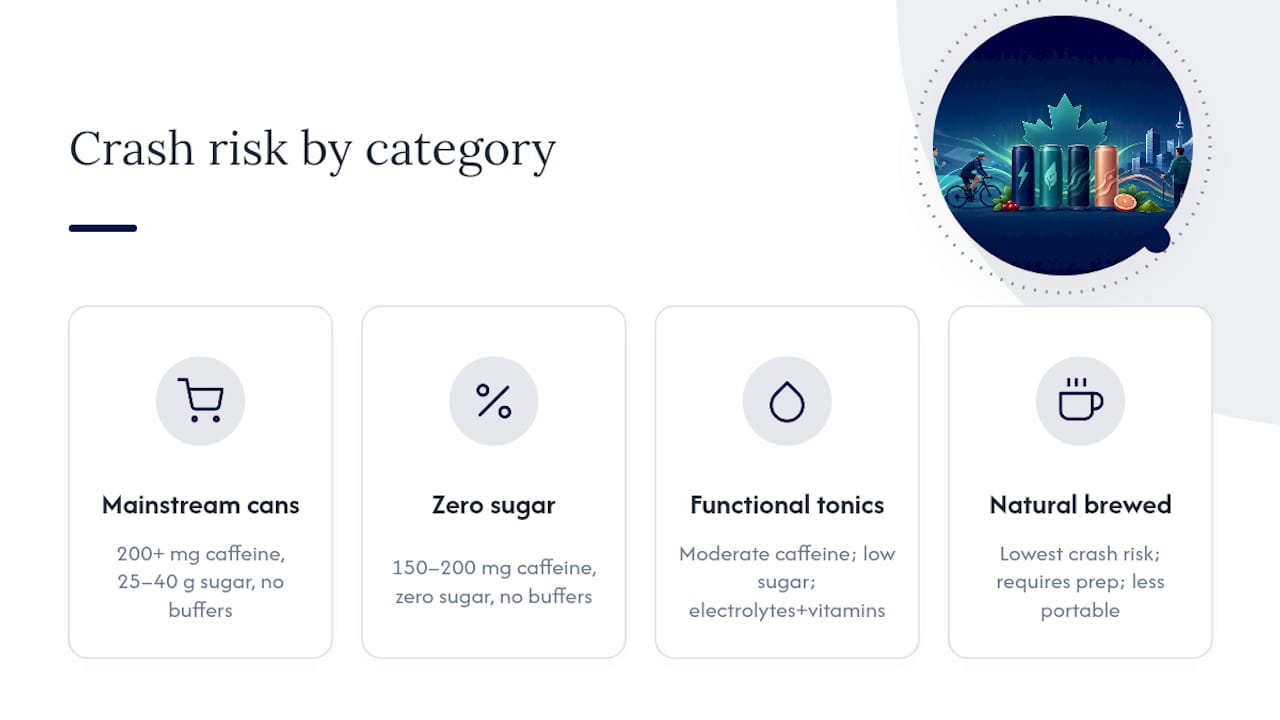
High-sugar, high-caffeine mainstream cans (200 mg+ caffeine, 25–40 g sugar): These are the products most associated with crashes. The sugar load drives a glucose spike, the large caffeine dose produces a sharp adenosine rebound when it clears, and the absence of buffering nutrients leaves nothing to smooth the curve. They’re also the cheapest and most widely available, which is why they dominate convenience store shelves.
Mid-range “zero sugar” versions of mainstream brands: Better on the sugar side, but many still carry 150–200 mg of caffeine per can and use synthetic anhydrous caffeine with no L-theanine or electrolyte support. The crash is less severe than the full-sugar version, but the adenosine rebound is still present at those caffeine levels.
Functional sparkling tonics (low sugar, moderate caffeine, added nutrients): This is the category Drinksolidviibe sits in. Lower sugar means no glucose spike. Moderate caffeine means a gentler adenosine rebound. Added electrolytes and vitamins address the hydration and nutrient gaps that amplify fatigue. Available online across Canada through Drinksolidviibe’s store in single and variety packs.
Natural brewed options (matcha, yerba mate, green tea): The lowest crash risk of any caffeinated option, but require preparation and aren’t portable in the same way. For Canadians who want something grab-and-go, a canned functional tonic is the practical equivalent.
The comparison between sparkling functional tonics and sports drinks is also worth reading if you’re deciding between electrolyte-focused options.
What I’ve actually found works for steady energy
The conventional wisdom around energy drinks focuses almost entirely on caffeine milligrams, as if the number on the label is the whole story. It isn’t. The crash risk from a 150 mg drink with 35 g of sugar is meaningfully higher than from a 150 mg drink with 2 g of sugar and added L-theanine, even though the caffeine number is identical. Most people learn this the hard way.
What the evidence in this article points to, consistently, is that the sugar load is the more reliable predictor of a hard crash than the caffeine dose alone. That’s the thing most energy drink marketing doesn’t want you to notice, because sugar is cheap and it makes drinks taste good without effort.
The practical shift is simple: prioritise low-sugar formulations with moderate caffeine, pair them with food, and pay attention to how your body responds over 2–3 hours rather than just the first 30 minutes. That feedback loop, more than any single product, is what builds a sustainable energy routine.
Drinksolidviibe: a low-sugar Canadian option worth trying
If you’ve read this far, you know what to look for: low sugar, moderate caffeine, electrolytes, and ideally some L-theanine or supporting nutrients. Drinksolidviibe’s sparkling functional tonics check those boxes in a format that’s actually convenient for Canadians.

The passionfruit, lemon-ginger, and peach varieties are made with natural ingredients, contain no artificial additives, and are formulated with vitamins and minerals that support hydration and gut health. This article is published by Drinksolidviibe, so that’s the disclosure. What it means practically is that the product is built around the same evidence-backed principles described throughout this guide. Single packs and variety packs are available for direct order at Drinksolidviibe. Check the nutrition facts on the product page and see how the label compares to what you’re currently drinking.
Sources
- 10 Ways to Boost Your Energy in 10 Minutes or Less - WebMD
- CNN
- I Ranked 30 Energy Drinks, From Celsius to Ghost (2025)


