
IBS Friendly Drinks: Low FODMAP Picks and Exact Portion Limits

Water, decaf herbal teas like peppermint and ginger, lactose-free or nut-based milks, and small servings of diluted low-FODMAP juice are the safest starting point for most people with IBS. The one thing to watch across the board: carbonation, caffeine, alcohol, and hidden sugar alcohols cause more flare-ups than any single ingredient on its own.
TL;DR:
- Small servings of low-FODMAP juice, herbal teas, and water are generally safe, but carbonated drinks and alcohol tend to cause more symptoms.
- Caffeine in regular coffee and tea can trigger IBS symptoms, so switching to decaf or limiting intake helps manage flare-ups.
- Sugar alcohols and high-fructose juices are common hidden triggers, especially in sugar-free or diet beverages, requiring careful label reading.
- Testing new drinks should involve small amounts, isolating variables, and thorough symptom logging over 48 hours for accurate tolerance assessment.
- Moderate consumption of probiotics and carefully prepared low-FODMAP mocktails or flavored waters can be tolerated, but individual responses vary.
Table of Contents
- IBS friendly drinks: categories and concrete examples
- Drinks to avoid or check carefully
- How to test your tolerance without wrecking your week
- Recipes and swaps for social drinking and daily life
- What the research actually supports (and where it stops)
- A few things I’ve picked up watching people manage this
- A lower-sugar sparkling option worth trying carefully
- Sources
IBS friendly drinks: categories and concrete examples
Once you know the categories that tend to behave, building a daily rotation gets a lot easier. Here’s what actually holds up across most people’s guts, plus where the exceptions live.
- Water and infused water. Plain hydration keeps digestion moving without adding anything for your gut to react to. Drop in lemon, cucumber, or a few mint leaves if plain water bores you.
- Herbal teas. Peppermint tea is one of the most commonly recommended options for IBS because it tends to ease cramping, and ginger tea helps with nausea and general gut settling. Chamomile is generally fine too, though it can worsen reflux in people prone to heartburn.
- Coffee and tea. Both are technically low-FODMAP, but caffeine is a well-documented IBS trigger that can speed up bowel transit and increase urgency. If you’re sensitive, limit regular coffee to a small daily amount or switch to decaf or half-caf.
- Milk and milk alternatives. Lactose-free milk, almond milk, rice milk, and macadamia milk are generally well tolerated. Oat milk and soy milk made from whole soybeans can carry more fermentable carbohydrate, so keep portions modest until you know how you react.
- Probiotic drinks. Kombucha and kefir can work in small amounts, but fermentation changes their carbohydrate content batch to batch, so tolerance really is individual. Start with a small pour rather than a full bottle.
- Smoothies. Build around low-FODMAP fruit like strawberries, blueberries, or ripe banana, spinach or kale for greens, and a scoop of lactose-free yogurt or protein powder. Keep the fruit portion controlled since IBS-friendly smoothies still add up in FODMAP load if you overload the blender.
- Electrolyte drinks. Diluted sports drinks or Monash-tested low-FODMAP electrolyte options work better than gulping a full-strength bottle, especially if diarrhea has you needing extra fluids.
Pro Tip: Start your morning with warm water or a light herbal tea instead of a cold, strong coffee. The gut’s natural morning wake-up reflex is already active, and stacking caffeine on top of it is often what triggers that urgent, rushed-to-the-bathroom feeling.
Drinks to avoid or check carefully
Some beverages are obvious problems. Others hide behind “healthy” or “sugar-free” labelling, which is exactly why label reading matters more than gut instinct here.
- High-fructose juices. Apple, pear, and mango juice are loaded with excess fructose relative to glucose, and fructans and fructose sit near the top of the common trigger list. Skip anything sweetened with high-fructose corn syrup entirely.
- Sugar alcohols. Sorbitol, mannitol, xylitol, and maltitol act as osmotic laxatives and are common in sugar-free gum, diet drinks, and some flavoured waters. The simple rule: any ingredient ending in “-ol” deserves a second look before it goes in your cart.
- Misleading “diet” drinks. Low sugar doesn’t automatically mean IBS friendly. A drink can carry zero grams of sugar and still be full of the sugar alcohols above, which is worth understanding when you’re comparing sugar-free versus no-sugar-added labelling on packaging.
- Full-fat dairy and heavy oat milk pours. Full-fat milk carries more lactose exposure per serving, and oat milk beyond a small serving can push your FODMAP load higher than people expect.
- Carbonated drinks. Bubbles stretch the gut mechanically, and that happens regardless of what’s dissolved in the liquid. A zero-sugar sparkling water can still leave you bloated simply from the gas.
- Sugary mixed drinks and fruit-flavoured beer or wine. Sugary mixers and fruit additives stack fructose and alcohol together, which is about the worst combination for a sensitive gut.
How to test your tolerance without wrecking your week
Testing a new drink isn’t complicated, but skipping steps is how people end up blaming the wrong ingredient. Change one variable at a time and give your gut a fair shot to respond.
- Start small and isolate the variable. Try one new drink at a time, in a moderate serving, and avoid introducing any other new food or drink alongside it.
- Log symptoms for 48 hours. Note the time, the drink, the amount, and any symptoms with a rough severity rating. IBS reactions don’t always show up immediately.
- Use real portion anchors. Kombucha: 100 to 175 millilitres to start. Orange juice: cap it around 75 to 120 millilitres depending on how you tolerate it. Alcohol: no more than one drink if it’s tolerated at all, and never binge even with a “safe” type.
- Pick your test window wisely. Trial new drinks when your baseline symptoms are already calm, not during a flare, and not stacked against a heavy or trigger-loaded meal.
- Know when to stop testing and get help. Worsening symptoms, unexplained weight loss, or blood in stool are signals to stop self-testing and talk to a professional, not push through.
Pro Tip: Keep your symptom log dead simple: time, drink, amount, symptom, severity out of 10. A complicated tracking system is the fastest way to abandon tracking altogether.
Recipes and swaps for social drinking and daily life
You don’t need to give up flavour to keep your gut calm. These swaps replace the usual triggers with versions your gut is more likely to tolerate.
- Citrus rosemary mocktail. Muddle a sprig of rosemary with a wedge of orange (keep it light on the juice), top with soda water or a still alternative if you’re fizz-sensitive, and serve over ice.
- Ginger-pear iced tea. Brew strong ginger tea, cool it, and add a small amount of ripe, peeled pear for sweetness rather than a heavy syrup. Serve over ice with a mint leaf.
- Low-FODMAP green smoothie. Blend spinach, a small ripe banana, lactose-free yogurt, and a splash of almond milk. Keep the fruit portion modest so the fructose load stays manageable.
- Infused water pitcher. Cucumber, lemon slices, and mint steeped overnight in the fridge makes a pitcher that lasts a couple of days and beats plain water for people who get bored easily.
For mixers, swap sugary syrups for a diluted cordial and check for sugar alcohols first, and lean on lactose-free milk anywhere a recipe calls for cream. If you’re hosting, dilute cordials ahead of time, label ingredients clearly, and always keep a non-carbonated option on the table for guests managing IBS. For more mocktail inspiration built around lower sugar, the low sugar mocktail collection has a handful of party-ready options, and halal-friendly mocktail recipes are worth a look if you’re planning a bigger gathering.
What the research actually supports (and where it stops)
The evidence base here is stronger than most diet trends get. A clinical review of diet and IBS backs the FODMAP-restriction approach and supports portion-based testing rather than blanket bans on entire food groups.
Fermentable carbohydrates provoke IBS symptoms in a dose-dependent way for many people. That is exactly why a small serving of kombucha or juice can sit fine while a full glass triggers a flare.
Alcohol behaves differently from FODMAP foods. It’s a gut irritant on its own, independent of sugar content, which is why moderation matters even with a “safe” clear spirit. Carbonation works the same way, mechanically stretching the gut regardless of what’s dissolved in the bubbles, so clinicians generally suggest trialling fizzy drinks in small amounts before committing to a full can.
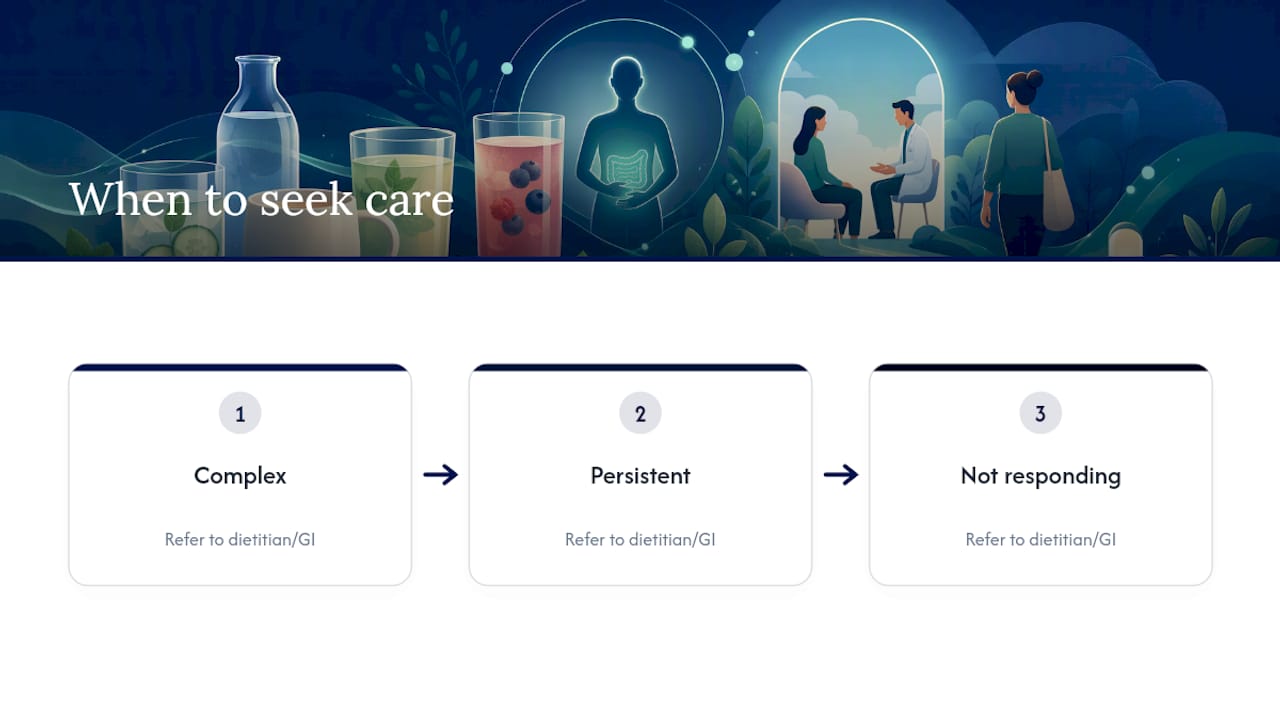
None of this replaces individual care. Gut sensitivity varies enough between people that a dietitian or gastroenterologist is worth involving for anyone whose symptoms are complex, persistent, or not responding to diet changes alone.
A few things I’ve picked up watching people manage this
Travelling with IBS gets a lot easier once you build small habits: carry a refillable water bottle, and if you know you’ll be drinking cordial or a mixed drink somewhere, pre-dilute it at home so you’re not stuck guessing at a bar’s pour.
Flavour without a sugar crash is harder to pull off than people think, which is why some beverage brands lean on natural flavours like lemon-ginger and passionfruit instead of piling on sweeteners. That approach lines up with what IBS-conscious drinking actually needs: real taste, low sugar, nothing hidden in the ingredient list.
Track what works for you specifically. Two people with the same diagnosis can react completely differently to the same glass of kombucha.
— Sharon
A lower-sugar sparkling option worth trying carefully
If sugary sodas or energy drinks are off your list but you still want something with real flavour and a bit of fizz, there are options built around that gap: natural ingredients, low sugar, and functional flavours like lemon-ginger and passionfruit instead of syrupy sweeteners or artificial additives.
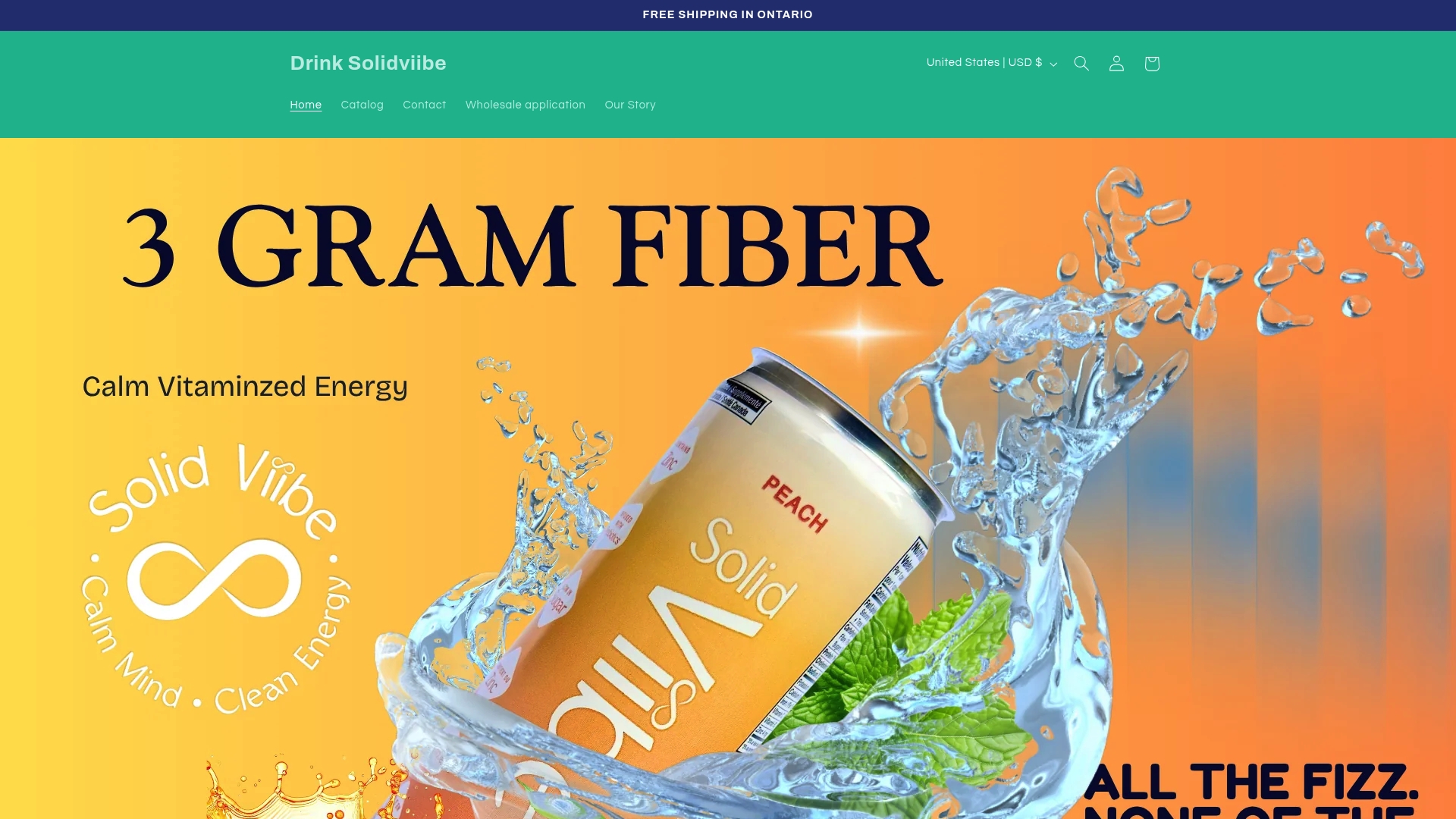
Because carbonation can be a mechanical trigger regardless of sugar content, start with a small pour and see how your gut responds before finishing a full can. If fizz is a known issue for you, try letting it go slightly flat first, or sip slowly rather than drinking it cold and fast. You can check the full lineup and order a variety pack directly through the Solidviibe landing page to find the flavour that works for your routine. For readers curious about how prebiotic-style sodas compare to what Solidviibe offers, the breakdown of what prebiotic soda actually does for gut health is a useful companion read before you commit to a pack.
Sources
For deeper clinical context beyond this guide, Everyday Health’s breakdown of IBS drink triggers covers ingredient-level guidance, the PMC review on diet and IBS covers the research behind FODMAP restriction, Cedars-Sinai’s IBS health library page explains the condition itself, and Ohio State’s Wexner Medical Centre guide to fructans explains fructose and fructan triggers in plain language.
This article is general information, not a substitute for advice from a qualified doctor. Consult a qualified healthcare professional about your own circumstances before acting on anything here.
- What to Drink and What to Avoid if You Have IBS — Everyday Health
- PMC review on diet and IBS
- Irritable bowel syndrome (IBS) — Cedars-Sinai
- Should you be avoiding fructans? — The Ohio State University Wexner Medical Centre


