
The best Instagram-worthy healthy beverages in Canada

For a ready-made, low-sugar sparkling wellness tonic that photographs beautifully and holds up under label scrutiny, Drinksolidviibe is the clearest recommendation for Canadian shoppers. Clean ingredients, photogenic can design, and flavours like lemon-ginger, passionfruit, and peach make it the fastest route to an Instagram-worthy healthy beverage without DIY effort. Grab a variety pack directly from Drinksolidviibe to sample all three flavours before committing to a subscription.
Key takeaways
Ready-made, low-sugar sparkling wellness tonics that combine clean ingredient lists with photogenic packaging are the fastest route to an Instagram-worthy healthy beverage in Canada, and Drinksolidviibe is the clearest recommendation in that category.
| Point | Details |
|---|---|
| Lead with the label | Check total sugars (under 5 g), added sugars, and ingredient order before any other claim. |
| Natural flavours need scrutiny | Ask brands for the source and extraction method; real juice or puree is preferable. |
| One to two cans daily | Moderate intake protects tooth enamel and avoids carbonation-related digestive issues. |
| Buy DTC for best value | Subscription variety packs from brand websites offer the lowest per-can cost in Canada. |
| Drinksolidviibe | Lemon-ginger, passionfruit, and peach tonics with verified clean ingredients, available direct-to-consumer across Canada. |
Table of Contents
- What makes a canned sparkling tonic Instagram-worthy?
- How to read a Canadian can label before you buy
- Health considerations worth knowing before you crack a can
- How to style a canned tonic for Instagram
- Packaging and sustainability for Canadian buyers
- Where to buy these tonics in Canada
- Quick trust checklist: questions to ask before you buy
- What do these tonics actually cost in Canada?
- Recommended brands for Instagram-worthy sparkling wellness tonics in Canada
- An honest perspective on what actually matters here
- Drinksolidviibe: the low-sugar tonic that earns its place on your feed
- Sources
What makes a canned sparkling tonic Instagram-worthy?
The term “Instagram-worthy healthy beverage” gets applied to everything from green smoothies to mocktail boards, but this article uses it in a specific, purchase-ready sense: ready-made, low-sugar, nutrient-enriched canned sparkling tonics sold direct-to-consumer. Think functional wellness drinks in a can, not a blender recipe.
Signature formulation features to expect from a quality tonic:
- Low total sugars per serving (ideally under 5 g)
- Real fruit extracts, juices, or purees as primary flavour sources
- Minimal additives and no artificial colourants
- Added vitamins, minerals, prebiotics, or probiotics with verifiable strain IDs
- Carbonation from natural sparkling water rather than forced CO₂ injection into still water
Visually, the cans that perform best on camera share a few traits: matte or soft-metallic finishes, bold but minimal label typography, and colour palettes drawn from the beverage’s actual fruit notes. A passionfruit tonic in a warm amber-and-cream can reads as premium instantly. Metallic finishes catch natural light without looking garish, which is why they dominate the soft drink flavours that trend on social feeds.
How to read a Canadian can label before you buy
Canadian Nutrition Facts panels follow a standardized format under Health Canada regulations. Here is what to scan, and what each field actually tells you:
| Label field | What to accept | What to question |
|---|---|---|
| Serving size | Matches a realistic single can | Unrealistically small serving that hides sugar |
| Total sugars | Under 5 g per serving | Over 10 g with no fibre offset |
| Added sugars | clearly disclosed | Unlisted when flavoured |
| Total carbohydrate | Consistent with sugar figure | Large gap between carbs and sugars (hidden starch) |
| Ingredients (first 3) | Water, fruit juice/puree, natural flavour | Sugar, glucose-fructose, or corn syrup in top 3 |
| Sweetener type | Stevia, erythritol (in moderation) | Sucralose, acesulfame-K, aspartame |
| Colourants | None, or fruit/vegetable juice for colour | Red, Yellow, caramel colour |
| Certifications | Organic, non-GMO, third-party tested | Vague “all-natural” with no verification body |

The phrase “natural flavours” deserves particular attention. Dietitians note that natural flavours are extracted from edible sources but their processing can involve solvents or additives, and the term can mask allergens. Discerning buyers often prefer tonics that list real juice or puree rather than relying solely on aroma-based natural flavours, because juices deliver trace phytonutrients that flavour extracts do not. For more on what those compounds contribute, the phytonutrient beverages guide from Drinksolidviibe explains it clearly.
Pro Tip: If a label lists “natural flavours” without specifying the source, email the brand and ask: “Is your natural flavour derived from the named fruit, and does it contain any allergen carriers or processing solvents?” A brand confident in its sourcing will answer within 24 hours.
Health considerations worth knowing before you crack a can
Low-sugar sparkling tonics can be a healthy, low-calorie hydration option when formulations are clean and consumption stays moderate. Carbonated water is calorie-free and safe, and the carbonation itself may support a sense of fullness. That said, a few caveats apply.
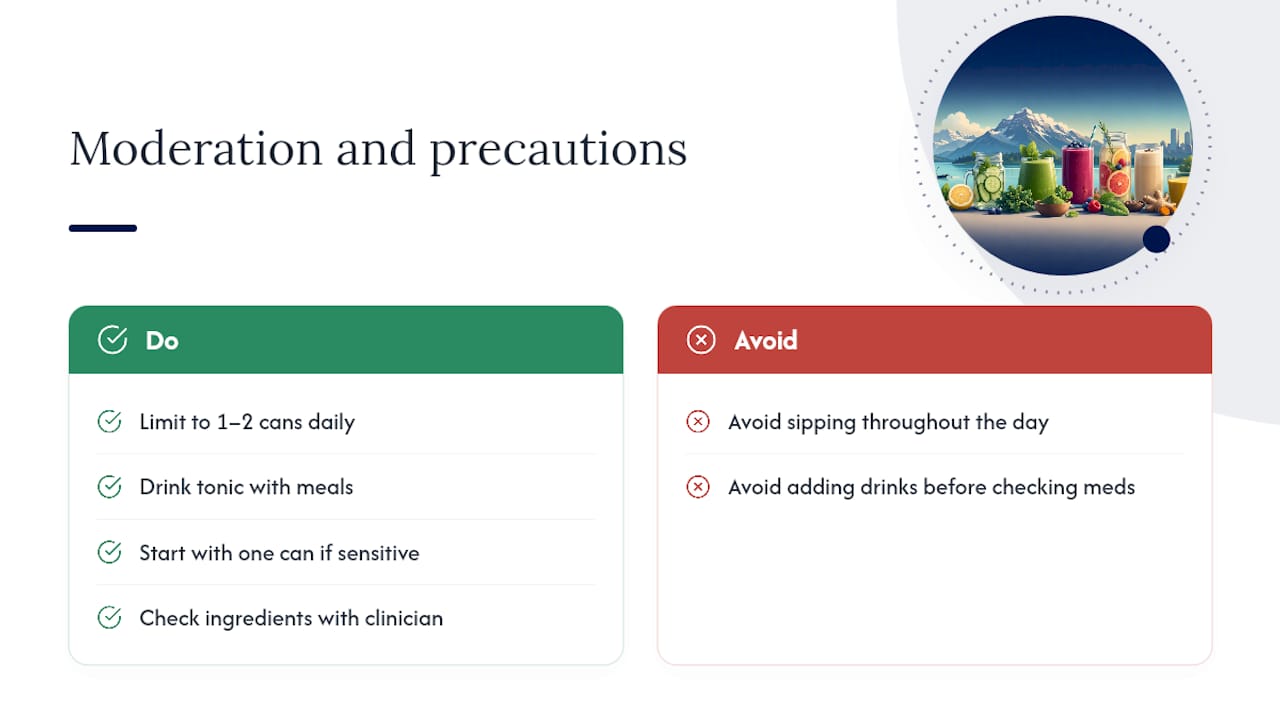
Carbonation is mildly acidic, which means frequent sipping throughout the day can soften tooth enamel over time. Drinking a tonic with a meal rather than nursing it over hours reduces acid contact time significantly. People with GERD or chronic bloating may find carbonation aggravates symptoms and should start with one can and monitor their response.
Moderate consumption, such as one to two cans per day, is generally recommended for most adults. If you use sweeteners like stevia or erythritol regularly, consider a short break from high-intensity sweeteners. After roughly a week or two, naturally sweet fruit extracts taste noticeably more complex and satisfying, which makes lower-sugar formulations easier to enjoy long-term.
Anyone managing diabetes, kidney conditions, or taking medications that interact with potassium or sodium should check the full ingredient list with their clinician before adding a new functional beverage to their routine. The sparkling water health benefits article covers the moderation science in more detail.
How to style a canned tonic for Instagram
Simple staging and natural light are the two variables that separate a polished photo from a forgettable one. You do not need a studio.
- Choose your light source first. Place the can near a window with indirect daylight. Harsh direct sun creates hot spots on metallic finishes; soft diffused light shows the can’s colour accurately.
- Pick a neutral background. A white linen napkin, a pale wood board, or a matte concrete surface keeps the can as the focal point. Busy backgrounds compete with the label.
- Add one botanical prop maximum. A sprig of fresh mint, a slice of ginger, or a halved passionfruit signals the flavour without cluttering the frame.
- Pour into a clear glass for the pour shot. Tilt the glass slightly and pour slowly to capture the carbonation rising. Shoot within 30 seconds before the bubbles settle.
- Shoot from a 45-degree angle. This angle shows both the can’s label and the glass simultaneously, giving context and depth.
Pro Tip: Shoot in portrait orientation at 1:1 crop for feed posts and 9:16 for Stories. Editing with a slight warm tone (+10 warmth, +5 saturation) makes fruit-forward colours like passionfruit and peach pop without looking filtered.
Caption prompts that work without sounding clinical:
- “Afternoon reset, no sugar crash required. 🍋”
- “Gut health in a can. Passionfruit hits different when it’s actually real fruit.”
Packaging and sustainability for Canadian buyers
Aluminium cans are among the most recyclable beverage formats available in Canada, but local rules vary by municipality. Most Canadian blue-box and depot programmes accept clean aluminium, though some provinces require deposit returns through specific retail channels.
Packaging features worth prioritising:
- Recyclable aluminium with no plastic overcap or shrink sleeve that contaminates the recycling stream
- Minimal secondary packaging (cardboard sleeves rather than plastic rings)
- Lightweight shipping materials that reduce transport emissions per order
- Brands that publish recycled content percentages for their cans or offset shipping carbon
When verifying claims, look for a recycling symbol with a resin code on any plastic components, and check whether the brand’s product page links to a third-party environmental audit. Vague “eco-friendly” language with no certification body behind it is a red flag.
Pro Tip: Search the brand’s website for “recycling” or “sustainability” before purchasing. Brands serious about packaging transparency post specific guidance, not just a green leaf icon.
Where to buy these tonics in Canada
Buy direct from brand websites for the widest selection and the best per-can pricing through subscription. Retail and convenience channels offer immediate access but typically carry fewer SKUs and no subscription option.
| Channel | Selection | Price per can | Speed |
|---|---|---|---|
| DTC / brand website | Full range, variety packs | Lowest with subscription | 3 business days shipping |
| Grocery / mass retail | Limited SKUs | Mid-range | Same day |
| Convenience / c-store | 1–2 SKUs | Highest | Immediate |
Subscription orders from DTC brands typically reduce per-can cost and let you rotate flavours automatically, so you always have photogenic stock on hand. For Canadian provinces in western or northern regions, factor in an extra 2–3 days for transit. Most functional tonic brands ship ambient (room temperature), so there is no cold-chain concern, though storing cans in the fridge for a few hours before opening improves both taste and carbonation retention.
The Canadian low-calorie RTD beverage market shows premium functional products command higher per-litre prices than commodity sparkling waters, which means DTC subscription pricing often represents genuine value relative to convenience-store single-can pricing.
Quick trust checklist: questions to ask before you buy
Trust signals to look for on a product page or can:
- Complete ingredient list visible on the can and the website
- Nutrition Facts panel with added sugars disclosed separately
- Third-party lab test results (Certificate of Analysis) available on request or published
- Probiotic strain IDs listed (e.g., Lactobacillus rhamnosus GG, not just “probiotic culture”)
- Sourcing notes for key ingredients (country of origin for fruit extracts)
- Verified customer ratings with a meaningful review count
Three questions to send to customer service before your first order:
- What is the exact source of your “natural flavours,” and are any allergen carriers used in extraction?
- Do you publish third-party testing results, and can I request a Certificate of Analysis?
- How much real fruit juice or puree is in each can, expressed as a percentage of the total volume?
A brand that answers all three clearly and quickly is one worth trusting with a subscription.
What do these tonics actually cost in Canada?
Entry-level sparkling waters with minimal functional additions generally retail at a low cost per can in grocery stores. Mid-tier functional tonics with added vitamins or probiotics are usually priced at a moderate level in retail. Premium functional wellness tonics with verified ingredient sourcing, clean labels, and photogenic packaging tend to be priced higher per can, with DTC subscription pricing often offering a discount relative to retail pricing.
Canada’s functional beverages market reached USD 14.07 billion in 2025 and continues to grow, which has brought more competition and, gradually, more competitive pricing at the premium end. Functional benefits like prebiotics and fibre are moving into mainstream formats, meaning the gap between a basic sparkling water and a genuinely functional tonic is narrowing in price while widening in formulation quality.
Variety packs from DTC brands typically offer the best cost-per-can entry point for first-time buyers, and Statista’s tracking of functional drink launches in Canada confirms that new product activity in the segment continues to accelerate, giving shoppers more choice at each price tier.
Recommended brands for Instagram-worthy sparkling wellness tonics in Canada
Drinksolidviibe is the standout option for Canadian shoppers who want a ready-made tonic that checks every box: low sugar, natural ingredients, no artificial colourants, and a can design that photographs well. Flavours include lemon-ginger, passionfruit, and peach, each formulated with real fruit extracts and enriched with vitamins and minerals. The brand sells direct-to-consumer with variety packs and ships across Canada, making it accessible whether you are in Toronto, Calgary, or a smaller market. Customer satisfaction ratings are consistently high, and the brand’s ingredient transparency is a genuine differentiator in a category where vague labelling is common.
For shoppers who want to compare the broader healthiest canned sparkling beverages available in Canada, Drinksolidviibe’s own editorial covers the category in detail. Beyond Drinksolidviibe, look for brands that publish Certificates of Analysis, list specific probiotic strains, and use real juice rather than flavour extracts alone. The functional beverages category in Canadian grocery is expanding rapidly, but label quality varies widely, so the checklist in Section 3 applies regardless of which brand you choose.
An honest perspective on what actually matters here
The functional beverage category has a marketing problem. Brands compete on aesthetics and buzzwords, and “wellness tonic” has become as diluted as “superfood.” The Instagram angle makes this worse: a beautiful can with a vague ingredient list gets shared more than a plain can with a rigorous formulation.
What I find genuinely useful about the criteria in this article is that they force a separation between visual appeal and formulation quality. A can that photographs well AND lists real fruit juice, a verifiable probiotic strain, and under 5 g of sugar per serving is rare. Most brands deliver one or the other. The ones that deliver both, like Drinksolidviibe, are worth paying a small premium for, not because the packaging is pretty, but because the label holds up when you actually read it.
The moderation point is also underplayed in most beverage content. One to two cans a day as part of a broader hydration strategy is sensible. Replacing water with functional tonics entirely misses the point of the category.
Drinksolidviibe: the low-sugar tonic that earns its place on your feed
Drinksolidviibe delivers what most functional tonic brands promise but rarely achieve: low sugar, real fruit flavours, clean ingredients, and a can that looks as good as it tastes. Lemon-ginger, passionfruit, and peach are formulated without artificial additives, enriched with vitamins and minerals, and packaged in a sleek design that photographs naturally well.
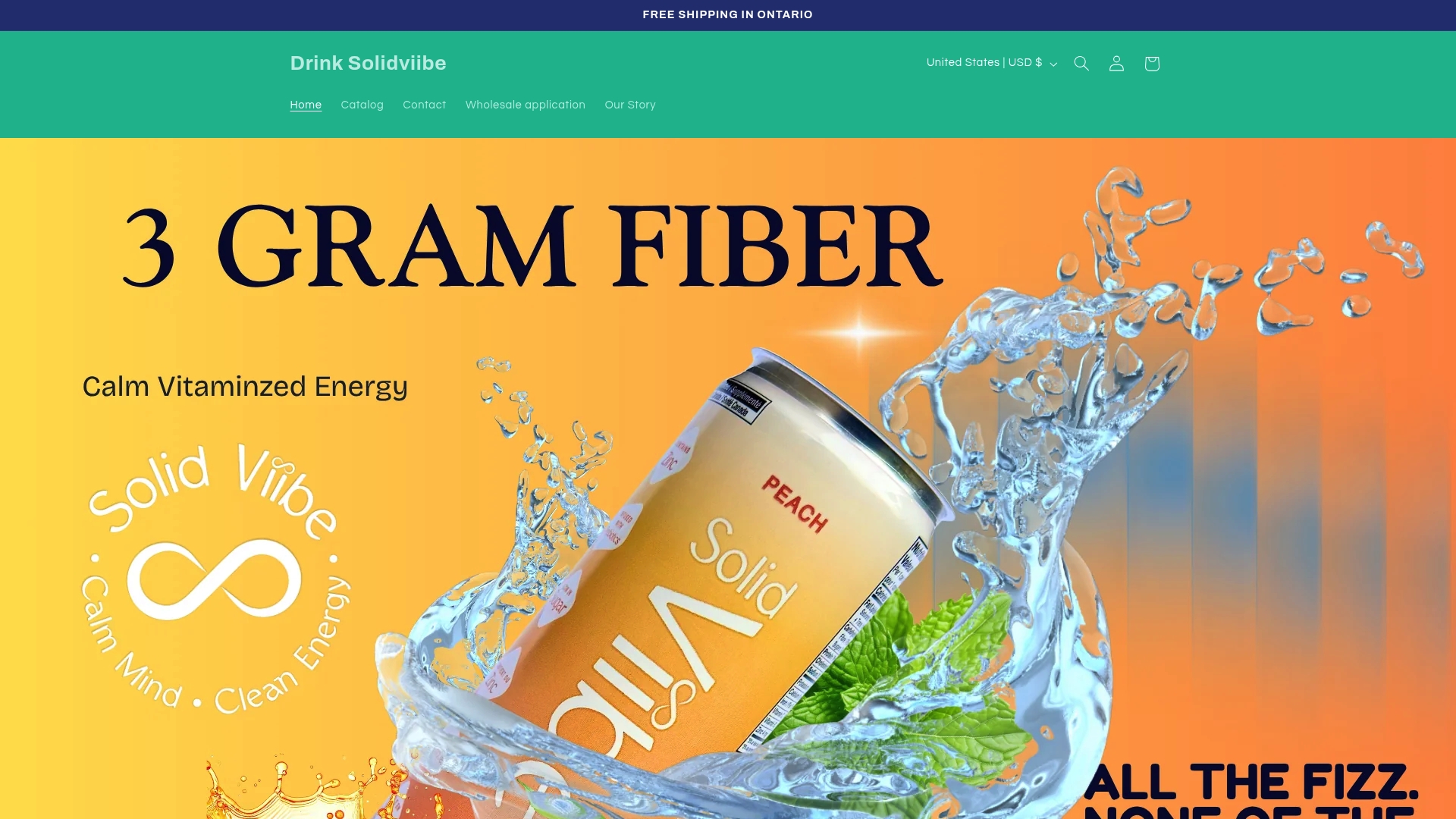
For Canadian shoppers, the variety pack is the smartest starting point. You get all three flavours, the per-can cost is lower than single-can retail, and you will know within a week which flavour becomes your go-to. Subscription options reduce cost further and keep your fridge stocked without reordering manually. Visit Drinksolidviibe to order a variety pack and try the full range today.
Sources
- Is carbonated water bad for you? Nutrition, benefits, and risks - Healthline
- What “Natural Flavors” in Your Sparkling Water Actually Are, According to Dietitians - Real Simple
- Functional drinks in Canada - Statista
- Canada Functional Beverages Market Report 2026 - Sourceready
Recommended
- Best drinkmisfits.com alternatives for Canadians in 2026 – Drink Solidviibe
- Healthiest canned sparkling beverages ranked for 2026 – Drink Solidviibe
- On-the-go nutrition beverages explained: your Canada guide – Drink Solidviibe
- Fizzy drinks without artificial colours: your Canadian guide – Drink Solidviibe


