
Natural fruit drinks for kids: a parent's 2026 guide
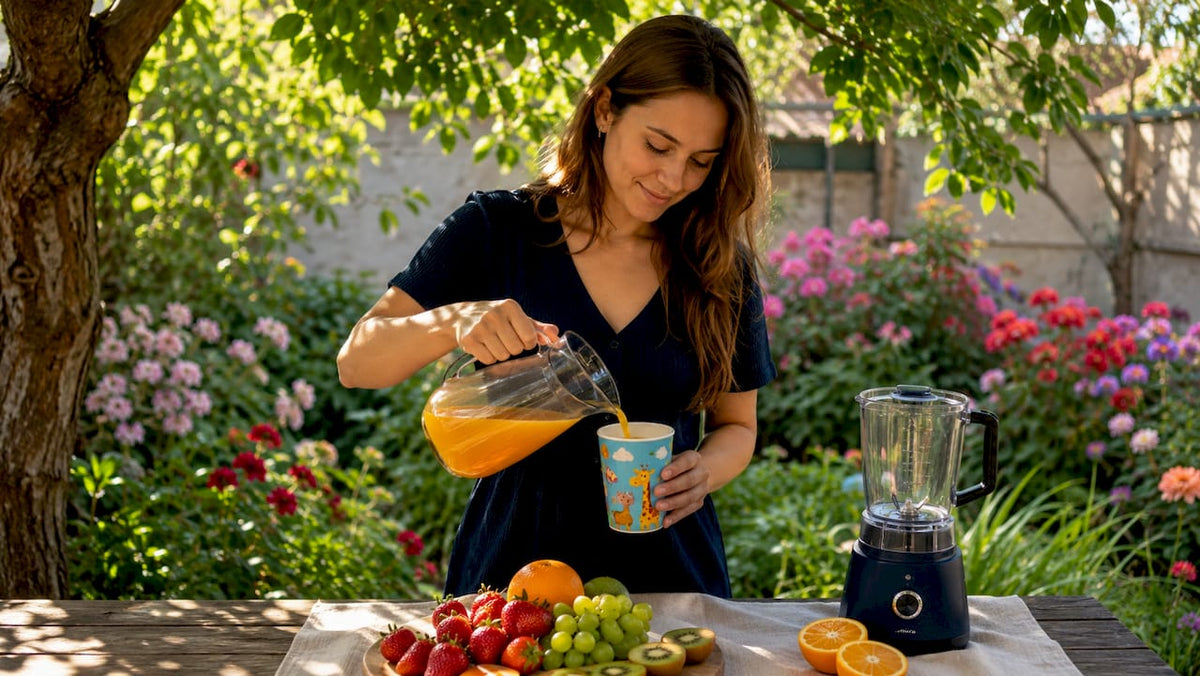
Natural fruit drinks for children are beverages made primarily from real fruit, with no added sugars, artificial colours, or synthetic flavours. Parents searching for what are natural fruit drinks kids need to know that not every product labelled “fruit drink” qualifies. The American Academy of Pediatrics and the American Heart Association both publish clear guidelines on how much fruit-based beverage a child should consume each day. Water and plain milk remain the two most important daily drinks for children, with natural fruit options playing a supporting, occasional role.
What are natural fruit drinks kids should actually be drinking?
Natural fruit drinks fall into four main categories: 100% fruit juice, whole fruit smoothies, fruit-infused water, and sparkling water with natural fruit flavour. Each one differs significantly in sugar content, fibre, and nutritional value.
Commercial “fruit drinks” often contain less than 10% actual juice, padded with added water, sugars, artificial colours, and flavours. That means a child drinking a brightly coloured “fruit punch” from a carton is getting very little fruit and a significant dose of added sugar.
100% fruit juice contains real fruit but no fibre. The sugars in juice absorb quickly into the bloodstream, which causes blood sugar spikes. Whole fruit smoothies are a better choice because they retain the fibre from the fruit, which slows sugar absorption and keeps kids fuller longer.
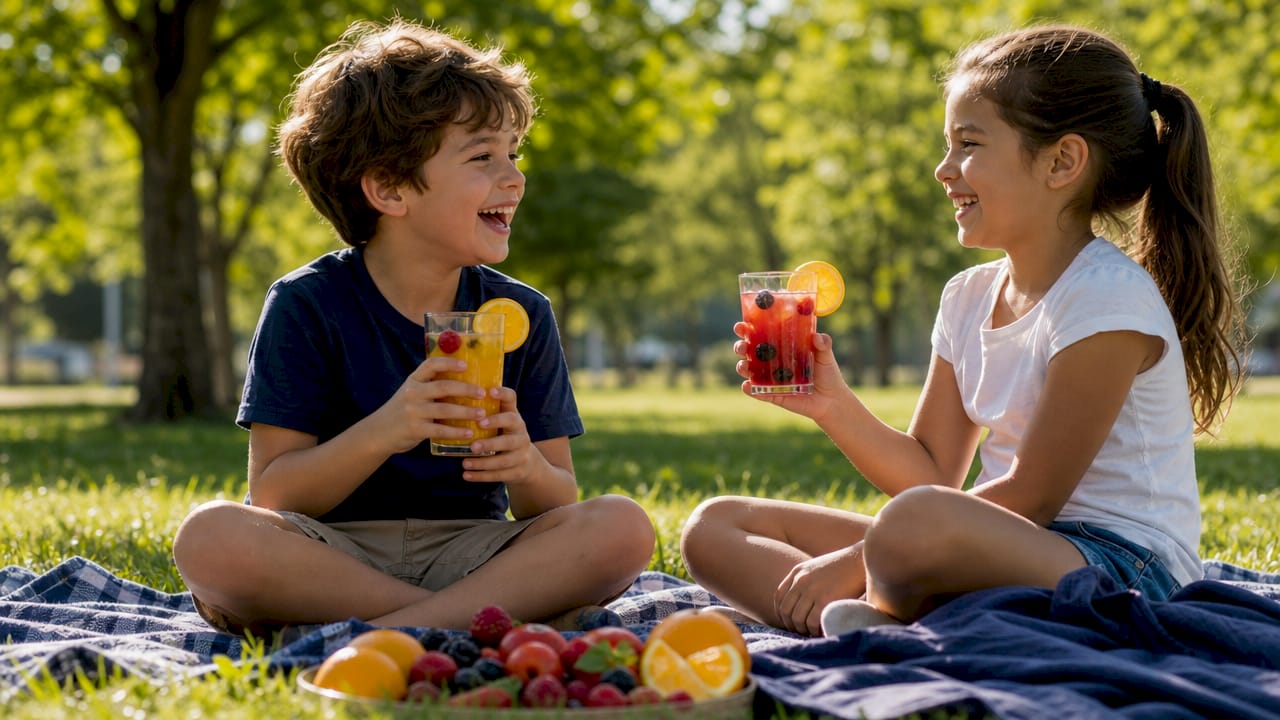
Fruit-infused water sits at the healthiest end of the spectrum. Slicing strawberries, raspberries, or citrus into a jug of still or sparkling water adds natural colour and flavour without any sugar at all. Labels to watch out for include “fruit cocktail,” “fruit beverage,” “fruit punch,” and “fruit-flavoured drink.” These terms signal that the product contains minimal real fruit.
How to spot a genuinely natural drink on a label
- Ingredient list: Real fruit or fruit juice should appear first or second.
- Added sugar: Look for zero added sugar or less than 3g per serving.
- Juice content: The label must state the percentage of juice. Anything below 100% is a diluted product.
- Artificial additives: Avoid products listing artificial colours (e.g., Red 40, Yellow 5) or artificial flavours.
- “Natural flavours” warning: Marketing terms like “natural flavours” can mask high added sugar content. Always check the nutrition facts panel, not just the front of the package.
What are the health guidelines for children’s fruit drink intake?
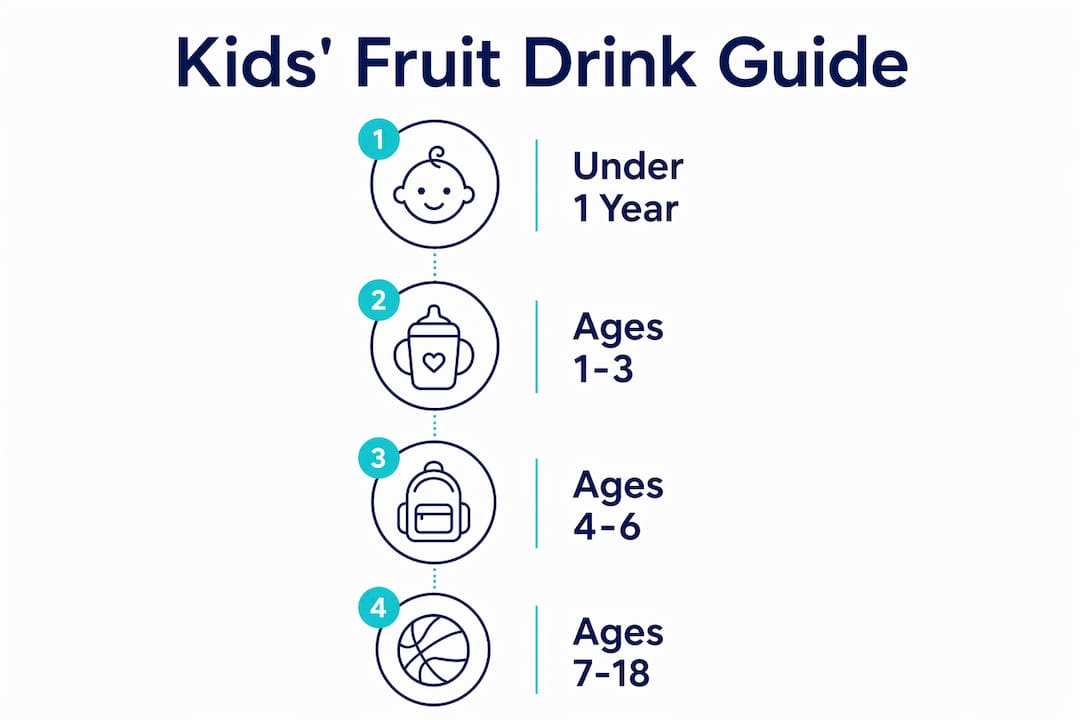
The American Academy of Pediatrics sets specific juice limits by age group. Children under 12 months should have no juice at all. Children aged 1–3 years should have no more than 4 oz of 100% fruit juice per day. Children aged 4–6 years can have 4–6 oz per day. These limits exist because even 100% juice delivers a concentrated sugar load without the fibre that whole fruit provides.
The American Heart Association advises children aged 2–18 to keep added sugar below 25 grams per day. Many commercial fruit drinks exceed that limit in a single serving. A standard 250 mL juice box can contain 20–25g of sugar, leaving almost no room for any other sugar across the rest of the day.
High sugar intake from fruit drinks is linked to tooth decay, weight gain, and disrupted appetite regulation in children. These are not minor concerns. They compound over years of daily consumption.
Water is the primary hydration tool for children. Plain milk provides calcium and protein that fruit drinks cannot replicate. The goal is not to find a healthy fruit drink to replace water. The goal is to use natural fruit drinks as an occasional, enjoyable addition to a water-first routine.
Key risks of excess fruit drink consumption in children:
- Tooth enamel erosion from natural fruit acids and added sugars
- Reduced appetite for nutrient-dense foods at mealtimes
- Habituation to sweet flavours, making plain water less appealing over time
- Blood sugar instability from rapid sugar absorption in juice
How can parents choose and make natural fruit drinks at home?
Reading labels is the single most effective skill a parent can build when shopping for children’s beverages. The front of a package is marketing. The nutrition facts panel and ingredient list are facts.
When shopping, look for products with 100% juice clearly stated, no added sugar in the ingredient list, and a short ingredient list with recognisable names. Products listing “juice from concentrate” are still 100% juice, but the concentration process can reduce some heat-sensitive nutrients. Fresh-pressed or cold-pressed juice retains more nutrients but spoils faster and costs more.
Homemade smoothies are the most nutritious fruit drink option parents can make. Blending a banana, a handful of frozen berries, and a cup of plain yoghurt takes under three minutes and delivers fibre, protein, and vitamins in one cup. Adding a handful of spinach or kale increases nutrient density without significantly changing the flavour, especially when berries are involved.
Pro Tip: Let children choose one fruit to add to each smoothie. Ownership of the choice increases the likelihood they will drink it without complaint.
Infusing water with fruit is the easiest way to make hydration appealing without adding sugar. Combine sliced cucumber and mint, or strawberry and lemon, in a pitcher of cold water and refrigerate overnight. The flavour is subtle but real, and children respond well to the visual appeal of colourful fruit floating in their cup.
Sparkling water without added sugar is another practical option. Offering fizzy water gives children the sensation of a special drink without the sugar load of sodas or commercial fruit drinks. Adding a splash of 100% pomegranate or cherry juice to sparkling water creates a naturally coloured, lightly flavoured drink that stays well within daily juice limits.
Practical steps for parents making drinks at home:
- Freeze fruit in ice cube trays and drop them into water glasses for slow-release flavour.
- Use a blender with a single-serve cup attachment for fast, portion-controlled smoothies.
- Batch-prepare infused water on Sunday evenings for the school week.
- Offer drinks in clear cups so children can see the colour and fruit pieces inside.
What are the benefits and limitations of each natural fruit drink type?
Smoothies made from whole fruits are the strongest everyday choice among fruit drinks for children. They preserve fibre, which slows sugar absorption and stabilises blood sugar. A smoothie made from one banana, half a cup of blueberries, and plain milk delivers potassium, antioxidants, calcium, and fibre in a single serving.
100% fruit juice provides vitamins, particularly vitamin C, but lacks fibre entirely. The sugar in a glass of orange juice hits the bloodstream at nearly the same speed as a soft drink. Treating juice as an occasional drink rather than a daily staple is the right approach for most children.
Fruit-infused water has no meaningful sugar content and no calories. It is the closest thing to plain water while still offering a flavour incentive. The limitation is that it provides no significant vitamins or minerals beyond trace amounts from the fruit.
Commercial packaged fruit drinks, even those marketed as “natural,” carry the highest risk. Many contain added sugars, natural flavour concentrates, and preservatives. The word “natural” on a label has no regulated definition in Canada, which means it offers no nutritional guarantee.
Pro Tip: Rank your child’s drinks in order of frequency: water daily, milk daily, smoothies a few times per week, 100% juice occasionally, and commercial fruit drinks as a rare treat.
| Drink type | Key benefit | Key limitation |
|---|---|---|
| Whole fruit smoothie | Retains fibre, slows sugar absorption | Requires preparation; calorie-dense if oversized |
| 100% fruit juice | Vitamins, especially vitamin C | No fibre; rapid sugar absorption |
| Fruit-infused water | Zero sugar; encourages hydration | Minimal vitamins or minerals |
| Commercial fruit drinks | Convenient; widely available | Often high in added sugar; low juice content |
Key takeaways
Whole fruit smoothies are the best daily natural fruit drink for children because they retain fibre, slow sugar absorption, and deliver more nutrients than juice or commercial fruit drinks.
| Point | Details |
|---|---|
| Smoothies beat juice daily | Whole fruit smoothies retain fibre and slow sugar absorption, making them the top everyday choice. |
| Juice has strict age limits | The American Academy of Pediatrics caps juice at 4 oz/day for children aged 1–3 and 4–6 oz/day for ages 4–6. |
| Labels can mislead parents | Terms like “natural flavours” and “fruit beverage” do not guarantee low sugar or real fruit content. |
| Water stays the foundation | Natural fruit drinks supplement hydration; they do not replace water as the primary daily beverage. |
| Infused water is the safest option | Fruit-infused still or sparkling water adds flavour with zero added sugar and no nutritional trade-offs. |
What I’ve learned about raising kids who actually drink water
Parents often ask me which fruit drink is the healthiest, and I understand the impulse. We want to give children something that feels like a treat while still doing right by their health. But after years of paying close attention to children’s nutrition, I think that framing is the wrong starting point.
The real goal is not to find the healthiest sugary drink. The real goal is to make water the default, and to use natural fruit drinks as a deliberate, occasional addition. Children who grow up drinking mostly water develop a taste for it. Children who grow up drinking sweetened beverages, even “natural” ones, tend to find plain water boring by comparison.
The label-reading habit is where I see parents make the biggest difference. Spending 30 seconds checking the nutrition facts panel before buying a juice box is more effective than any single dietary rule. When parents do this consistently, children start doing it too. That is a skill that lasts a lifetime.
Homemade smoothies and infused water are not complicated. They take five minutes and cost less than a packaged drink. The barrier is habit, not skill. Starting with one homemade drink per week and building from there is a realistic approach that most families can sustain.
— Sharon
A naturally flavoured option worth keeping in the fridge
Parents who want a fizzy, flavourful drink that skips the added sugar entirely will find Drinksolidviibe worth a look. The sparkling beverage variety pack includes lemon-ginger, peach, and passionfruit flavours, all made with natural ingredients and no added sugars.
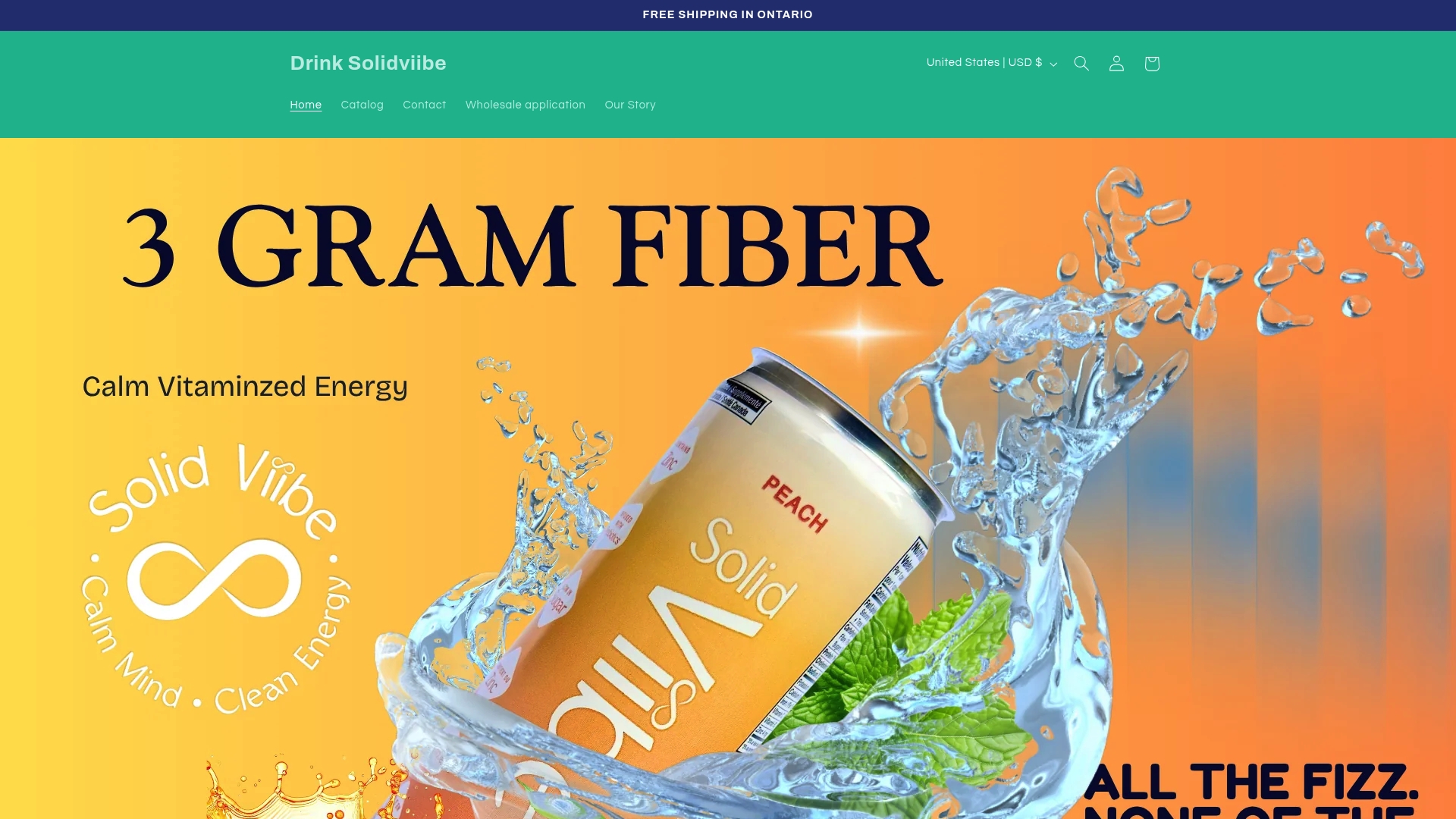
Drinksolidviibe is built around the same principle this article covers: real flavour without the sugar load. The lemon-ginger sparkling beverage and the passionfruit option give families a ready-made alternative to sodas and commercial fruit drinks, without compromising on taste or ingredient quality. For parents building a water-first household, having a naturally flavoured sparkling option on hand makes the transition easier for the whole family.
FAQ
What counts as a natural fruit drink for kids?
A natural fruit drink for children is one made from real fruit with no added sugars, artificial colours, or synthetic flavours. Whole fruit smoothies and fruit-infused water are the clearest examples.
How much fruit juice can a child have per day?
The American Academy of Pediatrics recommends no juice for children under 12 months, a maximum of 4 oz/day for ages 1–3, and 4–6 oz/day for ages 4–6.
Are smoothies healthier than fruit juice for kids?
Smoothies made from whole fruit are healthier than juice because they retain fibre, which slows sugar absorption and prevents blood sugar spikes that juice causes.
What should parents look for on a fruit drink label?
Look for 100% juice clearly stated, zero added sugar in the ingredient list, and no artificial colours or flavours. Avoid products labelled “fruit beverage,” “fruit cocktail,” or “fruit punch.”
Is sparkling water a good drink option for children?
Sparkling water without added sugar is a healthy choice for children. It provides the fizzy sensation of soda without sugar, and adding a splash of 100% fruit juice keeps it within daily limits.
Recommended
- Solidviibe Sparkling Beverage Variety Pack - 12 Cans (Lemon-Ginger, Pe – Drink Solidviibe
- Solidviibe Passionfruit — Functional Sparkling Beverage – Drink Solidviibe
- Solidviibe Peach — Functional Sparkling Beverage – Drink Solidviibe
- Solidviibe Lemon Ginger — Functional Sparkling Beverage – Drink Solidviibe


