
On-the-go nutrition beverages explained: your Canada guide

On-the-go nutrition beverages are ready-to-drink (RTD) products formulated to deliver calories, protein, electrolytes, caffeine, or micronutrients when a full meal isn’t an option. The verdict for Canadian shoppers: these drinks are genuinely useful as targeted tools — post-workout recovery, a high-protein mid-morning snack, or a short-term meal bridge on a travel day — but they are not automatic upgrades over whole food. The label is where the decision actually gets made, and most people skip it.
- RTD protein shakes, meal-replacement drinks, sports drinks, energy beverages, fortified waters, and bottled smoothies are the six main categories you’ll encounter.
- Cold-brew and specialty coffee segments are among the fastest-growing grab-and-go beverage formats, with consumers most commonly purchasing them mid-morning and mid-afternoon as functional snack alternatives.
- Health Canada’s Canada Food Guide puts water first and recommends limiting sugary beverages — a recommendation that applies to many products marketed as “nutritional.”
- The Nutrition Facts table is your single most reliable tool for cutting through marketing language.
Table of Contents
- How to read the Nutrition Facts table on any beverage
- The six main categories and what to expect from each
- How to choose the right beverage for your goal
- Your one-minute shelf checklist
- What dietitians actually say about these drinks
- Key takeaways
- Why Drinksolidviibe covers this topic
- Drinksolidviibe fits the checklist you just built
- Useful sources for further reading
How to read the Nutrition Facts table on any beverage
The first number to check is not calories. It’s serving size. A bottle that looks like a single serving can legally list nutrition per 250 mL when the bottle holds 500 mL — which means every number on the label doubles when you drink the whole thing. Canadian labels follow Health Canada’s regulations and must list a reference amount, but that reference amount doesn’t always match how people actually drink the product. Flip the bottle, find the serving size, and decide whether you’ll drink one serving or the whole container before you read anything else.
Calories and % Daily Value (%DV): The %DV on Canadian Nutrition Facts tables is based on a 2,000-calorie reference diet. A drink with 15% DV for sodium in a 355 mL can is delivering a meaningful chunk of your daily sodium in one sip. For beverages used as snacks, aim for 150–250 calories per serving; for meal replacements, 300–400 calories is a more realistic range.
Protein: For most active adults, a drink with 20 g or more of protein per serving is protein-rich. For a mid-morning snack, 10–15 g is sufficient. The protein source matters too — whey, casein, and soy are complete proteins; pea and rice blends can be complete when combined, but check the label for the source, not just the gram count.
Total sugar vs. added sugar: Canadian labels now require both. Total sugar includes naturally occurring sugars (from milk or fruit); added sugar is what the manufacturer put in. A drink with a high total sugar but no added sugar (e.g., a 100% fruit smoothie) reads very differently from one with substantial amounts of added sugar. Watch the added sugar line specifically.
Fibre and fat: Most liquid nutrition products contain little to no fibre, which is part of why liquid calories produce weaker satiety signals than solid food. If satiety is your goal, look for at least 3 g of fibre per serving, or plan to pair the drink with a small solid snack.
Ingredient list and allergens: Ingredients are listed in descending order by weight. If sugar, glucose-fructose, or a refined carbohydrate is among the first three ingredients, the product is closer to a sweet snack than a balanced nutrition beverage. Allergen disclosures are mandatory in Canada — scan for milk, soy, tree nuts, and gluten if you have sensitivities.
Label red flag to memorise: If the ingredient list opens with water, sugar, and a flavour agent — with protein or vitamins appearing sixth or seventh — the nutritional value is thinner than the marketing suggests. Flip the bottle before you buy it.
Pro Tip: Photograph the Nutrition Facts table with your phone before you buy a new product. Compare it at home against your daily targets — you’ll spot patterns across brands far faster than reading in-store.
Health Canada’s water-first guidance is clear: plain water is the drink of choice, and sugary beverages — including many marketed as nutritional — should be limited. That framing is worth keeping in mind every time a label looks impressive.
The six main categories and what to expect from each
Understanding how beverages are categorised for performance and convenience helps you match the product to the moment rather than defaulting to whatever looks healthiest on the shelf.
| Category | Typical calories/serving | Typical protein (g) | Typical total/added sugars (g) | Typical fibre (g) | Best use |
|---|---|---|---|---|---|
| RTD protein shake | 150–250 | 20–30 | 3–10 / 1–5 | 0–3 | Post-workout, high-protein snack |
| Complete/meal-replacement drink | 300–400 | 15–25 | 15–25 / 5–15 | 3 | Meal bridge, appetite loss |
| Sports drink | 150 | 0–2 | 12–30 / 12–30 | 0 | Electrolyte replenishment during/after exercise |
| Energy/caffeinated beverage | 10–200 | 0–5 | 5–25 / 5–25 | 0 | Caffeine boost, quick carbs |
| Fortified water | 0 | 0–5 | 0–10 / 0–10 | 0 | Hydration with micronutrients |
| Bottled smoothie/juice | 150–300 | 1–5 | 25 / 0 | 1–4 | Vitamins, quick carbs |
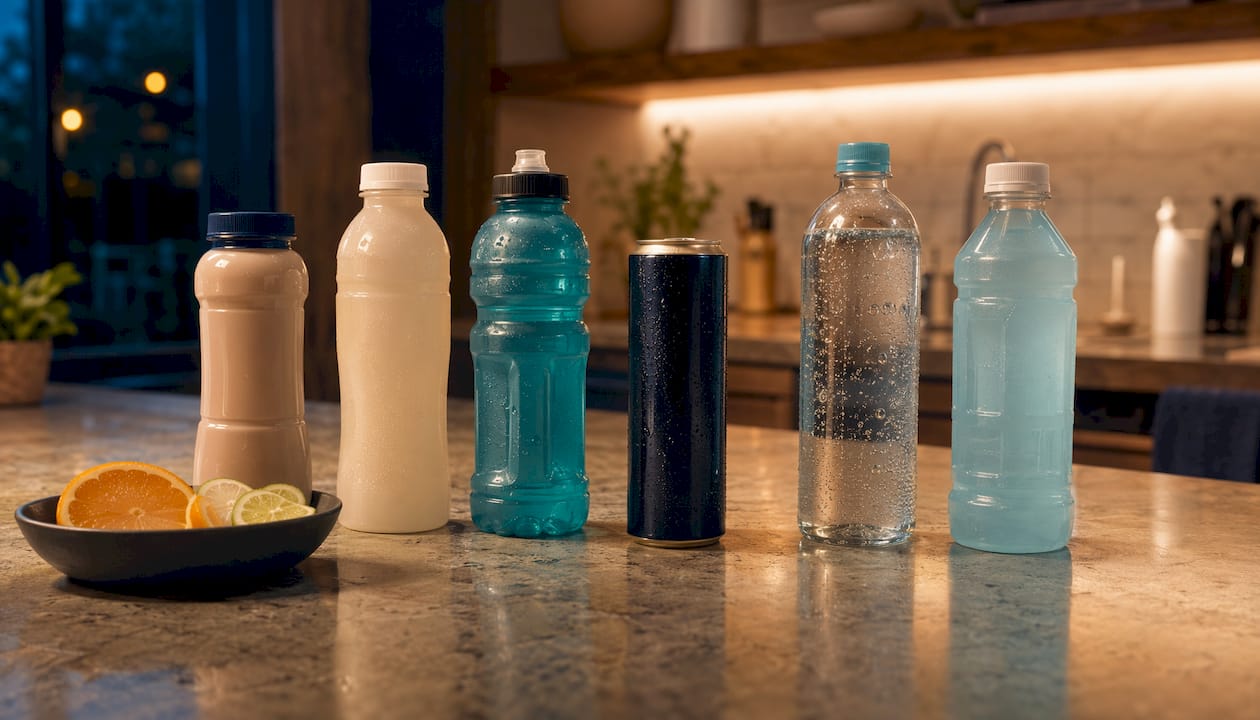
RTD protein shakes are built for muscle maintenance and recovery. The protein content is the point; everything else is secondary. Check that the protein source is named (whey isolate, pea protein) rather than listed generically.
Complete nutrition drinks aim to replicate a meal’s macro and micronutrient profile in a shelf-stable bottle. The complete nutrition trend is a direct response to convenience culture — pre-portioned, low-waste, and designed for time-pressed days. The trade-off is that added sugar often climbs to improve palatability.
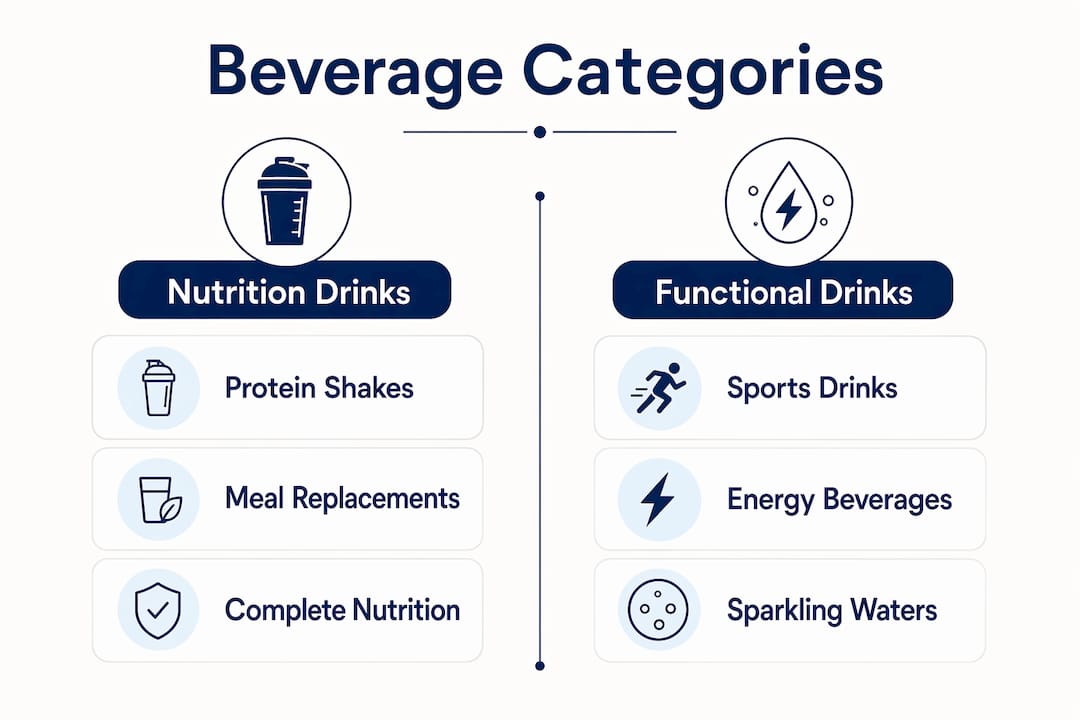
Sports drinks are electrolyte vehicles, not nutrition sources. They make sense during or after sustained physical activity lasting more than an hour. Drinking one at your desk is essentially a flavoured sugar water.
Energy and caffeinated beverages range from zero-calorie sparkling options with natural caffeine to heavily sweetened cans with synthetic additives. The RTD coffee and cold-brew formats sit in this category and tend to be lower in sugar than traditional energy drinks when unsweetened. Caffeine content varies widely — check the label or product page for milligrams per can.
Fortified waters add vitamins or minerals to plain water, usually with minimal calories. They’re the lowest-risk category for most people, though some versions carry added sugars that push them closer to a sports drink.
Bottled smoothies and juices are vitamin-dense but often the highest in total sugar of any category — even when that sugar is entirely from fruit. Fibre is usually lower than in whole fruit because blending and pressing break down fibre structure.
- Shelf-stable formats (tetrapak, sealed cans) travel well and don’t require refrigeration until opened — practical for commuters and travellers.
- Refrigerated RTD shakes typically use fewer preservatives and stabilisers, but require a cold chain; check whether the product needs refrigeration before or only after opening.
How to choose the right beverage for your goal
Start with the goal, not the product. That sounds obvious, but most shoppers do it backwards — they pick up a bottle that looks healthy and then check whether it fits. Here’s a faster framework:

Step 1 — Name your goal: Post-workout recovery? High-protein snack? Meal bridge when you can’t eat? Caffeine without a sugary soda? Each goal points to a different category.
Step 2 — Check calories against your context: A 400-calorie meal-replacement drink is appropriate when you’re skipping lunch. The same drink as a mid-morning snack adds a meal’s worth of calories to your day. Calorie density matters relative to what else you’re eating.
Step 3 — Protein and fibre: For satiety and muscle support, prioritize protein—aim for 10 g or more for a snack, 20 g or more for a meal replacement. Add fibre where you can — it slows digestion and reduces the blood-sugar spike that liquid carbohydrates can cause.
Step 4 — Sugar check: Added sugar under 5 g per serving is a reasonable target for most goals. Above 15 g added sugar, the drink is functioning more like a dessert than a nutrition tool, regardless of what the front label says.
The single most useful shopping question: “Is the serving size the whole bottle?” If yes, the label numbers are what you’re actually consuming. If no, multiply everything by the number of servings before you decide.
Red flags to walk away from:
- Added sugar listed above 15 g per serving
- Artificial sweeteners (sucralose, acesulfame-K) listed before vitamins or protein in the ingredient list
- Protein source listed only as “protein blend” with no named ingredients
- No allergen disclosure on a product containing dairy or soy derivatives
- A very small bottle (200–250 mL) with 350+ calories
Storage and shelf life in Canada: Shelf-stable products handle Canadian winters and summers well in a bag or car. Refrigerated RTD shakes should not be left unrefrigerated for more than two hours — a practical limit on a warm commute. Freezing is generally not recommended for dairy-based shakes as it alters texture and can separate the protein matrix.
Pro Tip: When comparing two products in-store, ignore the front-of-pack claims entirely and go straight to the added sugar line and the first three ingredients. Those two checks take under 30 seconds and tell you more than any front-label badge.
Understanding empty-calorie beverages helps clarify what you’re avoiding — drinks that deliver calories with little nutritional return.
Your one-minute shelf checklist
Use this before any purchase. It takes about 60 seconds and covers the decisions that matter most.
- Serving size = bottle? Confirm whether the label reflects the whole container or just part of it.
- Calories per bottle: Under 200 for a snack, 300–400 for a meal replacement.
- Protein grams: 10 g or more for a snack; 20 g or more for post-workout or meal replacement.
- Added sugars: Under 5 g is solid; 5–10 g is acceptable; above 15 g, reconsider.
- Fibre: 3 g or more is a bonus for satiety; 0 g is common and not a dealbreaker, but pair the drink with something solid.
- Artificial sweeteners: Sucralose or acesulfame-K in the first five ingredients signals a heavily sweetened product — fine for some goals, worth knowing.
- Caffeine: If the label lists caffeine, note the milligrams. Health Canada’s guidance for healthy adults is up to 400 mg per day from all sources combined.
Scenario quick picks:
- Post-workout: RTD protein shake, 20+ g protein, under 10 g added sugar.
- Mid-morning snack: Fortified water or a lower-calorie RTD shake; avoid full meal-replacement calories.
- Travel day with no meal access: Complete nutrition drink, 300–400 calories, 15+ g protein, check shelf stability.
- Appetite loss or recovery: Sip a complete nutrition drink slowly between meals rather than replacing them outright.
For a side-by-side look at how sparkling drinks compare to sports drinks, the differences in sugar and electrolyte content are sharper than most people expect.
What dietitians actually say about these drinks
The most persistent misconception in this category: a drink labelled “protein” or “complete” is automatically healthy. Registered dietitians are consistent on this point — added sugar and calorie density still determine whether a product supports your goals or quietly works against them. A protein shake with 30 g of protein and 25 g of added sugar is delivering a dessert alongside the muscle support.
Dietitian consensus: Nutrition beverages are best treated as occasional convenience tools, not daily meal staples. The label, not the marketing, tells you what you’re actually getting.
The satiety issue is real and worth understanding. Chewing and food volume both contribute to fullness signals. Liquid calories bypass those mechanisms, which is why a 400-calorie shake often leaves people hungrier an hour later than a 400-calorie meal would. Sipping slowly helps — it gives your gut more time to register intake and reduces the risk of a sharp blood-sugar spike from fast-absorbing carbohydrates.
Clinical oral nutritional supplements are a different category entirely. They’re prescribed and calibrated for malnutrition in clinical settings, and some contain as much as 4 teaspoons of sugar per cup — a necessary trade-off for palatability in patients with poor appetite, not a model for everyday consumer use. Retail products target convenience and performance and are formulated differently.
For health-sensitive groups:
- People managing blood sugar: Prioritise low added sugar and higher fibre; sip slowly rather than drinking quickly.
- Older adults: Complete nutrition drinks can support protein intake when appetite is reduced, but consult a registered dietitian (RD) for personalised guidance.
- Digestive sensitivity: Avoid products with sugar alcohols (sorbitol, maltitol) or high doses of added vitamins, which can cause GI discomfort.
Drinksolidviibe’s focus on natural ingredients and reduced sugar reflects the kind of formulation transparency that makes label-reading easier — fewer synthetic additives means fewer surprises in the ingredient list.
Pro Tip: If you’re using nutrition beverages regularly for a medical reason — weight management, recovery from illness, or managing a chronic condition — book one appointment with a registered dietitian. A single session can save months of trial and error.
This article is general information, not medical or dietary advice. Confirm current guidance with Health Canada or a qualified registered dietitian for your specific situation.
Key takeaways
The single most important habit for buying on-the-go nutrition beverages: read the added sugar line and the first three ingredients before you read anything else on the label.
| Point | Details |
|---|---|
| Label first, always | Check serving size, added sugars, and the first three ingredients before trusting any front-of-pack claim. |
| Match product to goal | RTD protein for recovery, complete drinks for meal bridges, sports drinks only for sustained activity. |
| Watch added sugar | Under 5 g added sugar per serving is a reasonable target; above 15 g, the drink functions more like a dessert. |
| Liquid calories don’t fill you up | Pair drinks with a small solid snack when satiety matters; sip slowly to reduce blood-sugar spikes. |
| Drinksolidviibe as a lower-sugar option | Drinksolidviibe’s sparkling beverages use natural ingredients and reduced sugar, making them a straightforward fit for the checklist criteria above. |
Why Drinksolidviibe covers this topic
Writing beverage guides for health-conscious Canadians means confronting the same gap repeatedly: the marketing on the front of the bottle and the reality on the back are often very different things. This explainer exists because label literacy is the skill that actually protects shoppers — not brand loyalty, not trending ingredients, not a “clean” aesthetic on the packaging.
Drinksolidviibe’s editorial position on this is straightforward. The brand was built around natural ingredients and reduced sugar because those two criteria are what most shoppers are trying to find when they flip a bottle over. That’s not a coincidence — it’s the premise.
Drinksolidviibe fits the checklist you just built

If you’ve worked through the checklist above and you’re looking for a sparkling option that holds up to it, the Solidviibe Sparkling Beverage Variety Pack is worth a look. Twelve cans across three flavours — lemon-ginger, peach, and passionfruit — formulated with natural ingredients and lower sugar than conventional sodas or energy drinks. The flavours are functional rather than synthetic, and the format is shelf-stable, which means it travels.
Drinksolidviibe was designed for exactly the scenario this article describes: you want something better than a sugary soda, you don’t want artificial sweeteners, and you want to be able to read the ingredient list without a chemistry degree. Check the variety pack and see whether it fits your daily routine.
Useful sources for further reading
These are the primary and authoritative resources behind this guide. Each covers a different slice of the topic.
- Health Canada — Make water your drink of choice: Canada’s official guidance on beverage choices, including the rationale for limiting sugary drinks. The most relevant primary source for Canadian shoppers.
- Harvard T.H. Chan School of Public Health — Healthy Beverage Guidelines: A research-backed overview of beverage categories and their health implications, useful for understanding the evidence behind category-level recommendations.
- UF/IFAS Extension — Do I need supplemental nutrition drinks?: Covers clinical oral nutritional supplements, their sugar content, and when they’re appropriate — helpful context for distinguishing clinical from retail products.
- NHS — Nutrition drinks (oral nutritional supplements): Practical patient guidance on consumption pacing, frequency, and tolerance — applicable to anyone using complete nutrition drinks regularly. (UK source; clinical guidance principles apply broadly.)
- Healthy beverage options for school vending machines: A practical overview of how on-the-go beverages are categorised and selected for institutional settings — useful context for understanding how products are evaluated outside retail.
- 1mg — How to choose the best nutritional drinks: A consumer-facing buying guide covering ingredient quality, sugar checks, and formulation considerations.
Recommended
- Phytonutrient beverages: what they are and why they matter – Drink Solidviibe
- Fizzy drinks without artificial colours: your Canadian guide – Drink Solidviibe
- Best drinkmisfits.com alternatives for Canadians in 2026 – Drink Solidviibe
- Functional beverages for performance: your 2026 guide – Drink Solidviibe


