
3 Safe Ways to Get Tonic Without Quinine for Your Home Bar

Quinine-free tonic is real, and it comes in three practical forms: a labelled botanical mixer off the shelf, a light or low-quinine tonic, or a homemade syrup you diluted yourself. Makers replicate that classic bitterness with plants like gentian, quassia, and wormwood instead of cinchona bark. One caution worth knowing before you shop or cook: quinine can interact with certain medications, so anyone on blood thinners or heart medication should ask a doctor before treating tonic as harmless background flavour.
TL;DR:
- Quinine-free tonics use botanicals like gentian, quassia, and wormwood to mimic the bitterness of traditional tonic without cinchona bark.
- Proper label reading distinguishes between no quinine and low-quinine options, with ingredients list order and sugar content offering key clues.
- Homemade tonic syrup can be made with botanicals, citrus peels, sugar, and citric acid, giving full control over bitterness and sweetness.
- Quinine can interact with certain medications and should not be used as a health treatment, especially for those on blood thinners or heart medication.
- Most home drinkers will find quinine-free tonics cleaner and safer, with craft options and DIY recipes providing reliable alternatives to mass-market tonic water.
Table of Contents
- What is quinine-free tonic, and how does it taste like tonic anyway?
- Where can you buy quinine-free tonic mixers?
- How do you make quinine-free tonic syrup at home?
- How do you use quinine-free tonic in cocktails and mocktails?
- Are there health risks with quinine, and is DIY tonic safe?
- Why the quinine-free route usually wins for everyday drinking
- Try Solidviibe’s low-sugar, botanical-forward tonics
- Sources
What is quinine-free tonic, and how does it taste like tonic anyway?
Quinine gives classic tonic its sharp, medicinal bitterness. It comes from cinchona bark and was originally added for its anti-malarial properties, not for flavour, according to Wikipedia’s history of tonic water. Quinine-free versions swap that compound for botanical bittering agents, and the effect is surprisingly close.
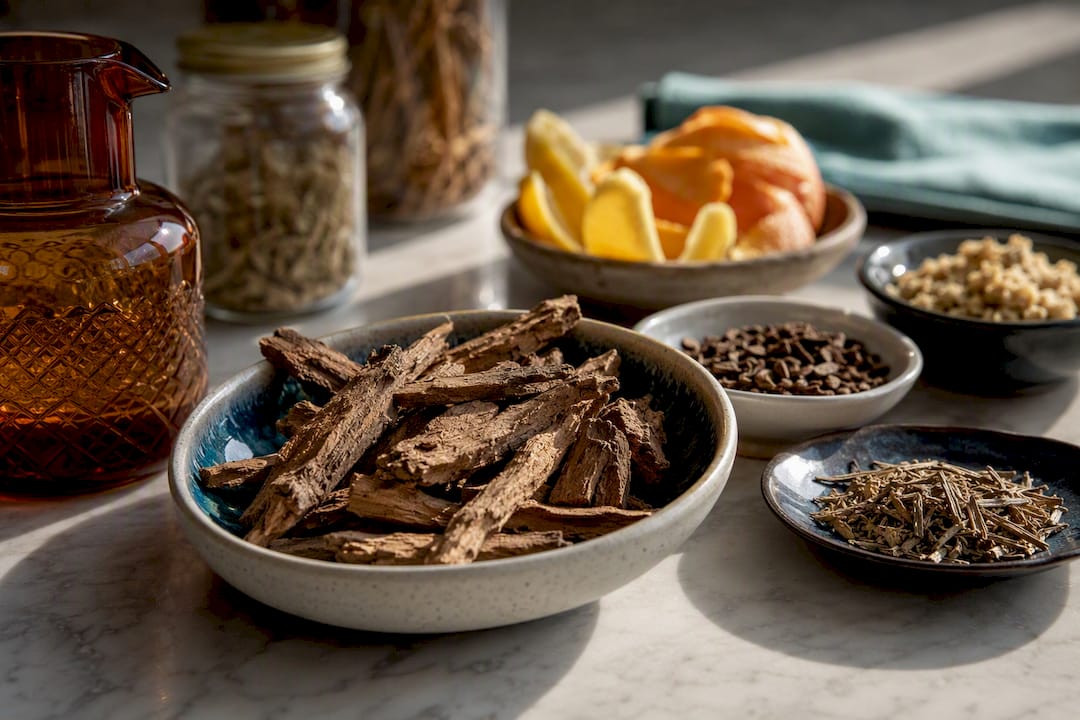
Craft producers commonly reach for gentian, quassia bark, wormwood, hops, and dandelion root to build bitterness without cinchona. Each brings its own character: gentian is earthy and root-like, quassia is cleaner and sharper, wormwood adds a herbal edge closer to vermouth. Sugar and citric acid then do the balancing act, rounding the bitter edge while keeping the drink tasting crisp rather than sweet. Carbonation matters too. Higher fizz sharpens perceived bitterness, while a flatter pour tastes softer and rounder.
Reading labels matters here. “Quinine-free” means no cinchona derivative at all. “Low quinine” or “light tonic” means a reduced amount, not zero, so check the ingredient line if you’re avoiding it completely. Scan for these terms:
- “Quinine” or “cinchona bark extract” listed anywhere in the ingredients
- “Natural bittering agents” or named botanicals (gentian, quassia)
- Sugar content per serving, since some quinine-free versions lean sweeter to mask botanical bitterness
Where can you buy quinine-free tonic mixers?
Four categories cover most of what’s on shelves and online right now. Craft botanical tonics lead with gentian or quassia and often skip artificial sweeteners entirely. Concentrated syrups let you control dilution yourself, which is handy if you like your drinks drier or sweeter than the bottle assumes. Mixers explicitly labelled “quinine-free” spell it out on the front, no label detective work required. And low-quinine “light” tonics sit in between, cutting quinine without eliminating it.
What to check before buying:
- Ingredient list order (bittering agents near the top usually mean a stronger flavour presence)
- Sugar or calories per serving, since this varies widely between brands
- Bottle versus can, since cans tend to hold carbonation slightly longer once opened
Specialty grocery stores and online mixer retailers carry the widest botanical selection, while mainstream grocery chains increasingly stock at least one quinine-free or light option. Prices for craft tonics generally tend to be higher per bottle than mass-market tonic, reflecting smaller batch sizes and pricier botanicals.
Pro Tip: If you’re mixing more than sipping, buy the more concentrated syrup format first. You get more drinks per dollar, and you control your own bitterness-to-sweetness ratio instead of accepting whatever the bottler chose.
How do you make quinine-free tonic syrup at home?
Skip any recipe that tells you to extract quinine from cinchona bark yourself. It’s genuinely risky to dose correctly, and most cooking authorities steer home cooks toward quassia and gentian instead, since these botanicals never contain quinine in the first place. A concentrated syrup gives you full control over bitterness, sweetness, and acidity without that risk.
Ingredients:
- 2 tablespoons dried quassia bark or gentian root
- 1 tablespoon crushed hops (optional, for a beer-like edge)
- Peel from 2 lemons and 1 orange (pith removed)
- 2 cups water
- 2 cups sugar
- 1 to 2 teaspoons citric acid, to taste
- A few whole cloves or a cinnamon stick, optional
Method:
- Combine the botanicals, citrus peel, and water in a saucepan. Bring to a gentle simmer, not a hard boil.
- Simmer for several minutes, then remove from heat and let the mixture steep for some time to extract flavors.
- Strain through a fine mesh sieve or cheesecloth, pressing out as much liquid as you can.
- Return the strained liquid to the saucepan, add sugar, and stir over low heat until fully dissolved.
- Stir in citric acid a little at a time, tasting as you go until the bitterness and tang feel balanced.
- Cool completely, then transfer to a clean, sealed jar or bottle and refrigerate.
Dilute at a ratio of syrup to soda water that is typically around one to three or four as a starting point, then adjust to taste (https://www.drinksolidviibe.com/blogs/news/make-soda-alternatives-at-home). The syrup keeps in the fridge for a limited time, typically a few weeks, though flavour may fade after that. Label the jar with the date, since flavour fades noticeably after that window even if it still looks fine.
Pro Tip: Keep a small glass of soda water on the counter while you test. Add a small amount of syrup to soda, taste, then adjust the citric acid or sugar accordingly. before committing to a full batch. Home bartenders who’ve tested this method report solid results once the ratio is tuned, especially in a classic gin and tonic.
How do you use quinine-free tonic in cocktails and mocktails?
Ratios shift slightly depending on how assertive your botanical mix is. A gentian-forward tonic can handle a slightly heavier pour of spirit before it gets lost, while a lighter quassia blend needs a gentler hand.
- Gin and tonic: Start at 1 part gin to 2 parts tonic over plenty of ice, then adjust toward more tonic if the botanicals taste sharp.
- Vodka tonic: Vodka’s neutral profile lets the tonic’s bitterness carry the drink, so 1:3 spirit to tonic works well.
- Spirit-free highball: Use your DIY syrup diluted 1:4 with soda water, and treat it exactly like a finished tonic.
Garnish choices can nudge the flavour in useful directions. Lime sharpens a gentian-based tonic, grapefruit peel softens a harsher wormwood note, and a sprig of rosemary or a cucumber ribbon adds aromatic lift without competing with the bitterness. More carbonation reads as more bitter on the tongue, so if a drink tastes too sharp, a splash of still water can round it out faster than adding more syrup.
Are there health risks with quinine, and is DIY tonic safe?
Quinine can interact with certain heart medications and blood thinners, and health authorities have specifically warned against treating tonic water as any kind of medical remedy, a point reinforced during public confusion over unproven home treatments during the COVID pandemic, according to Emory University’s public health guidance. If you’re on prescription medication and unsure whether quinine affects you, WebMD’s clinical notes on quinine are worth a read, and a conversation with your pharmacist or doctor is the safer move than guessing.
Tonic water is a mixer, not a treatment. If you’re drinking it for a health condition rather than for the taste, that’s the moment to stop and ask a clinician instead.
For DIY syrup makers, buy quassia bark and gentian from reputable herbal suppliers rather than unlabelled “bark blend” products, since a mislabelled blend could technically contain cinchona. Measure citric acid rather than eyeballing it. Refrigerate your finished syrup immediately, and write the date on the jar so nothing lingers past its safe window.
Why the quinine-free route usually wins for everyday drinking
Honestly? For most home bars, quinine-free is the better default, not just the safer one. The bitterness botanicals like quassia and gentian deliver is cleaner and easier to tune than cinchona’s, and you’re not stuck wondering whether your third G&T of the night is doing anything to your medication. Solidviibe’s approach to functional, low-sugar sparkling drinks reflects the same logic: flavour and function without the guesswork. My practical advice is to try a small batch or a single can before committing to a full bottle or a big syrup batch. Your palate will tell you fast whether gentian or quassia is your style.
— Sharon
Try Solidviibe’s low-sugar, botanical-forward tonics
There are ready quinine-free options available without the trial-and-error of a first DIY batch. Some sparkling tonics use natural ingredients and functional flavours like lemon-ginger and passionfruit, with low sugar and no artificial additives, delivering bitterness and brightness without the sugar crash that some conventional tonics carry.
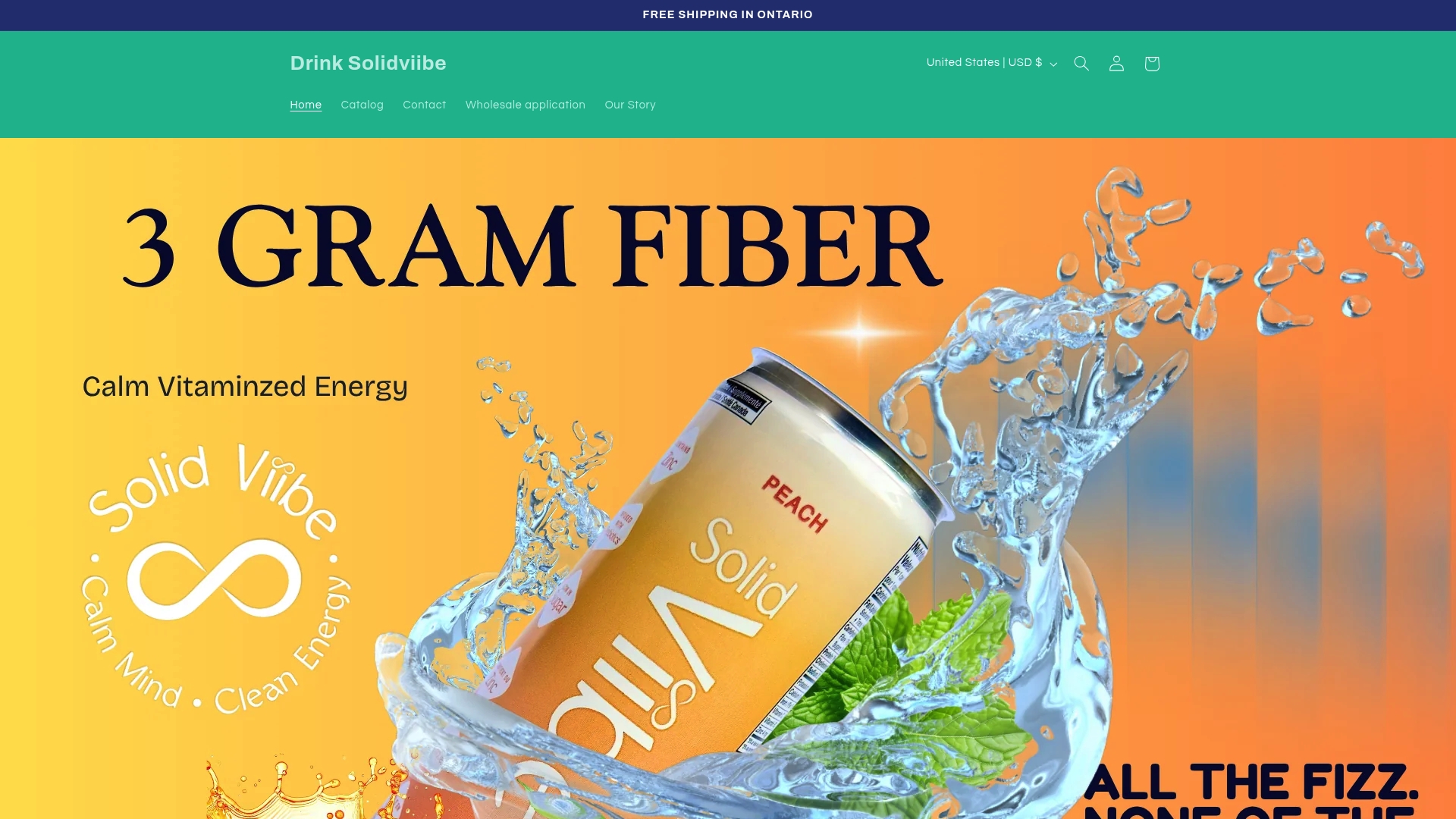
If you’ve been comparing carbonated alternatives or checking labels the way this article walked through, Solidviibe’s ingredient lists are built to hold up to that same scrutiny, right down to sugar content and natural sourcing. Pair it the way you would any quinine-free mixer: alongside dinner, in a spirit-free highball, or as a pizza night pour when you want something with more character than plain soda.
Start with a single can or grab a variety pack to find your flavour before committing to a full case, right from the Solidviibe landing page.
Sources
- Quinine-free tonic syrup recipe — The Spruce Eats
- Beware false cures: COVID-19 misinformation responses — Emory News
- Tonic water — Wikipedia
- Quinine (Qualaquin) — WebMD
- Quinine-Free Tonic Waters : Wildleaf


