
Flavoured water beats juice for daily hydration and sugar

Flavoured water beats juice for most people, most days, for one simple reason: it delivers the taste that makes you drink more without the sugar load that comes with it. A cup of orange juice can carry close to the same sugar as a can of soda, while a glass of unsweetened flavoured water sits at zero or close to it. The one trade-off worth knowing: juice still brings real vitamin C and antioxidants that plain flavoured water doesn’t replicate.
Here’s the honest starting point if you want the benefit without overhauling your whole diet:
- Swap one daily glass of juice for flavoured water this week
- Keep a small juice serving (4 to 6 oz) if you want the vitamin C, not a full glass
- Read the label before buying bottled “flavoured water” — some are juice in disguise
Key Takeaways
Flavoured water reduces daily sugar and calorie intake as effectively as any single beverage swap, while hydrating just as well as juice in normal daily use.
| Point | Details |
|---|---|
| Sugar gap is real | An 8 oz glass of orange juice runs 21 to 26g of sugar versus 0g in unsweetened flavoured water. |
| Hydration is equal | Flavoured water hydrates comparably to juice since water, not flavour, does the hydrating. |
| Keep juice small if wanted | A 4 to 6 oz pour preserves vitamin C benefits without a full sugar hit. |
| Infuse safely | Refrigerate infusions promptly and use them within three days per VA guidance. |
| Swap gradually | Replace every other juice with flavoured water for two to four weeks to avoid feeling deprived. |
| Ready-made option | Drinksolidviibe’s canned sparkling tonics offer a low-sugar, nutrient-enriched alternative without prep time. |
Table of Contents
- Why choose flavoured water over juice: the sugar and calorie gap
- Does flavoured water hydrate as well as juice?
- How to keep homemade infusions safe
- A step-by-step plan to replace juice with flavoured water
- Why Drinksolidviibe’s approach fits this swap
- The gradual swap works better than the dramatic detox
- Try a ready-made low-sugar option instead of DIY infusions
- Sources
Why choose flavoured water over juice: the sugar and calorie gap
The numbers are not subtle. An 8 ounce serving of 100% orange juice runs roughly around one hundred calories and over twenty grams of sugar, almost entirely from fructose with none of the fibre that would slow it down. A 12 ounce serving of a sweetened juice drink or “juice cocktail” can contain a high amount of sugar once bottlers add extra syrup on top of the juice concentrate. Unsweetened flavoured water, whether homemade or a plain sparkling can, sits at zero calories and zero grams of sugar because there’s no juice concentrate in it at all.
That gap matters more than most people assume, because liquid sugar doesn’t trigger the same fullness signals as food. You drink a glass of juice and your body barely registers the calories, so they stack on top of whatever you’d have eaten anyway. Dentists see the same pattern from the other direction: sugar sitting on your teeth in liquid form, sipped slowly over an hour, does more damage than the same sugar eaten quickly at a meal.
A quick sugar snapshot:
- 8 oz orange juice: about 110 calories, 21-26g sugar
- 12 oz sweetened juice drink: up to 40g+ sugar
- 8-12 oz unsweetened flavoured water: 0 calories, 0g sugar
Pro Tip: Before buying anything labelled “flavoured water,” flip it over and scan for “juice concentrate,” “added sugars,” “high fructose corn syrup,” “artificial sweeteners,” and “caffeine.” A product can call itself water and still function like soda.
Does flavoured water hydrate as well as juice?
Water is what hydrates you, not the flavour riding along with it. Flavoured water hydrates about as effectively as juice because the hydrating mechanism (water crossing into your cells and bloodstream) doesn’t change based on whether that water tastes like cucumber or orange. The exception is any additive with a diuretic effect, like excess caffeine, which can work against you if you’re drinking it specifically to rehydrate.
Where juice pulls ahead is nutrition, not hydration. A serving of orange or grapefruit juice supplies genuine vitamin C and antioxidants, and those benefits are real even though the concentrated sugar that comes with them usually outweighs the upside for people watching weight or blood sugar. If getting vitamin C is your actual goal, a small 4 to 6 ounce pour does the job without the full sugar hit of a large glass.
Fortified flavoured waters split the difference. Some are enriched with electrolytes or a vitamin blend, and that fortification can add real value as long as the sugar content stays low. Judge the whole nutrition label, not just the marketing on the front of the can.
- Flavoured water hydrates comparably to juice in most everyday situations
- Juice offers vitamin C and antioxidants worth keeping in small portions
- Fortified flavoured waters can add electrolytes without juice’s sugar load
How to keep homemade infusions safe
Infusing your own water is cheap and endlessly customizable, but bacteria don’t care how good your lemon-ginger blend tastes. The VA’s nutrition guidance lays out clear timing rules worth following every time.
- Wash all produce before slicing it into your pitcher, no exceptions.
- Leave infusions at room temperature for a maximum of two hours, then refrigerate.
- Strain out solids after about four hours so citrus and herbs don’t turn bitter or mushy.
- Refrigerate the strained infusion and use it within three days.
- Peel citrus promptly rather than letting the rind sit in the water for hours, since the pith turns bitter fast.
Pro Tip: If you’re using berries, keep them whole or sliced instead of muddling them. Crushed fruit releases more sugar into the water, which quietly undercuts the whole point of the swap.
Store-bought isn’t automatically safer from a nutrition standpoint. Some commercially labelled flavoured waters carry added sugar, sugar alcohols, or artificial sweeteners, and a few sneak in caffeine you didn’t ask for. Sugar alcohols like xylitol or sorbitol can also cause digestive upset in people with sensitive stomachs, so check the ingredient list, not just the front label.
A step-by-step plan to replace juice with flavoured water
You don’t need to quit juice cold turkey, and trying to usually backfires. The Cleveland Clinic’s approach is to replace every other juice or soda with flavoured water first, then increase the ratio over two to four weeks as your palate adjusts. That gradual pace matters, because a sudden switch to plain water after years of sweet drinks tends to feel like deprivation, and deprivation is what makes people quit.
- Week 1 to 2: swap every second glass of juice for a flavoured water of your choice.
- Week 3 to 4: swap three out of every four glasses, keeping juice for one small serving a day if you want.
- After week 4: default to flavoured water, with juice as an occasional extra rather than a daily habit.
A few combinations make the switch easier because they actually taste like something:
- Lemon and cucumber for a clean, refreshing option
- Berry and mint for a natural sweetness that doesn’t need sugar
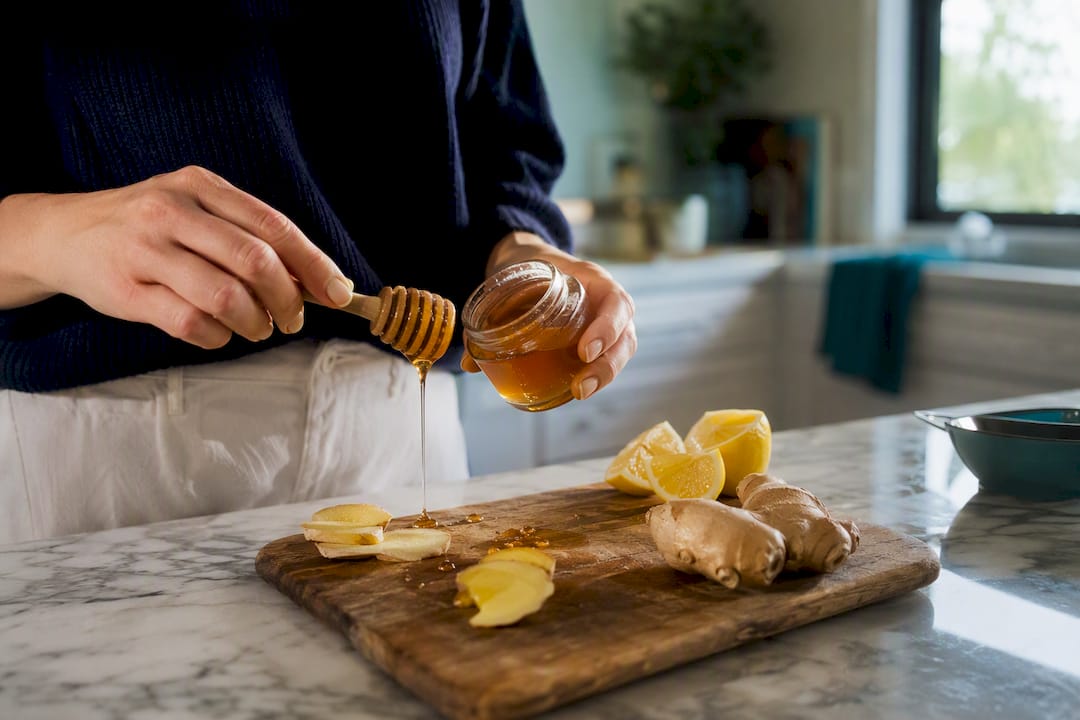
- Ginger and lemon for a slight kick that mimics soda’s bite
- Pre-made sparkling cans for mornings when slicing fruit isn’t happening
If you’ve got kids in the house, make the swap visual before you make it about health. Pour a few colourful options into clear cups, keep them cold, and let your kids pick their own mix from a variety pack rather than telling them what to drink. Involving them in the choice does more than any lecture about sugar ever will.
Why Drinksolidviibe’s approach fits this swap
Drinksolidviibe built its sparkling tonics around the exact gap this article is describing: real flavour without the sugar bill. Flavours like passionfruit and lemon-ginger are formulated to be low in sugar with no artificial additives, which puts them closer to a well-made homemade infusion than to a bottled juice drink. Sharon, who covers hydration and beverage habits for the Drinksolidviibe blog, has watched the same pattern play out again and again with readers trying to cut sugar: the swaps that stick are the ones that still taste like something.
The products that win long term aren’t the ones with zero flavour. They’re the ones that taste good enough that you stop missing what you gave up.
A few things worth knowing about how these tonics fit the picture:
- Nutrient-enriched with vitamins and minerals, unlike a plain unsweetened infusion
- Formulated to support gut health and immunity alongside hydration
- Sold in single cans or variety packs for anyone easing into the switch
Even so, read the label on any canned option you buy, including this one, and pick varieties without added sugars or heavy caffeine if that’s your goal.
The gradual swap works better than the dramatic detox
Most advice on cutting sugar treats it as a willpower problem, and that’s where it goes wrong. The Cleveland Clinic’s own guidance backs a gradual, every-other-drink swap precisely because willpower runs out and habit doesn’t. The conventional wisdom that you need to quit juice entirely to see a benefit gives people an all-or-nothing target they usually abandon within a week.
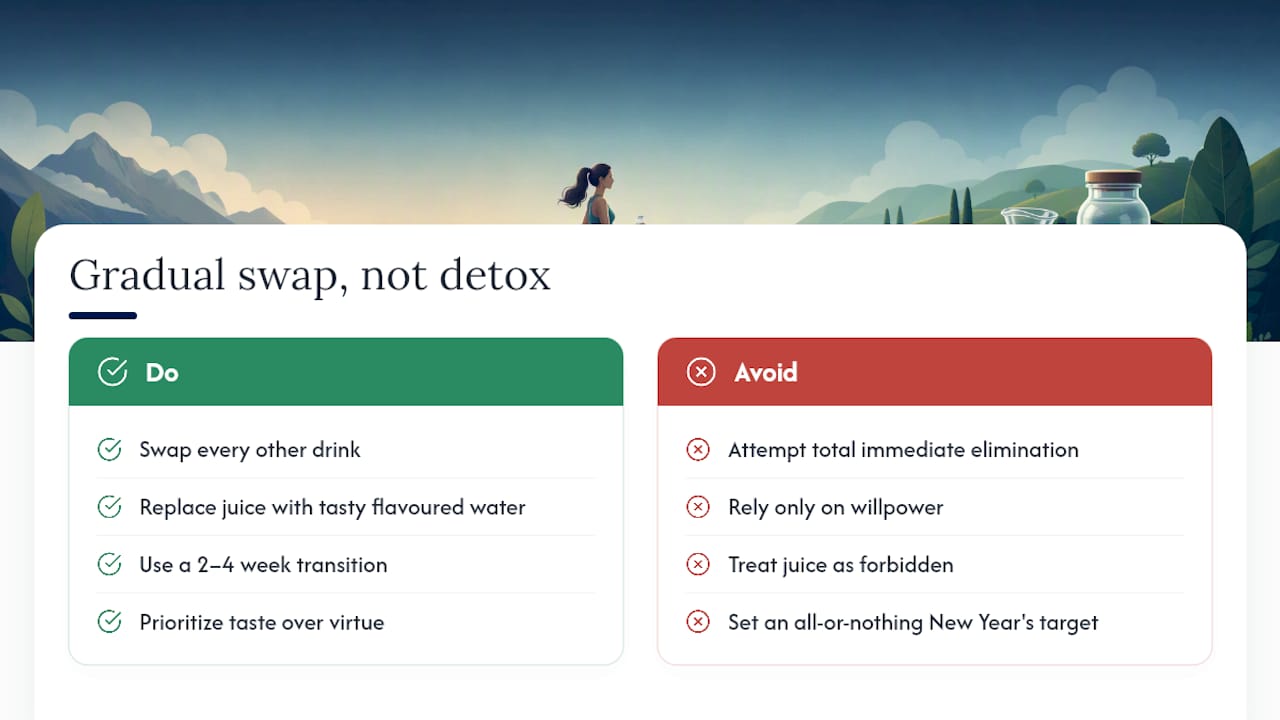
What the evidence actually supports is more modest and more useful: displacement, not elimination. You don’t need to hate juice or treat it as forbidden. You need fewer glasses of it in a normal week, replaced by something that still tastes like a treat. That’s a behavioural fix, not a willpower fix, and it’s the reason a two to four week transition works better than a New Year’s resolution.
If you take one thing from this, prioritize taste over virtue. A flavoured water you actually want to drink beats a “healthy” option you choke down twice before quitting.
— Sharon
Try a ready-made low-sugar option instead of DIY infusions
Not everyone wants to wash cucumbers and strain pitchers every three days, and that’s a fair trade to skip. Drinksolidviibe makes that easier with canned sparkling tonics built around the same low-sugar, natural-ingredient logic as a good homemade infusion, minus the prep and the food-safety clock.
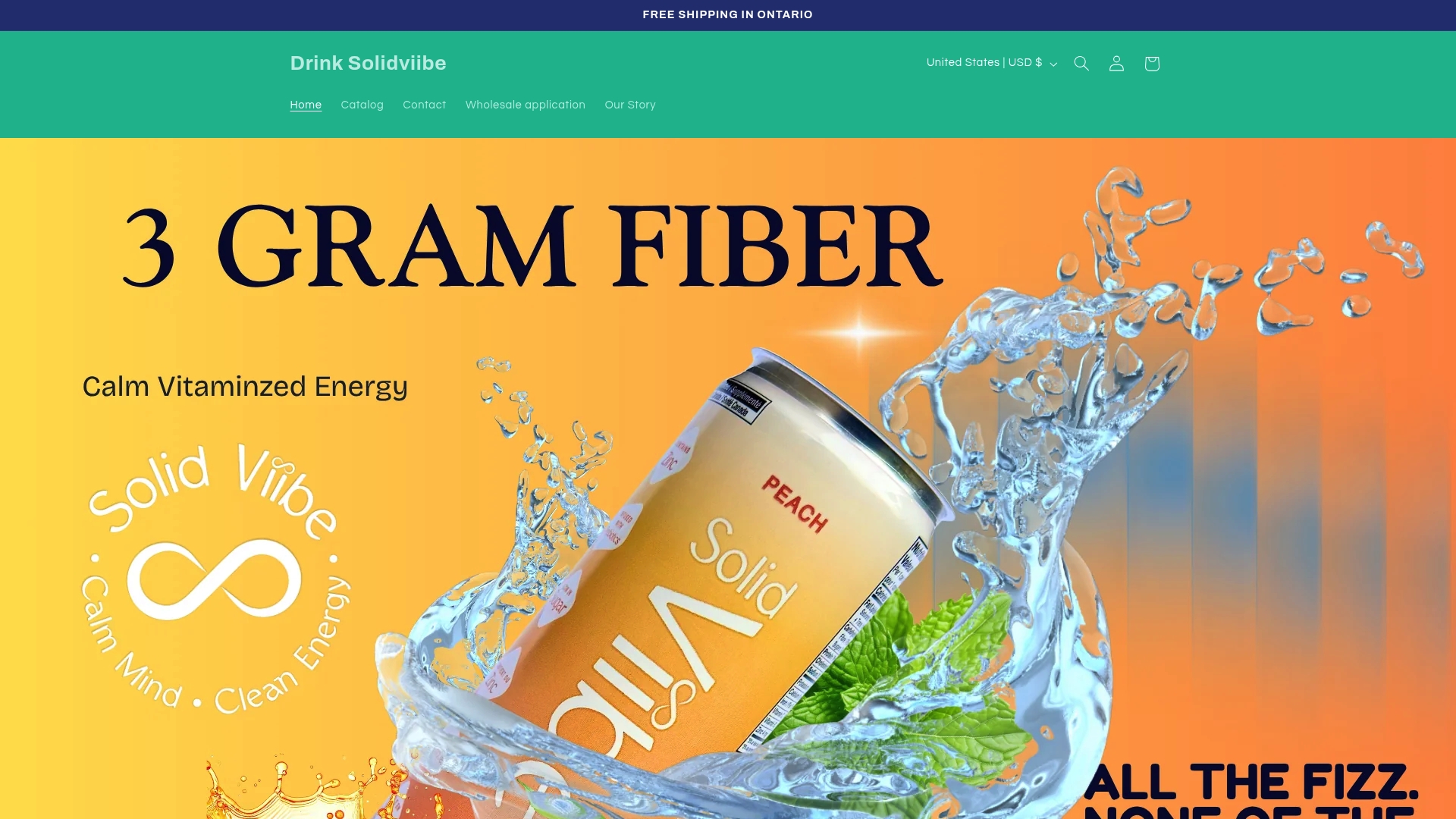
Flavours like lemon-ginger and passionfruit are formulated to give you the taste payoff that makes a sugar swap actually last, with nutrient-enriched ingredients supporting gut health and immunity on top of hydration. If you’ve been putting off the switch because infusions feel like one more chore, grab a variety pack of canned sparkling tonics and see which flavour earns a permanent spot in your fridge. Still worth checking the label on any can you buy, this one included, if avoiding added sugar is your main goal.
Sources
- Is flavored water good for you? | Cleveland Clinic
- Health benefits of infused water | WebMD
- Why try flavor infused water? | VA Nutrition (2025)
- Drinking flavored water vs plain water | MedicineNet


