
Why sparkling water beats soda for health-conscious Canadians

Sparkling water is the better choice over soda for most people, most of the time. It hydrates as effectively as still water, delivers zero added sugar, and skips the phosphoric acid, high-fructose corn syrup, and caffeine that make regular soda a poor daily habit. The American Heart Association and Cleveland Clinic both recommend unsweetened sparkling water as a practical soda substitute. Drinksolidviibe was built on exactly that premise: refreshment without the health cost.
The short version:
- Plain sparkling water hydrates just as well as still water
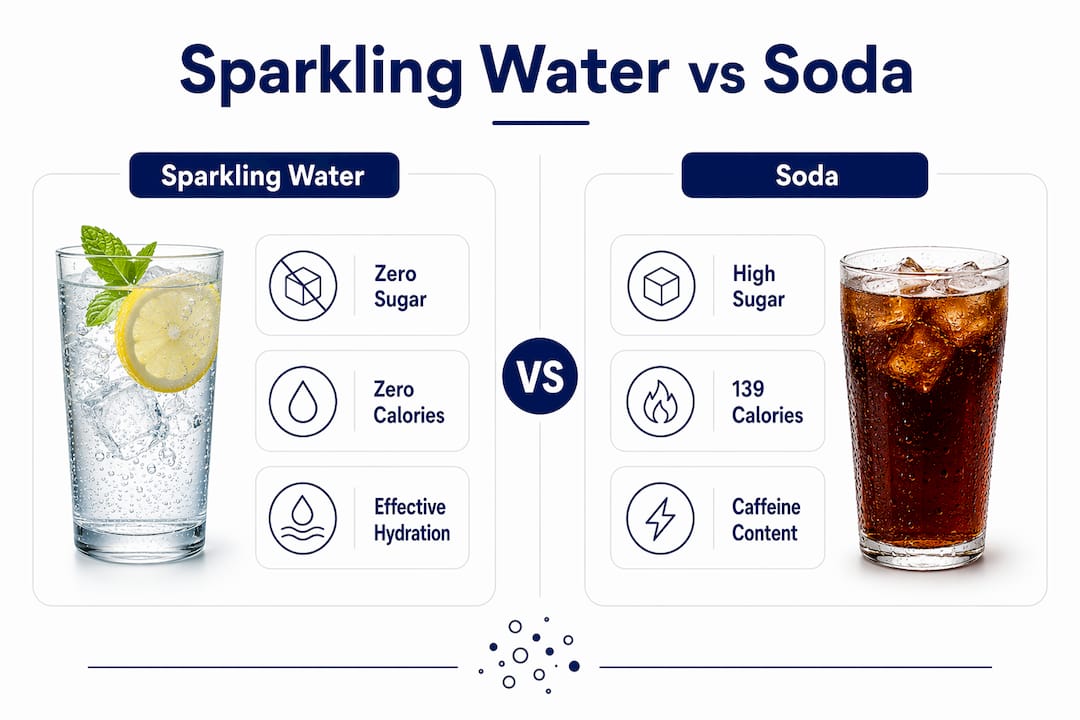
- Zero calories, zero sugar versus a typical soda’s 35 g of sugar per 355 mL can
- No phosphoric acid, no HFCS, no artificial colouring
- Carbonation creates a satisfying fizz that helps reduce cravings for sweet drinks
TL;DR: Swapping soda for unsweetened sparkling water reduces sugar and calorie intake without sacrificing the fizzy experience.
Table of Contents
- What types of sparkling water actually matter for your health?
- Does sparkling water hydrate you as well as regular water?
- Can sparkling water help you manage weight and feel fuller?
- Does sparkling water actually help with digestion?
- Are the dental and bone-health concerns about sparkling water real?
- How do you pick a healthier sparkling water in Canada?
- Practical tips for replacing soda with sparkling water
- Key takeaways
- A note on what this swap actually means
- Drinksolidviibe: a natural, low-sugar sparkling option for Canadians
- Sources and further reading
What types of sparkling water actually matter for your health?
Not every fizzy drink earns the “healthy swap” label. Four main types exist, and they are not interchangeable.
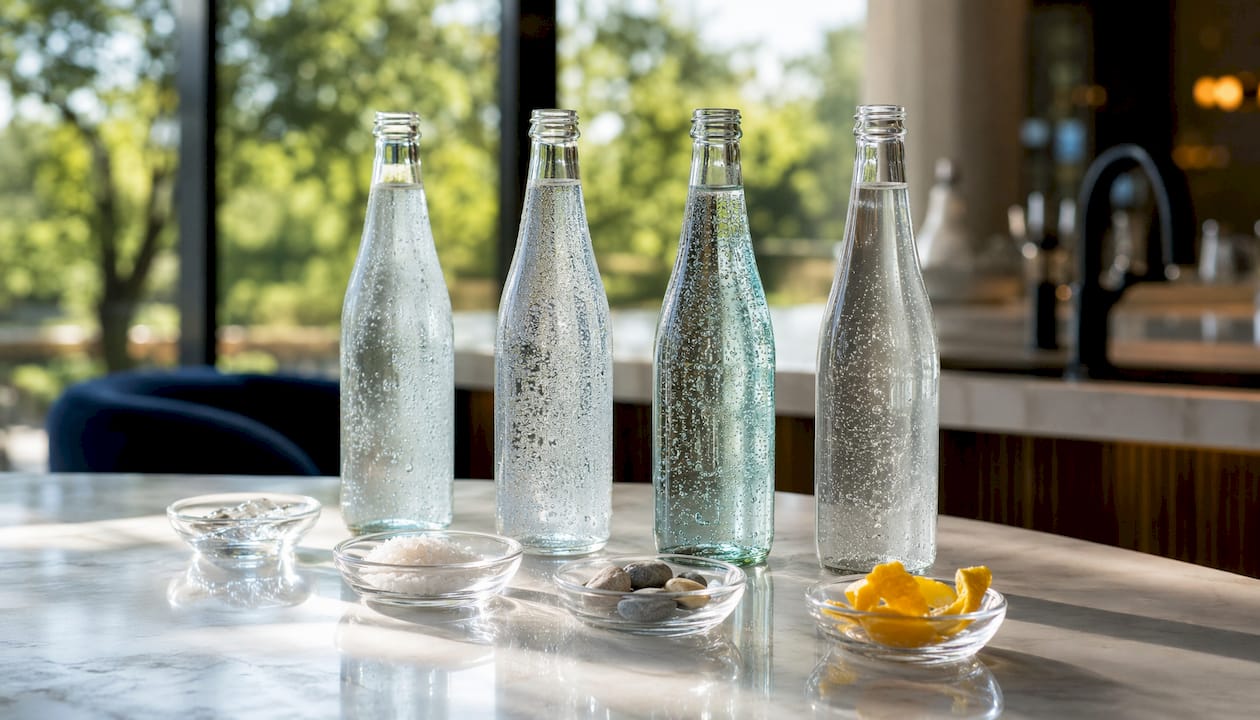
Seltzer is plain water carbonated with CO₂. No minerals, no sugar, no sodium. It is the cleanest option and the easiest to flavour yourself.
Club soda is also carbonated water, but manufacturers add sodium chloride, sodium bicarbonate, or similar salts for a slightly mineral taste. Sodium content is low but worth noting if you are watching your intake.
Sparkling mineral water comes from a natural spring and carries naturally occurring minerals such as calcium, magnesium, and potassium. The FDA requires at least 250 parts per million of dissolved solids for the “mineral water” designation. That mineral profile can vary dramatically between brands.
Tonic water is the outlier. It contains added quinine and sugar, giving it roughly 32 g of carbohydrates per serving. Tonic is closer to a soft drink than a health swap.
Some flavoured seltzers add only natural fruit essences and are fine. Others sneak in citric acid, artificial sweeteners, or sugar. Under Canadian retail labelling rules, check the Nutrition Facts panel and the ingredient list. A “no added sugar” claim on the front of the package is a good start, but the ingredient list confirms it.
Pro Tip: Look for products where the ingredient list reads “carbonated water” and nothing else, or “carbonated water, natural flavour.” If sugar, glucose, or high-fructose corn syrup appears anywhere, put it back.
Does sparkling water hydrate you as well as regular water?
Yes. Plain, unsweetened sparkling water contributes equally to your daily fluid intake and supports the same essential functions as still water, including temperature regulation and waste removal. For people who find still water boring, carbonation can actually increase total fluid intake across the day.
Regular soda does not perform the same way. The sugar content slows water absorption, and the caffeine in cola-style drinks has a mild diuretic effect.
| Factor | Plain sparkling water | Regular soda |
|---|---|---|
| Calories per 355 mL | — | ~139 |
| Sugar per 355 mL | — g | ~35 g |
| Phosphoric acid | No | Yes |
| Caffeine | None | varies by brand |
| Artificial sweeteners | None | None (regular) |
| Hydration equivalence | Same as still water | Reduced |
| Tooth enamel risk | Very low | High |
Tonic water and sweetened seltzers are the exceptions. Tonic water can contain up to 15 g of sugar per serving, which undermines the whole point of choosing fizzy over soda.
Can sparkling water help you manage weight and feel fuller?
Carbonation can increase short-term fullness, which is one of the more practical sparkling water advantages over soda. The bubbles stimulate stomach receptors and extend the sensation of fullness after you drink. That mechanism is modest, but it adds up when you are replacing a daily soda habit.
The behavioural piece matters just as much. The sensory tingle of carbonation helps people transition away from sweet drinks by providing a satisfying sensation that reduces reliance on sugar for sensory pleasure. Your brain gets the fizzy experience it was reaching for, without the 139 calories.
Replacing daily soda consumption with unsweetened sparkling water removes a significant amount of sugar from your diet. Over weeks, that is a meaningful reduction without any other change to your routine.
Pro Tip: Drink a glass of sparkling water before a meal. The carbonation creates a brief fullness signal that can reduce how much you eat, particularly useful if you tend to snack out of habit rather than hunger. Pairing sparkling water with meals is a strategy worth trying.
Does sparkling water actually help with digestion?
For some people, yes. Studies show carbonated water can ease constipation and improve swallowing ability in certain populations, including older adults. The evidence is strongest for those two specific benefits.
Natural mineral sparkling waters can also deliver calcium, magnesium, and potassium, electrolytes that support muscle and nerve function. The amounts vary widely by brand and source, so mineral water is not a reliable substitute for dietary intake. Think of it as a bonus, not a strategy.
Where the evidence is solid: constipation relief and improved swallowing in certain adults. Where it is limited: general digestive comfort, bloating reduction, and electrolyte replacement. Mineral content varies too much between brands to make broad claims.
Are the dental and bone-health concerns about sparkling water real?
Mostly myth, with one real nuance. Plain sparkling water has a pH of roughly 5–6, which is mildly acidic. Enamel effects are minimal compared with sugary sodas, which sit at a pH of around 2.5 and contain phosphoric acid that actively dissolves enamel.
- Myth: Sparkling water damages teeth like soda does. Fact: Plain sparkling water is far less erosive; the risk rises mainly with flavoured or citric-acid-added varieties.
- Myth: Carbonated water weakens bones. Fact: Only dark colas containing phosphoric acid are linked to lower bone density. Plain sparkling water does not share that risk and may support bone density if it provides calcium and magnesium.
- Real concern: Flavoured sparkling waters with citric acid can increase enamel erosion over time, especially with slow, prolonged sipping.
Pro Tip: Alternate sparkling water with still water throughout the day rather than sipping fizzy drinks continuously. Rinse with plain water after a flavoured or acidic sparkling drink. For more on citric acid and dental health, the Drinksolidviibe blog has a useful breakdown.
How do you pick a healthier sparkling water in Canada?
Choose plain, unsweetened sparkling water or mineral water with low sodium and no citric acid. That one sentence covers most of the decision.
| What to check | Target | Red flag |
|---|---|---|
| Sugar per serving | — g | Any amount listed |
| Calories per serving | — kcal | Any amount listed |
| Sodium per serving | low sodium | varies by brand |
| Ingredients | Water, CO₂ (± natural flavour) | Sugar, HFCS, citric acid, sweeteners |
| Tonic water sugar | Avoid (up to 15 g per serving) | Any tonic labelled as a health swap |
Canadian Nutrition Facts panels list sugar and sodium per serving clearly. “Naturally flavoured” on the front label is acceptable; “contains citric acid” in the ingredient list is a flag if you are concerned about enamel.
Pro Tip: A home carbonation system reduces single-use packaging and lets you control exactly what goes into your drink. Add a strip of lemon peel, a few mint leaves, or a slice of cucumber for flavour without any added sugar or acid.
Practical tips for replacing soda with sparkling water
The swap is easier than most people expect. Keep a chilled bottle in the fridge at eye level so it is the first thing you reach for. Replace one soda per day to start rather than cutting everything at once.
- Pair sparkling water with meals to increase satiety and make the transition feel natural
- Use it as a mixer to reduce alcohol in cocktails and mocktails
- Try natural flavour combinations like passionfruit, lemon-ginger, or cucumber-mint to keep things interesting
- Keep portable cans or a reusable bottle for travel so you are never stuck choosing between soda and nothing
- Gradually reduce soda rather than stopping cold; the sensory substitution works better when the transition is gradual
A note on caution: If you have GERD, experience frequent bloating, or have sensitive teeth, carbonation can aggravate symptoms. Still water is the better daily choice in those cases. Consult a clinician if symptoms worsen after switching to sparkling water.
Home carbonation also makes environmental and financial sense over time. Single-use plastic bottles add up in both cost and waste. A countertop carbonation system reduces packaging and, for regular sparkling water drinkers, can be cost-competitive within a few months of use in Canada.
Key takeaways
Sparkling water beats soda on every health metric that matters: zero sugar, zero calories, equivalent hydration, and far lower dental and bone risk than cola.
| Point | Details |
|---|---|
| Hydration equivalence | Plain sparkling water hydrates as effectively as still water, per the American Heart Association. |
| Sugar and calories | Regular soda contains a substantial amount of sugar per 355 mL can; plain sparkling water contains zero. |
| Digestion benefits | Carbonated water can ease constipation and improve swallowing in certain adults. |
| Dental risk | Plain sparkling water is far less erosive than sugary soda; risk rises with citric acid or added sugar. |
| Drinksolidviibe | Drinksolidviibe offers natural, low-sugar sparkling beverages in functional flavours like lemon-ginger and passionfruit as a ready-made soda swap. |
A note on what this swap actually means
The case for choosing sparkling water over soda is not complicated, and that is exactly why it gets underestimated. People assume a swap this simple cannot make a meaningful difference. It can. Removing 35 g of sugar per day from a single daily soda habit is not a minor tweak. Over a month, that is over a kilogram of sugar you did not consume.
What I find most interesting about the research is the behavioural mechanism. The fizz itself does real work. The carbonation tingle satisfies the sensory craving that soda creates, which means you are not just white-knuckling through a sugar craving. You are replacing the experience, not just the liquid. That distinction is what makes this swap stick for most people where other dietary changes do not.
The one thing I would push back on in the popular conversation: not all sparkling water is created equal. Tonic water, citric-acid-heavy flavoured seltzers, and high-sodium mineral waters are not the same as plain seltzer or clean mineral water. Reading the label takes ten seconds and it is the only thing standing between a genuinely healthy swap and a rebranded soft drink.
Drinksolidviibe: a natural, low-sugar sparkling option for Canadians
If you want the benefits of sparkling water without the effort of flavouring plain seltzer every day, Drinksolidviibe offers a ready-made alternative. The brand uses natural ingredients and functional flavour profiles, including lemon-ginger and passionfruit, to deliver a sparkling beverage with low sugar and no artificial additives.
This is not a hard sell. If plain seltzer works for you, use it. But for Canadians who want something that tastes like a treat without the sugar load of a soda, Drinksolidviibe is worth exploring. The brand’s approach aligns directly with what the research in this guide supports: natural ingredients, no high-fructose corn syrup, and a fizzy experience that satisfies without the health cost.
Disclosure: Drinksolidviibe publishes this guide and competes in the sparkling beverage category.
Explore Drinksolidviibe’s sparkling beverages and see the full product range and formulation details on the brand’s website.
Sources and further reading
- American Heart Association: Does sparkling water hydrate as well as regular water? — hydration equivalence and mineral content guidance
- Cleveland Clinic: Is sparkling water healthy? — satiety, carbonation mechanisms, and label-checking advice
- UChicago Medicine: Is carbonated water good for you? — digestive benefits, tonic water sugar content, and GERD cautions
- WebMD: Sparkling water benefits and risks — dental enamel evidence and bone-health myth correction
- TODAY: Is sparkling water good for you? — behavioural substitution and sensory craving research
- Drinksolidviibe: Sparkling water health benefits explained — brand-hosted deep dive for Canadian readers
Recommended
- Best drinkmisfits.com alternatives for Canadians in 2026 – Drink Solidviibe
- Sparkling water health benefits explained for 2026 – Drink Solidviibe
- Fizzy drinks without artificial colours: your Canadian guide – Drink Solidviibe
- Carbonated drink alternatives comparison guide for 2026 – Drink Solidviibe


